Why a Weak Factory Audit Can Put Your LED Street Light Project at Risk
A factory audit should reveal more than a showroom and a product catalog. If production capacity is unclear, quality checks are undocumented, test equipment is inadequate, or defective products cannot be traced, a low-cost Supplier can become an expensive risk. For brands, distributors, and project contractors, these gaps may lead to inconsistent products, failed inspections, delayed projects, and higher maintenance costs. A structured audit helps you verify whether an LED street light Manufacturer can consistently deliver the quality, customization, and technical support your project requires.
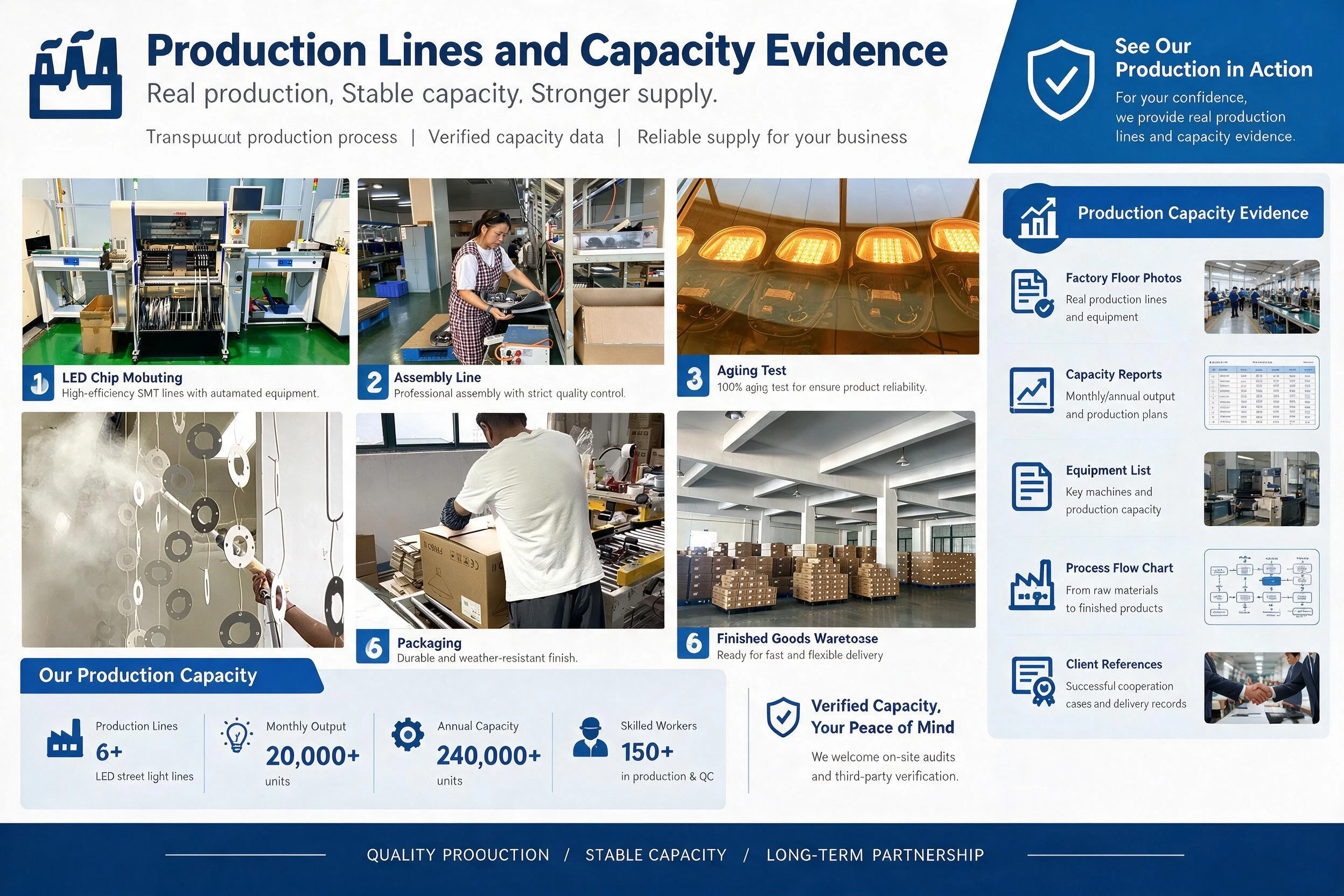
The best factory audit checks four areas: production capacity, quality control, testing capability, and traceability. Luxific Lighting combines established manufacturing experience, in-house R&D, strict product testing, OEM and ODM services, and international certification support to serve brands, Wholesalers, and project contractors.
1. Production Lines and Capacity Evidence
Do not judge a Manufacturer by the size of its showroom. A serious factory audit should confirm whether the production system can support your expected order volume while maintaining consistent specifications.
What to Check During the Factory Visit
- Number and type of active production lines
- Production areas for assembly, testing, aging, and packaging
- Availability of production equipment and trained operators
- Current production workload and scheduling process
- Capacity for standard products and Customizable OEM projects
- Warehouse organization for components and finished products
- Production planning for urgent or project-based orders
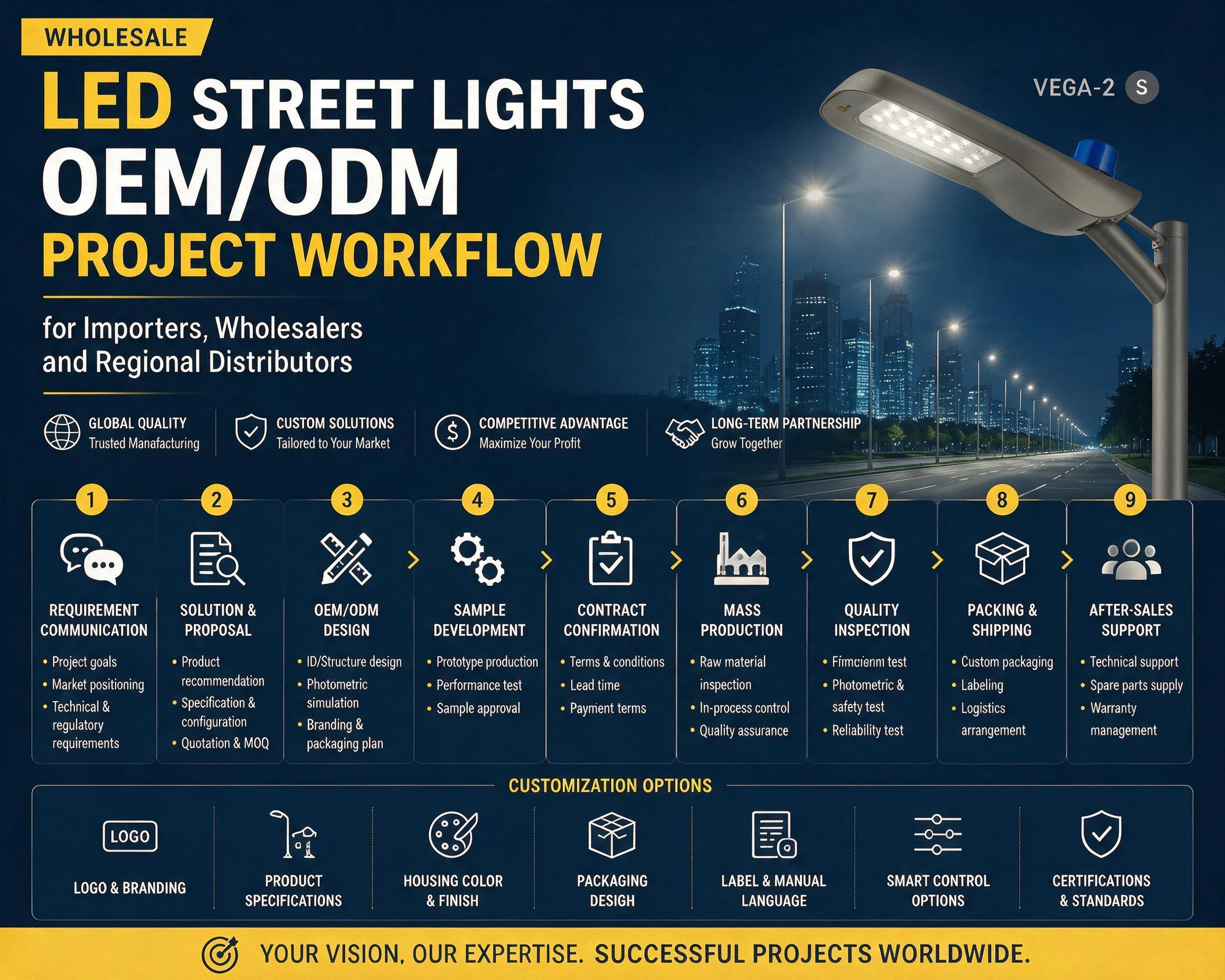
Luxific Lighting identifies itself as a professional LED outdoor lighting Manufacturer established in 1999, with more than 30 years of manufacturing experience. Its product range includes LED street lights and other outdoor lighting solutions, while its OEM and ODM service covers project-oriented design, customization, prototyping, quality control, and logistics.
| Factory Audit Area | Evidence to Request |
|---|---|
| Production capability | Production lines, equipment, workforce, workflow |
| Order capacity | Production planning and project scheduling process |
| OEM capability | Customization examples, prototypes, engineering process |
| Material management | Incoming inspection and component storage records |
| Finished products | Final inspection and packing procedures |
Why Capacity Evidence Matters
For a Wholesaler, insufficient capacity can interrupt inventory replenishment. For an EPC or infrastructure contractor, production delays can affect installation schedules. For a brand, inconsistent production can create differences between batches. The audit should therefore connect factory capacity with your actual purchasing plan rather than accepting a general statement that the factory can produce large quantities.
2. Incoming, In-Process and Final Quality Control
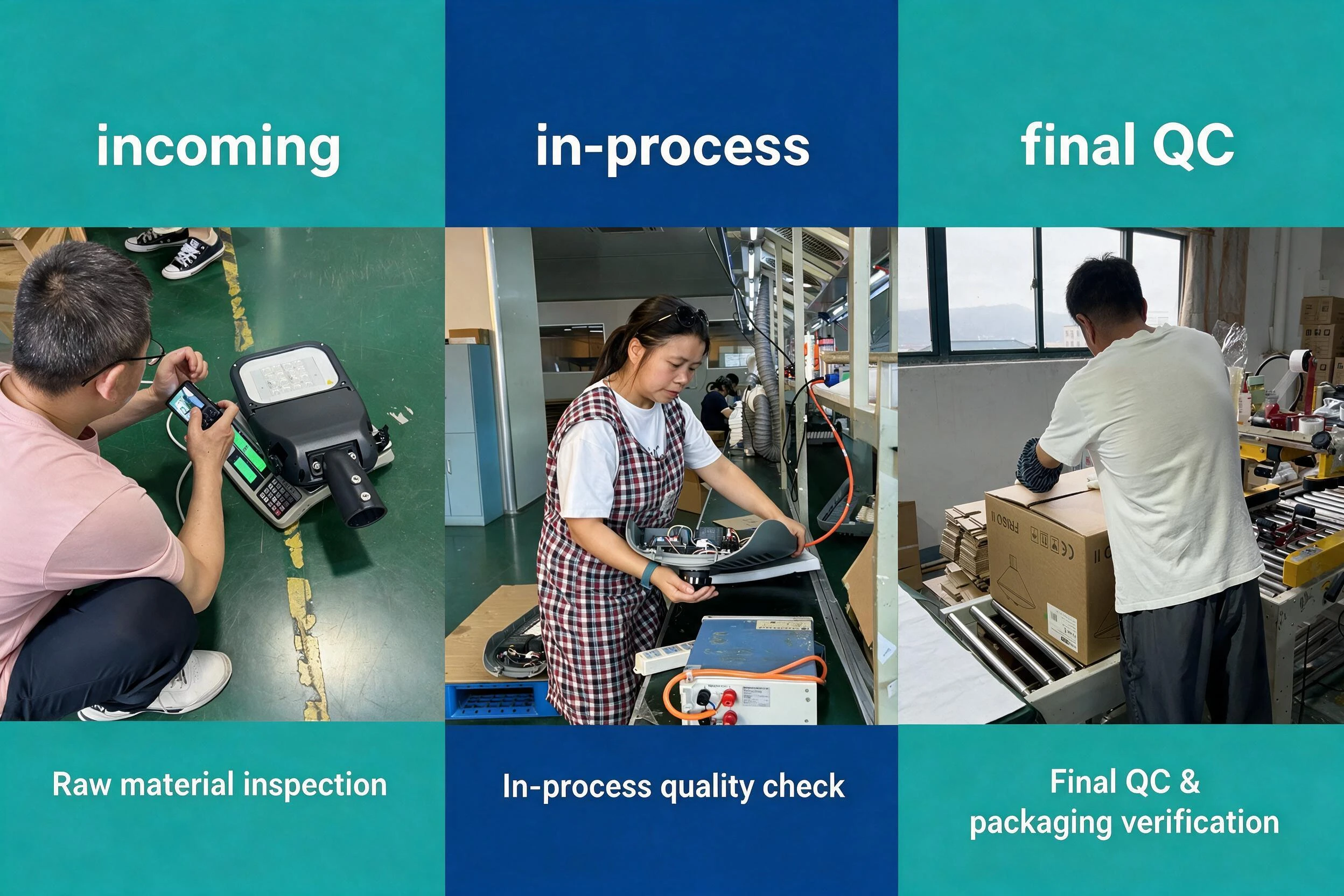
Quality control should not begin when the finished LED street light is ready to ship. A reliable Supplier should control quality throughout the production process, from incoming components to final inspection.
Incoming Quality Control
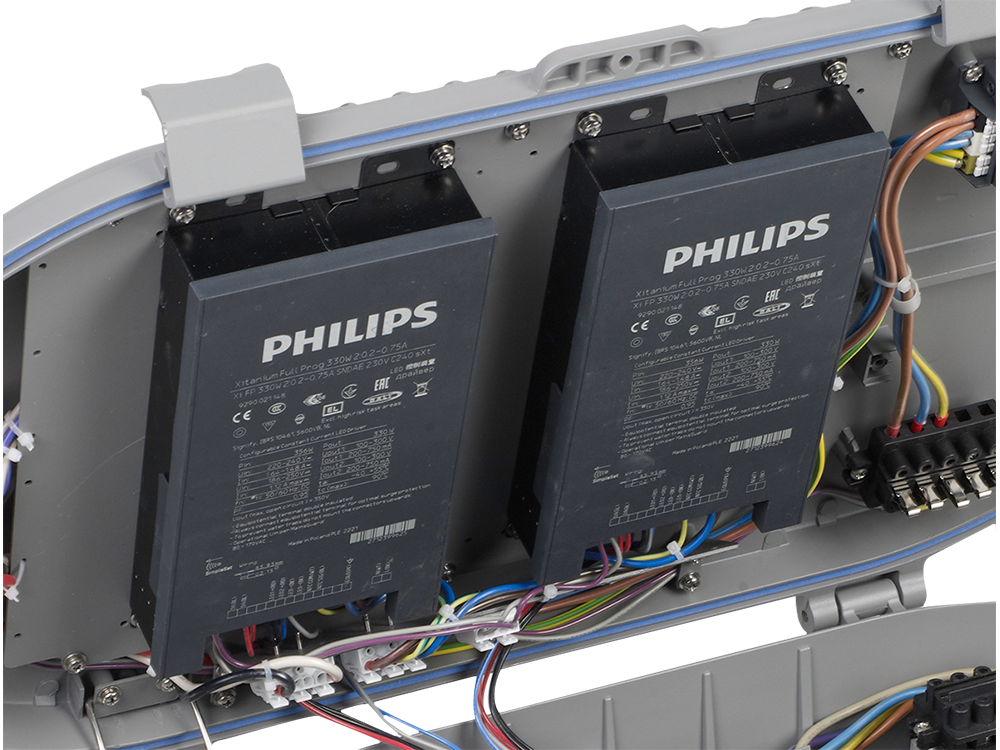
Ask how the factory verifies critical components before they enter production. Depending on the product configuration, these may include LED modules, drivers, housings, lenses, surge protection devices, connectors, and other electrical or mechanical components.
- Are incoming components inspected against specifications?
- Are rejected materials identified and separated?
- Are supplier and component details recorded?
- Are critical components checked for consistency between batches?
In-Process Quality Control
During assembly, the audit should examine whether workers follow defined procedures rather than relying only on final inspection. Check electrical connections, thermal management, sealing, mechanical assembly, optical components, and other product-specific controls.
Luxific states that strict quality testing is part of its service approach and that its in-house R&D supports continuous product development. Its product documentation also identifies construction and protection specifications for street lighting products, such as die-cast aluminum housing, IP66 protection, IK09 impact resistance, and surge protection options on a representative model.
Final Quality Control
Before shipment, the finished product should be checked against the approved specification. This is especially important for OEM orders because branding, dimensions, electrical configuration, optics, and packaging may differ from the standard product.
- Confirm the product model and approved specification.
- Check appearance, housing, finish, and branding.
- Verify electrical and functional performance.
- Check optical and lighting documentation where required.
- Confirm labeling and packaging.
- Record inspection results before shipment.
3. Photometric and Environmental Test Equipment
-scaled.webp)
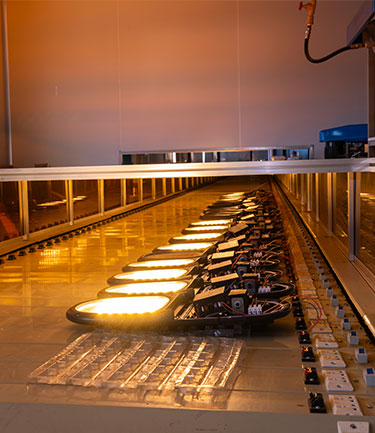
For LED street lights, a factory audit should examine not only whether testing exists, but whether the available testing supports the requirements of your application and destination market.
Photometric Verification
Street lighting performance depends on optical distribution, mounting height, road width, spacing, and required illuminance. A capable lighting Manufacturer should therefore be able to work with photometric data and provide appropriate technical documentation for project evaluation.
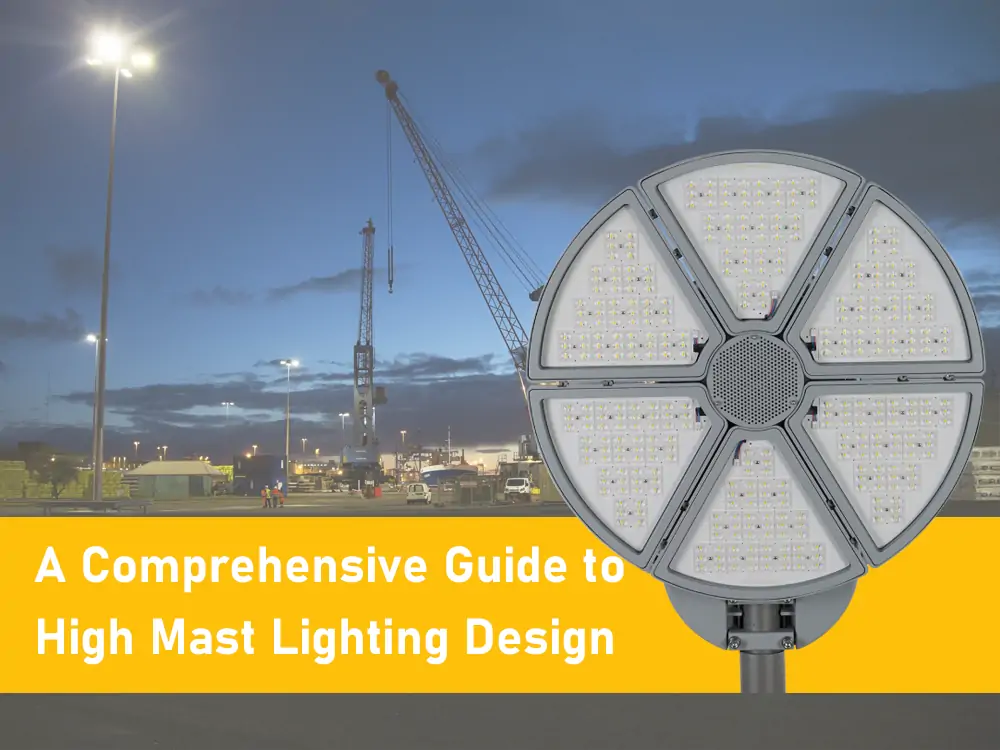
Luxific materials describe multiple optical distributions for its street lighting range and highlight photometric analysis as part of project services. In a Moroccan port project, Luxific provided a photometric analysis report to evaluate coverage and light trespass for a custom high-mast lighting solution.
Environmental and Reliability Considerations
Outdoor LED street lights may face rain, humidity, dust, temperature changes, impact, salt air, or other environmental stresses. The audit should therefore examine how the factory evaluates protection and environmental suitability.
For example, Luxific documentation includes street light configurations with IP66 protection, IK09 impact resistance, and operating environments from -40°C to +55°C on a representative model. A Northern Canada project also involved samples tested on site through a full winter season, with product testing data and certification documentation supplied to the customer.
| Test or Verification | Why Buyers Should Check It |
|---|---|
| Photometric data | Supports road lighting design and optical selection |
| Ingress protection | Helps evaluate resistance to outdoor exposure |
| Impact protection | Relevant to mechanical durability |
| Temperature suitability | Important for hot, cold, or variable climates |
| Surge protection | Relevant to outdoor electrical environments |
| Certification testing | Supports compliance with applicable market requirements |
Do Not Confuse Certificates With Factory Testing
Certificates demonstrate compliance within their defined scope, but buyers should also understand how products are controlled during everyday production. Ask to see both certification documentation and internal inspection or test records. Luxific states that its certification portfolio includes ISO 9001, CE, RoHS, and CB, with additional product documentation referencing ENEC, EMC, TM21, LM79, and IEC-62471. Buyers should verify that each document applies to the exact model and target market.
4. Traceability and Corrective-Action Records
One of the most overlooked factory audit points is what happens after a defect is discovered. A professional Supplier should have a method for identifying the affected batch, investigating the cause, correcting the problem, and preventing recurrence.
Traceability Checklist
- Can finished products be linked to production batches?
- Can critical component suppliers be identified?
- Are inspection results retained?
- Can defective products be isolated from accepted products?
- Are customer complaints recorded and investigated?
- Are corrective and preventive actions documented?
- Is the responsible department identified for each corrective action?
What a Good Corrective-Action Process Looks Like
- Identify and contain the nonconforming product.
- Determine the affected batch or production period.
- Investigate the root cause.
- Implement corrective action.
- Verify that the corrective action works.
- Record the result for future quality improvement.
This matters particularly for OEM and ODM projects. When a product is Customizable, even a small specification change can affect later production batches. Traceable records help the factory and buyer confirm which version was approved and what corrective action is required if an issue occurs.
5. Factory Audit Questions for Different Buyers
For Brands
- Can the factory maintain consistent OEM specifications?
- Can appearance, color, logo, dimensions, and packaging be customized?
- Can approved samples be used as production references?
- How are specification changes controlled?
For Wholesalers and Distributors
- Can the Supplier maintain stable quality across repeat orders?
- What quality records are available for each production batch?
- How are replacement products and warranty issues handled?
- Can the factory support future product customization?
For Project Contractors
- Can the Manufacturer review road dimensions and lighting requirements?
- Can suitable photometric information be provided?
- Are required certificates and test reports available?
- Can samples be supplied before mass production?
- Can production and delivery be coordinated with the construction schedule?
Final Factory Audit Decision
A factory audit should answer one practical question: can this Supplier repeatedly deliver the exact LED street light your business or project requires? Check production capacity, quality control, testing capability, traceability, OEM and ODM flexibility, documentation, and corrective-action procedures before evaluating price alone.
Ready to Audit Your Next LED Street Light Manufacturer?
Send Luxific your road dimensions, pole height, target illuminance, quantity, required market certifications, and delivery date. Our team can use these details to recommend a suitable LED street light configuration and prepare a project quotation.