Why Do OEM and ODM Street Lighting Projects Fail Before Mass Production?
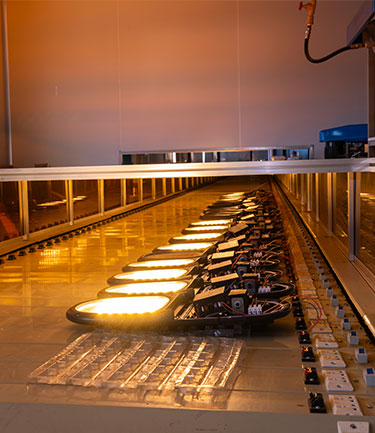
An OEM or ODM LED street light project can become costly when requirements are unclear, technical feasibility is not reviewed early, or samples are approved without a controlled specification. Importers and Wholesalers may then face delays, unsuitable products, inconsistent repeat orders, or unexpected changes during production. These risks increase when a Supplier treats customization as a simple branding exercise. A structured workflow solves the problem by moving step by step from RFQ review and engineering evaluation to customization, prototype approval, mass production, and pre-shipment inspection.
A successful OEM or ODM LED street light project starts with complete RFQ information, followed by feasibility review, controlled optical, electrical and mechanical customization, prototype approval, and documented mass production inspection. Luxific supports project-oriented customization from technical design and prototyping through quality control and delivery preparation.
Step 1: Start with Complete RFQ Inputs and a Feasibility Review
The quality of an OEM or ODM project usually depends on the quality of the information provided at the beginning. A professional Manufacturer should understand the application before recommending a solution.
Information to Include in Your RFQ
- Road width and road layout
- Pole height and installation arrangement
- Target illuminance or lighting requirements
- Required quantity and expected order frequency
- Destination country or market
- Required certifications and compliance documents
- Operating environment and climate conditions
- Preferred optical distribution
- Electrical and control requirements
- Branding and packaging requirements
- Required delivery schedule
For a Wholesaler or regional distributor, providing these details early can reduce unnecessary revisions later. Instead of simply asking for a price for a specific wattage, buyers should explain where and how the LED street lights will be used.
What Happens During a Feasibility Review?
The Supplier and engineering team should review whether the requested configuration can be supported by an existing product platform or requires additional customization.
- Review the application and technical requirements.
- Identify available product platforms.
- Evaluate customization requirements.
- Check optical, electrical, and mechanical feasibility.
- Review certification implications.
- Confirm sample and production requirements.
- Prepare a commercial and technical proposal.
Luxific describes its OEM and ODM service as project-oriented and supported by technical design and engineering capability. Buyers can submit application requirements for review before moving into product development or customization.
RFQ Decision Matrix
| RFQ Area | Key Buyer Input | Why It Matters |
|---|---|---|
| Application | Road type and installation environment | Supports suitable product selection |
| Optics | Lighting target and distribution needs | Helps evaluate illumination suitability |
| Electrical system | Voltage and control requirements | Supports market compatibility |
| Compliance | Required certifications | Reduces market-entry risks |
| Branding | Logo and packaging requirements | Supports private-label development |
| Delivery | Quantity and target schedule | Supports production planning |
Step 2: Define Optical, Electrical and Mechanical Customization
Customizable LED street lights can involve far more than adding a logo. The scope of OEM or ODM work should be clearly defined before prototype development begins.
Optical Customization
Optical design should match the actual lighting application. Luxific product information describes multiple optical distributions for selected outdoor lighting products, helping projects address different road and area lighting requirements.
During the engineering review, buyers should clarify:
- Road width and geometry
- Pole spacing and mounting height
- Required lighting distribution
- Uniformity expectations
- Glare considerations
- Color temperature requirements
Electrical Customization
Electrical requirements may vary according to the destination market and project specification. Buyers should discuss the required voltage, control options, surge protection, and other relevant electrical requirements.
Selected Luxific product information includes options such as DALI, 0-10V, Astro Dim, and Step Dim controls, as well as photocell, NEMA socket, and ZHAGA options for certain product configurations. The exact availability should be confirmed for the selected model.
Mechanical and Brand Customization
Luxific states that its OEM and ODM services can include project-oriented customization of appearance, shell materials, size, dimensions, colors, logos, and packaging.
| Customization Area | Examples to Discuss | Approval Requirement |
|---|---|---|
| Appearance | Product style and external design | Approved design specification |
| Materials | Housing material selection | Technical feasibility review |
| Dimensions | Size and installation compatibility | Mechanical confirmation |
| Color | Standard or specified color requirements | Approved color reference |
| Branding | Logo placement and identification | Approved artwork |
| Packaging | Private-label packaging requirements | Approved packaging design |
Step 3: Prototype and Sample Approval
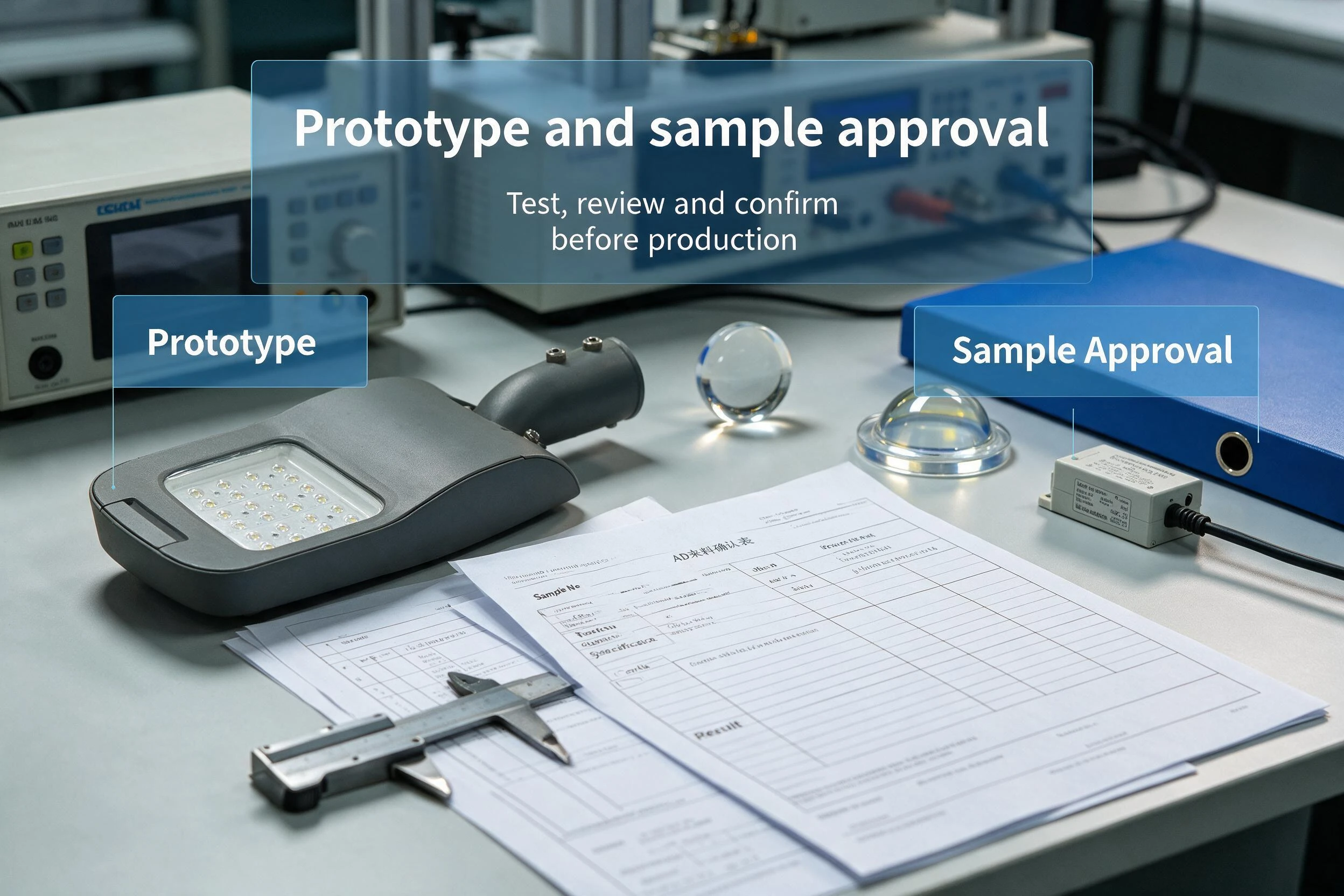
The prototype stage connects engineering requirements with the physical product. For importers, this is an important checkpoint before committing to mass production.
A Recommended Sample Approval Process
- Confirm the technical specification.
- Confirm the approved customization scope.
- Prepare the prototype or sample.
- Review appearance and mechanical details.
- Evaluate relevant technical performance.
- Check branding and packaging where applicable.
- Record requested changes.
- Approve the final specification before mass production.
Why Samples Matter for Regional Distributors
A sample can help a Wholesaler evaluate product quality, installation compatibility, appearance, and market suitability before committing to a larger order.
Luxific project information includes an example in which samples were supplied for on-site evaluation before a full order proceeded. This illustrates why sample testing can be particularly valuable when products will operate in demanding environments or when project requirements are highly specific.
Do Not Approve Only by Appearance
A product sample may look correct while still requiring technical confirmation. Buyers should compare the sample with the approved specification and verify relevant requirements for the destination market.
Step 4: Freeze the Approved Specification Before Mass Production
Once the prototype is approved, the project should move from development to controlled production. The Manufacturer and customer should have a common understanding of what has been approved.
The Production Specification Should Cover
- Product model and configuration
- Optical requirements
- Electrical configuration
- Mechanical dimensions
- Approved materials and finish
- Color requirements
- Control options
- Branding requirements
- Packaging details
- Applicable certification requirements
This step is particularly important for repeat orders. A documented specification helps the Supplier reproduce the approved configuration and helps the buyer maintain consistency across different projects and markets.
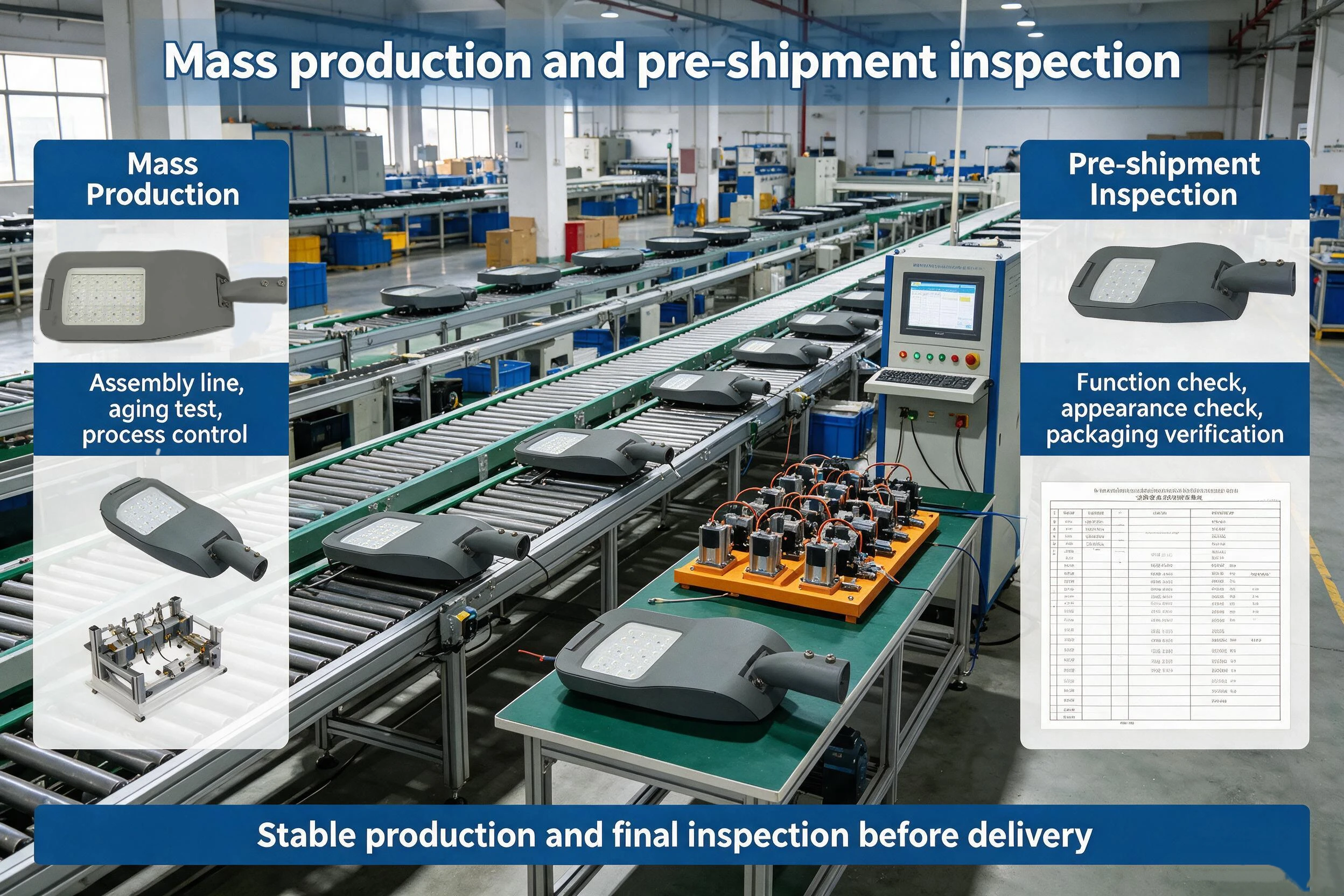
Step 5: Mass Production and Quality Control
Mass production should follow the approved project specification. Buyers should understand how the Manufacturer manages incoming materials, production processes, and finished-product inspection.
Luxific presents strict quality testing and quality control as part of its manufacturing approach. For specific projects, buyers should agree in advance on the inspection requirements relevant to the selected product.
A Practical Production Control Workflow
- Confirm the approved production specification.
- Prepare materials and components.
- Carry out incoming quality checks according to the production process.
- Assemble products according to approved requirements.
- Conduct in-process inspections.
- Perform final quality checks.
- Prepare approved products for packaging.
- Complete pre-shipment inspection procedures.
Step 6: Conduct Pre-Shipment Inspection Before Delivery
Pre-shipment inspection provides a final opportunity to confirm that the finished order matches the agreed requirements before goods leave the factory.
Pre-Shipment Inspection Checklist
- Correct product model and configuration
- Approved quantity
- Appearance and workmanship
- Relevant functional checks
- Correct labeling and branding
- Packaging according to approved requirements
- Available documentation
- Shipping marks and order identification
For project orders, importers may also establish additional inspection requirements based on the customer specification. Clear communication before production is usually more effective than trying to solve disagreements after goods are ready for shipment.
How Luxific Supports OEM and ODM LED Street Light Projects
Luxific is positioned as a professional outdoor LED lighting Manufacturer with experience in LED street lighting and project-oriented customization. Its company information describes OEM and ODM support from technical design and prototyping through quality control and logistics preparation.
The available customization scope includes:
- Project-oriented product design
- Appearance customization
- Material selection
- Size and dimension adaptation
- Custom color options
- Logo integration
- Customized packaging
For importers and distributors, the value of working with a capable Supplier is not simply receiving a customized product. It is having a clear workflow that connects the RFQ, engineering review, sample approval, production specification, quality control, and final delivery.
Build a Repeatable OEM/ODM Sourcing Process
The strongest OEM and ODM projects are managed as a controlled process rather than a series of separate conversations. Every major decision should be connected to an approved specification.
- Submit complete project requirements.
- Complete the feasibility review.
- Define the customization scope.
- Develop and evaluate the prototype.
- Approve the final specification.
- Begin controlled mass production.
- Complete pre-shipment inspection.
- Maintain approved specifications for future orders.
Start Your LED Street Light OEM or ODM Project
Send Luxific your road dimensions, pole height, target illuminance, required quantity, market certifications, and delivery deadline. Our team can review your requirements, discuss suitable Customizable OEM or ODM options, and help prepare an appropriate LED street light selection and quotation.