
Why Poor Municipal Street Lighting Design Can Become a Citywide Risk
When municipal street lighting is selected by wattage or fixture price alone, cities can face uneven illumination, glare, dark spots, excessive energy use, and costly maintenance. These problems become more serious when pole spacing, road geometry, and optical distribution are decided without photometric validation. The result can be unsafe roads, failed project specifications, and expensive redesigns. A better approach is to design from the road conditions backward: define illuminance and uniformity targets, coordinate pole height and spacing, select suitable Type I–V optics, and validate the complete layout before procurement.
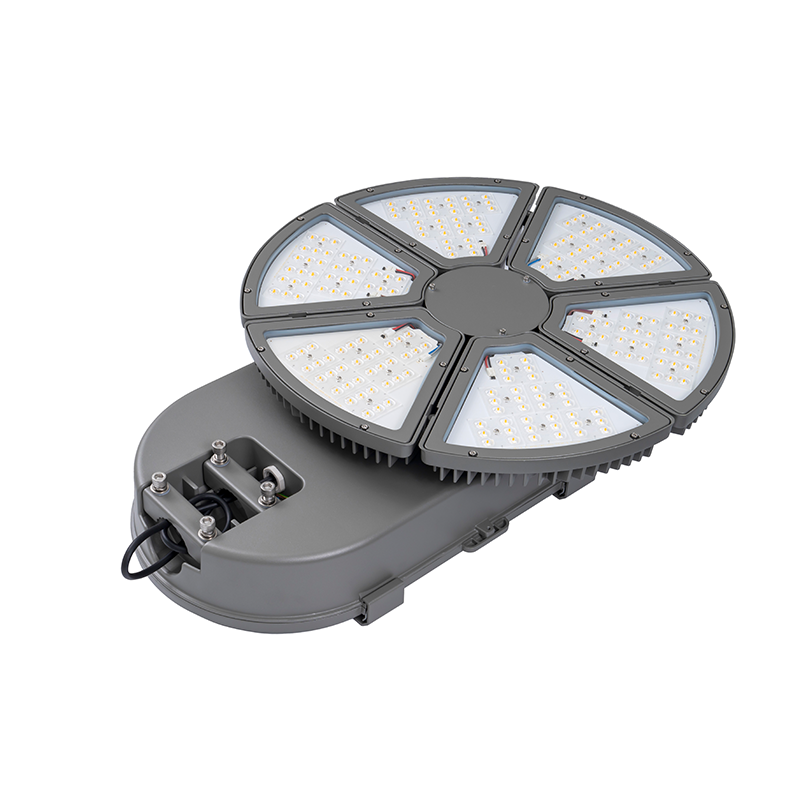
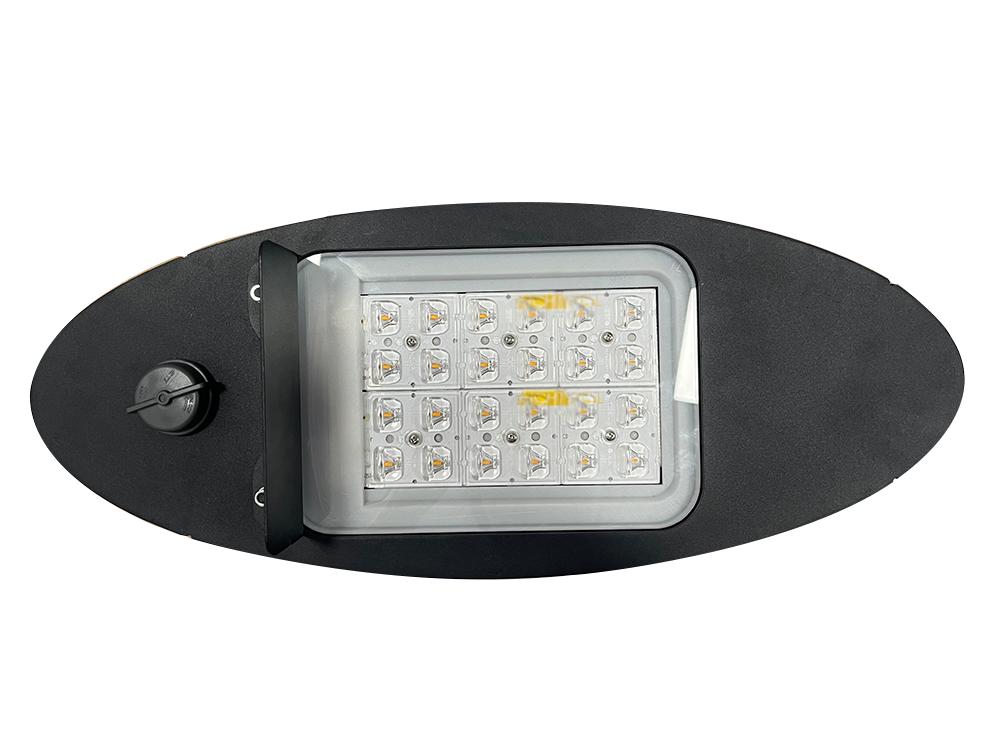
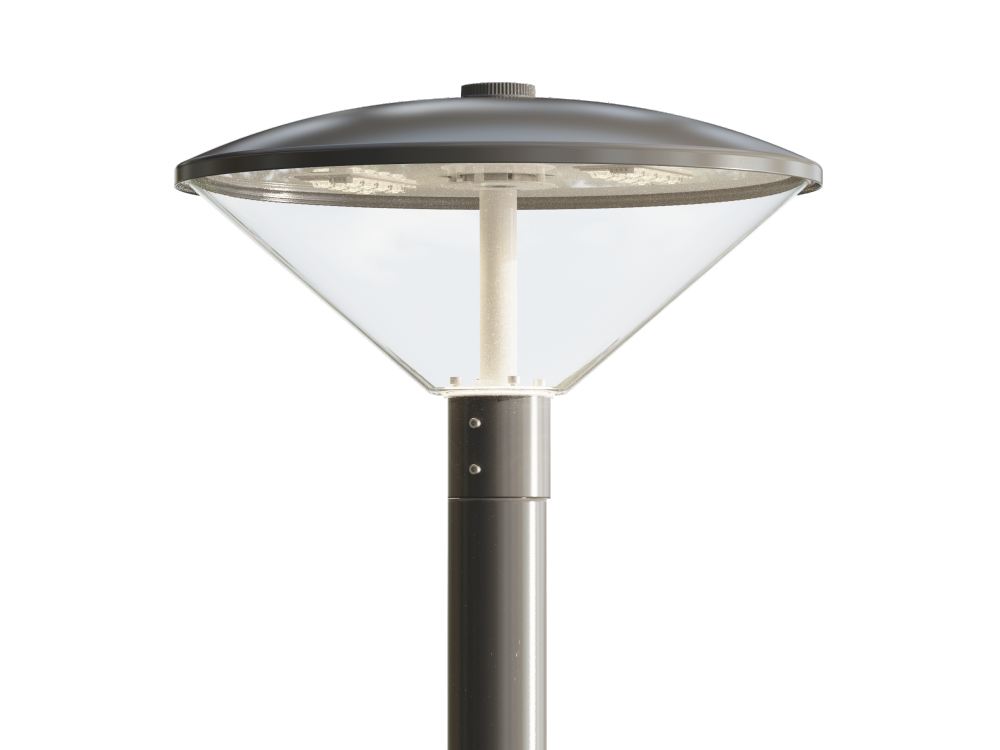
Effective municipal street lighting should balance illuminance or luminance, uniformity, pole geometry, optical distribution, glare control, and verified photometric performance. Luxific provides LED street lighting solutions with Type I–V optical options, technical design support, OEM and ODM customization, and photometric analysis for project-specific requirements.
1. Set Illuminance, Luminance and Uniformity Targets First
Street lighting design should begin with the road function and applicable local or project lighting standard, not with a fixed LED wattage. Illuminance is commonly expressed in lux, while road luminance considers how bright the pavement appears to the driver. Uniformity is equally important because high average illumination does not compensate for dark areas between poles.
Match the Target to the Road Environment
Municipalities, utility operators, EPC contractors, and lighting integrators should identify the actual application before selecting a fixture. Residential streets, urban roads, highways, pedestrian areas, and intersections can require different lighting approaches.
- Identify road classification, traffic level, pedestrian activity, and surrounding land use.
- Define the required average illuminance or luminance according to the applicable project standard.
- Specify minimum and overall uniformity requirements rather than evaluating average brightness alone.
- Consider glare, visual comfort, intersections, crossings, curves, and conflict areas.
- Confirm whether energy efficiency, smart dimming, or environmental requirements are included in the specification.
| Design Input | Why It Matters | What to Confirm |
|---|---|---|
| Illuminance or luminance | Defines the required lighting performance | Target value and applicable standard |
| Uniformity | Reduces dark spots and inconsistent visibility | Minimum and overall uniformity criteria |
| Road geometry | Determines light distribution requirements | Road width, lanes, median and sidewalks |
| Traffic and users | Influences safety and visual requirements | Vehicle speed, pedestrians and cyclists |
Use a Design Target Before Choosing Wattage
Two 150 W LED street lights can produce very different results when their optics, installation heights, and distributions differ. For a professional Supplier or Manufacturer, the correct question is not simply how many watts are required, but whether the complete installation achieves the specified lighting performance.
2. Coordinate Pole Height, Spacing and Arrangement
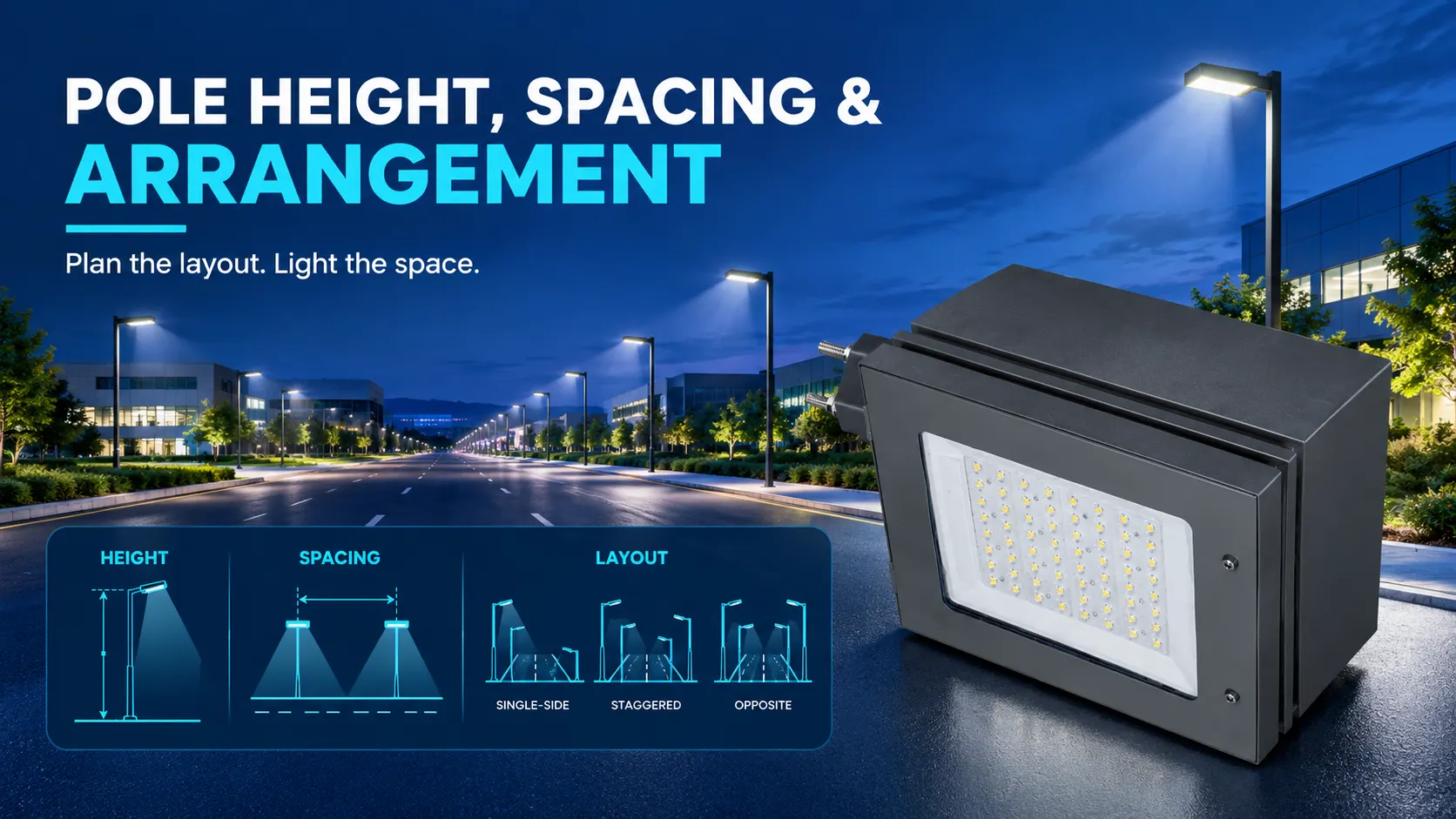
Pole geometry directly influences how efficiently a luminaire can distribute light across the road. Pole height, spacing, outreach, mounting angle, road width, and arrangement should therefore be considered as one design system.
Balance Height and Spacing
A higher mounting position can help distribute light across a larger area, while a lower position may require closer spacing and careful glare control. Excessive spacing can create dark zones, while overly close spacing may increase unnecessary energy use and visual discomfort.
- Measure the road width and carriageway configuration.
- Record the proposed pole height, outreach, and mounting angle.
- Define the initial pole spacing and arrangement.
- Apply the selected luminaire and optical distribution to the layout.
- Run photometric calculations and adjust spacing, mounting height, or optics until the required performance is achieved.
For projects with unusual road geometry, a Customizable solution can be more practical than forcing a standard fixture into an unsuitable layout. Luxific supports project-oriented design and can adapt product dimensions, materials, colors, and configurations through OEM and ODM services.
| Variable | Potential Design Effect | Recommended Approach |
|---|---|---|
| Pole height | Changes coverage, glare and required spacing | Evaluate together with optics and road width |
| Pole spacing | Affects uniformity and dark areas | Validate through photometric simulation |
| Mounting angle | Changes light distribution on the pavement | Optimize for the actual road geometry |
| Arrangement | Influences cross-road and longitudinal uniformity | Compare single-side, staggered and opposite layouts |
3. Select Type I–V Optics and Control the Cutoff
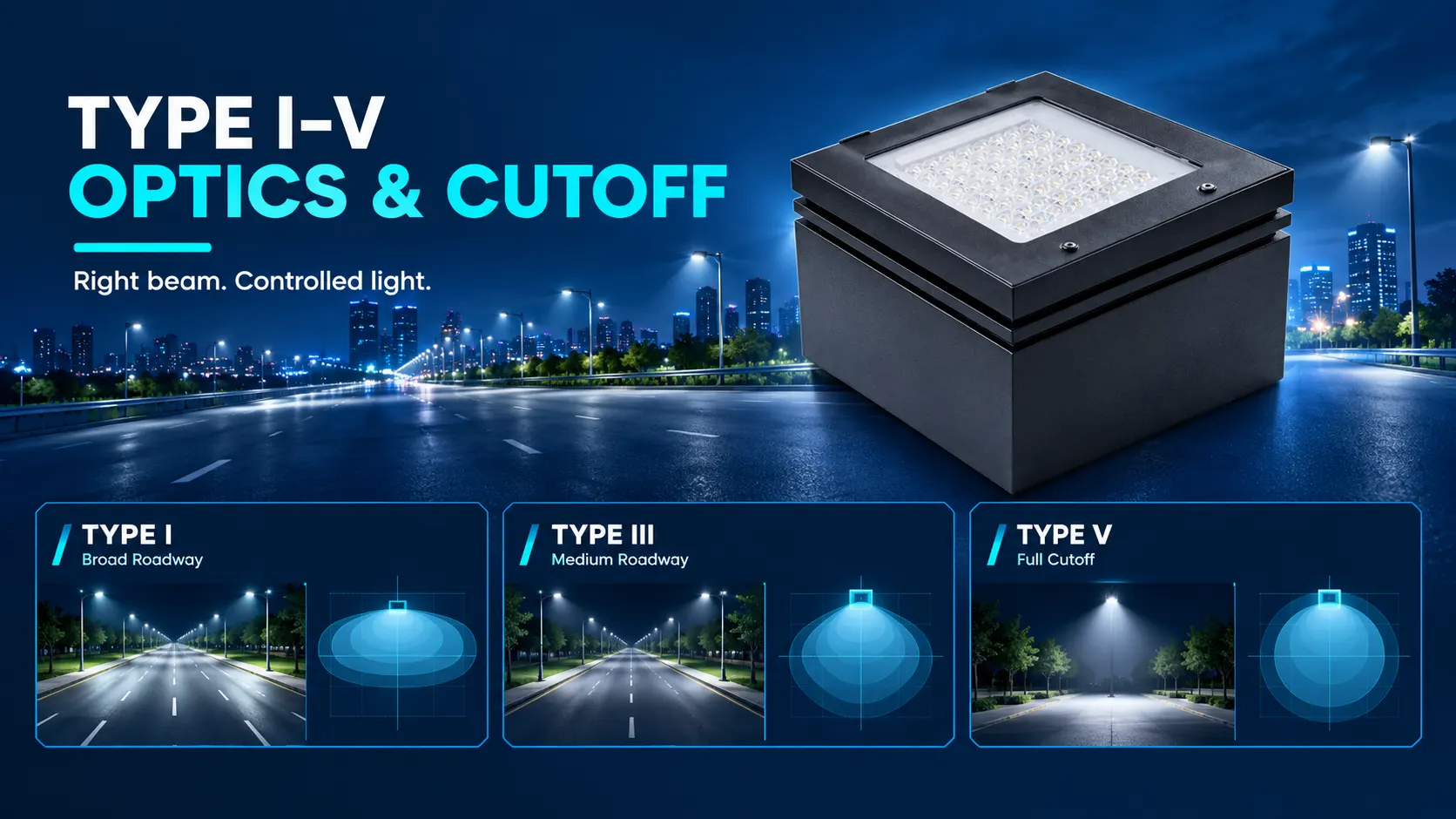
Optics determine where the available LED light goes. A high-output fixture with unsuitable optics can still produce poor road illumination, excessive glare, or unwanted light spill. For municipal projects, optical selection should therefore follow the road geometry rather than the luminaire wattage.
Understand the Role of Type I–V Distribution
Luxific street lighting products include multiple optical distributions, including Type I–V options, allowing the light pattern to be adapted to different road applications. The product information also specifies optical control designed to support uniform illumination and reduced glare.
- Type I: Consider for narrower road or pathway applications where a focused distribution is appropriate.
- Type II: Useful where broader forward distribution is needed for road edges and relatively narrow roadways.
- Type III: Suitable for wider roadway applications requiring broader forward coverage.
- Type IV: Consider when a strong forward distribution is needed for specific roadway layouts.
- Type V: Provides a more symmetrical distribution for applications where light must be distributed around the mounting position.
These descriptions should be treated as starting points rather than automatic selections. The final optic should be confirmed through the actual road width, pole arrangement, mounting height, and photometric calculation.
Cutoff and Glare Matter Beyond Road Illumination
Municipal lighting can affect drivers, pedestrians, nearby residences, and the surrounding environment. Proper shielding, beam control, and mounting orientation can reduce unnecessary light trespass while maintaining useful illumination on the road. Luxific product information includes multiple beam distributions and optical control features intended to support adaptable illumination and glare reduction.
4. Validate the Design with IES or LDT Photometric Files
A professional lighting proposal should be verified before mass procurement. IES and LDT photometric files allow lighting designers to model the actual luminaire output within professional calculation software. This helps project teams evaluate illuminance, uniformity, spacing, mounting height, and potential dark areas before installation.
A Practical Photometric Validation Process
- Collect the road dimensions, pole positions, mounting height, outreach, and mounting angle.
- Select a preliminary LED street light and optical distribution.
- Obtain the appropriate photometric file and product technical data.
- Build the road layout in lighting calculation software.
- Check average and minimum illuminance or luminance together with uniformity.
- Review glare, light spill, and areas outside the roadway.
- Adjust fixture power, optics, spacing, or mounting configuration when required.
- Finalize the technical schedule only after the simulated design meets the project criteria.
What Buyers Should Request from a Supplier
- Complete product datasheet and electrical specifications
- Applicable photometric files such as IES or LDT
- Optical distribution information
- Relevant testing and certification documents
- Installation and mounting information
- Warranty and maintenance information
- Project-specific photometric analysis where required
Luxific states that its engineering service covers technical design, prototyping, strict quality control, and logistics. Its street lighting product information also lists optical options and certifications including CE, CB, ENEC, EMC, TM21, LM79 and IEC-62471 for the specified product.
5. Turn the Lighting Design into a Procurement Decision
For cities and utility operators, the best lighting specification should connect technical performance with procurement risk. A Wholesaler, EPC contractor, or public lighting company should be able to compare suppliers using the same technical criteria instead of comparing fixture prices alone.
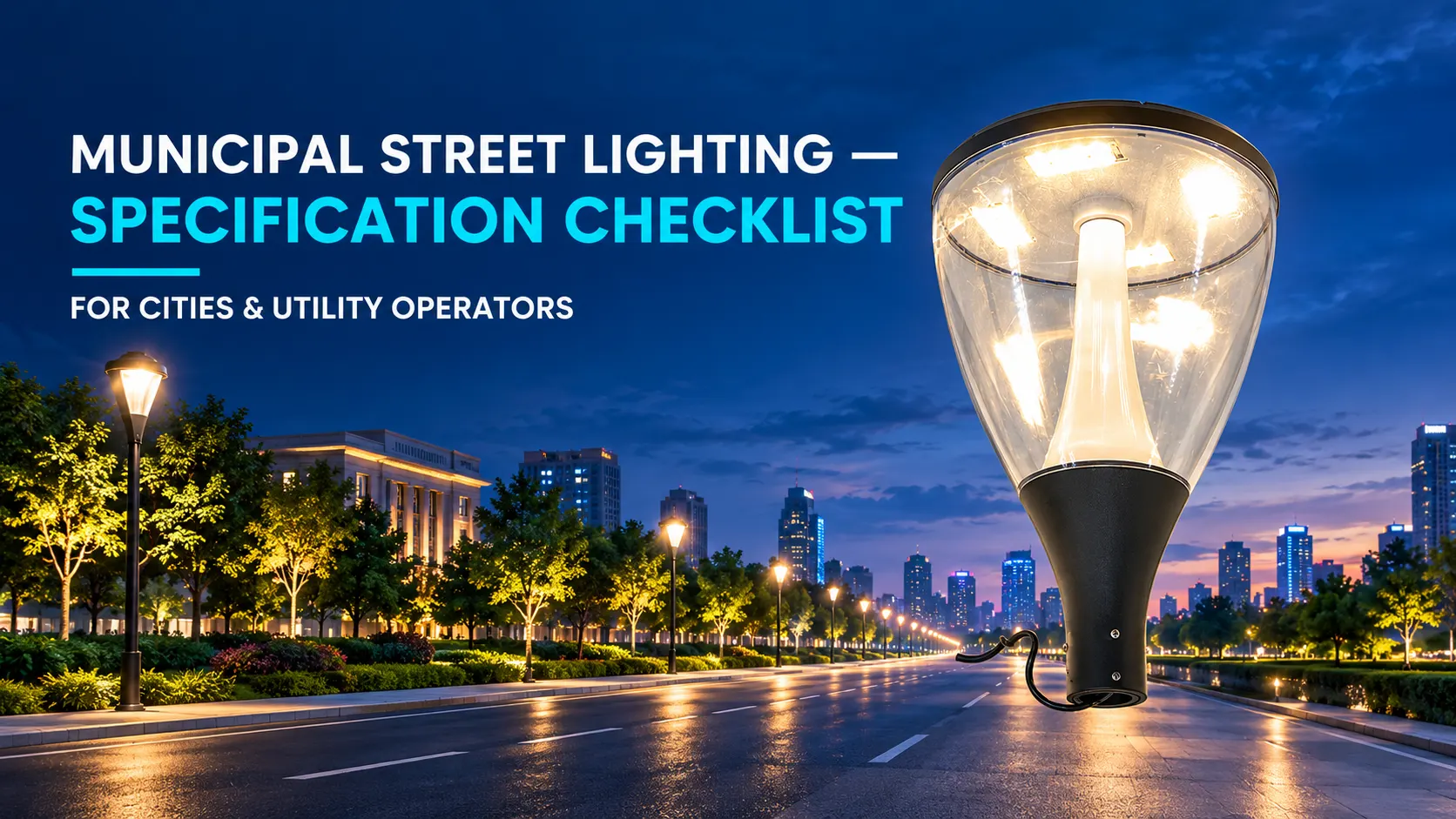
Municipal Street Lighting Selection Checklist
- Road classification and application confirmed
- Illuminance or luminance target defined
- Uniformity requirement defined
- Pole height and spacing established
- Optical distribution selected based on geometry
- Glare and light trespass considered
- IES or LDT photometric data available
- Required market certifications identified
- Warranty and maintenance requirements reviewed
- Delivery schedule and project quantity confirmed
- OEM or ODM requirements identified if customization is needed
Luxific is a professional LED outdoor lighting Manufacturer with experience in street lighting and project-oriented customization. Its documented capabilities include OEM and ODM services, in-house R&D, technical design, quality testing, and international certification support.
Conclusion
Good municipal street lighting starts with the road, not the fixture. Send Luxific your road dimensions, pole height, target illuminance, quantity, required market certifications, and delivery schedule. Our team can use these inputs to recommend suitable optics and prepare a project-specific selection or quotation.