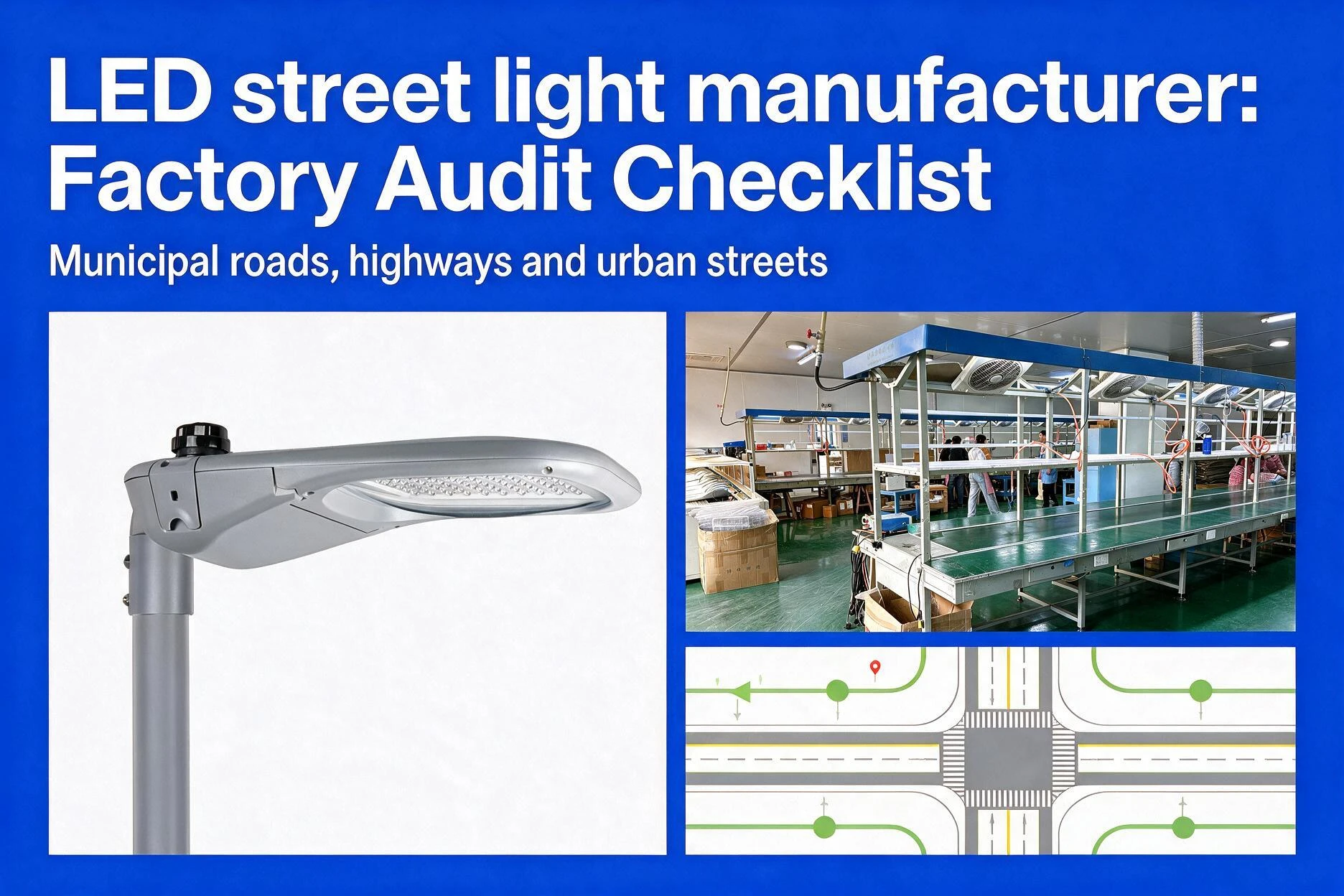
Why the Wrong Street Light Selection Can Increase Project Risk and Cost
Commercial estates, campuses, and public infrastructure require more than high brightness. If the wrong light output, optical distribution, pole spacing, or control system is selected, projects can suffer from dark areas, glare, uneven visibility, energy waste, and difficult maintenance. These problems may lead to complaints, redesign, delayed installation, and higher operating costs. The risk increases when procurement focuses only on wattage or purchase price. A better approach connects road classification, lighting targets, pole geometry, optics, controls, certifications, and lifecycle cost before ordering.
How to Select Commercial LED Street Lights
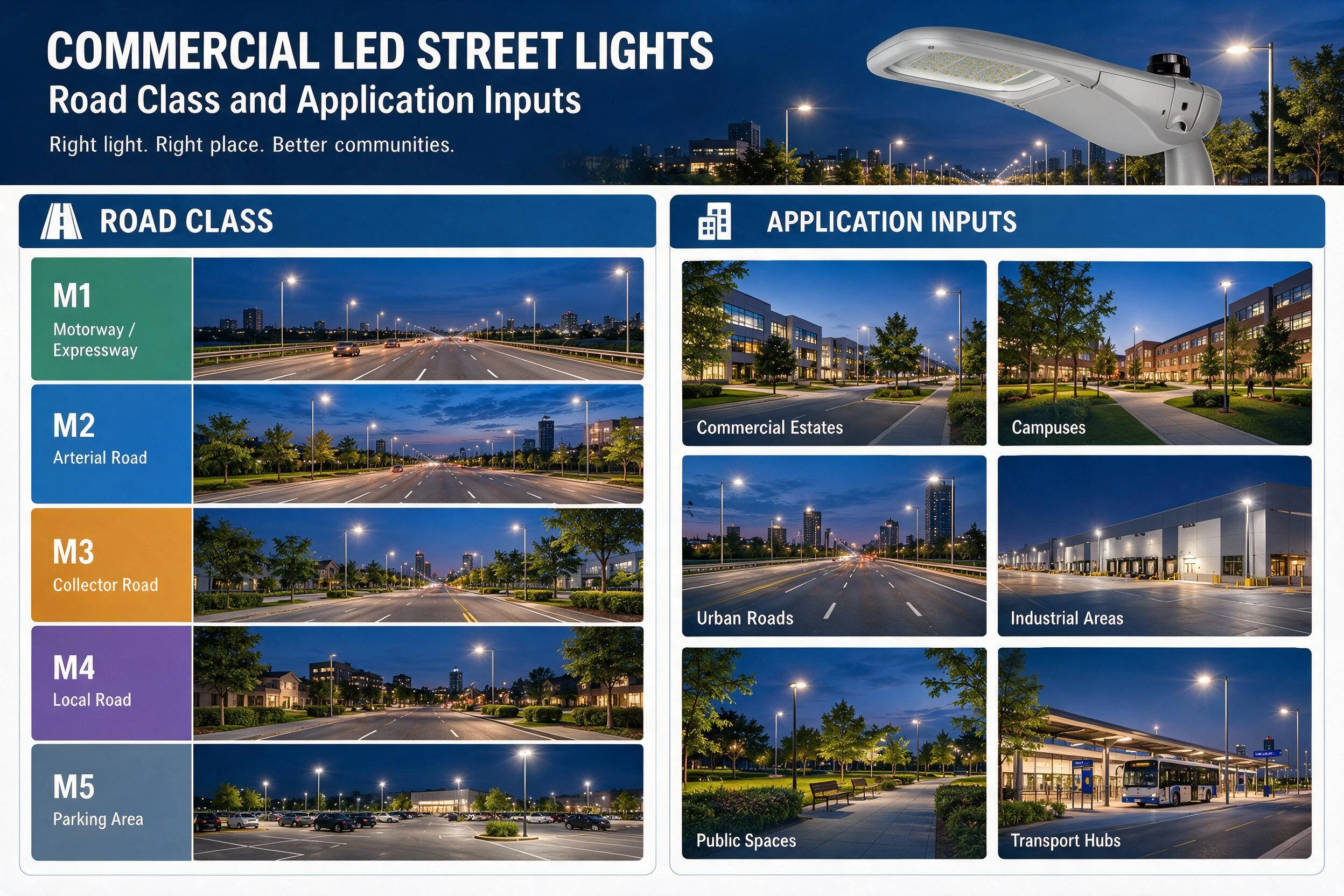
The right commercial LED street light should match the road class, application, required illuminance, maintained light output, optical distribution, pole geometry, controls, certifications, and lifecycle cost. Luxific combines project focused engineering, customizable lighting solutions, OEM and ODM support, and production experience to help buyers develop suitable configurations for different projects.
1. Start With Road Class and Application Inputs
The first selection decision should be based on where the lighting will operate. A commercial estate access road does not necessarily have the same requirements as a public arterial road, campus roadway, industrial site, or municipal infrastructure project.
Define the Application Before Choosing the Fixture
- Commercial estate roads and internal access roads
- University and corporate campus roads
- Municipal streets and urban roads
- Highways and major access routes
- Industrial areas and logistics facilities
- Parking areas and pedestrian zones
- Ports, airports, and other infrastructure environments
For each project, collect the basic site information before comparing products. This prevents a catalogue model from being selected before the actual lighting requirement is understood.
Project Information Checklist
- Identify the road classification and application.
- Measure road width and lane arrangement.
- Record the planned pole height and mounting position.
- Determine pole spacing or the available installation positions.
- Confirm the required illuminance and uniformity targets.
- Identify local environmental conditions.
- Confirm the required market certifications and testing documents.
- Determine quantity and expected delivery schedule.
Luxific develops outdoor lighting for applications including highways, urban streets, residential areas, car parks, cycling paths, and pedestrian zones. Its project approach allows the lighting configuration to be considered according to the actual application rather than relying on one standard fixture for every site.
2. Compare Lumens, Efficacy, and Maintained Light Output
Lumen output is important, but it should not be treated as the only measure of street light performance. Two luminaires with similar lumen ratings can produce different results because of optical efficiency, beam distribution, mounting geometry, driver performance, and light loss over time.
What Buyers Should Compare
- Lumens indicate the total quantity of visible light produced by the luminaire.
- Efficacy describes how much light is produced for each unit of electrical power.
- Maintained output considers how lighting performance changes during the operating life of the product.
- Optical efficiency indicates how effectively available light is directed toward the required area.
| Selection factor | What to review | Why it matters |
|---|---|---|
| Lumen output | Total fixture output | Provides a starting point for lighting calculations |
| Efficacy | Light output compared with power consumption | Helps evaluate energy use |
| Maintained output | Expected performance during service life | Supports long term lighting planning |
| Optical efficiency | Light directed toward the target area | Helps avoid unnecessary light outside the required zone |
| Power | Electrical consumption of the selected configuration | Influences operating cost |
Do Not Select Only by Wattage
A higher wattage fixture is not automatically a better solution. If the optical distribution is unsuitable, additional power may increase light outside the target area without solving uniformity problems. A professional Supplier should therefore provide enough technical information for the buyer to compare complete lighting performance.
For wholesale projects, a Wholesaler or contractor can use this information to compare products on both initial price and expected operating cost. The objective should be the lowest practical lifetime cost rather than simply the lowest purchase price.
3. Match Optical Distribution With Pole Geometry
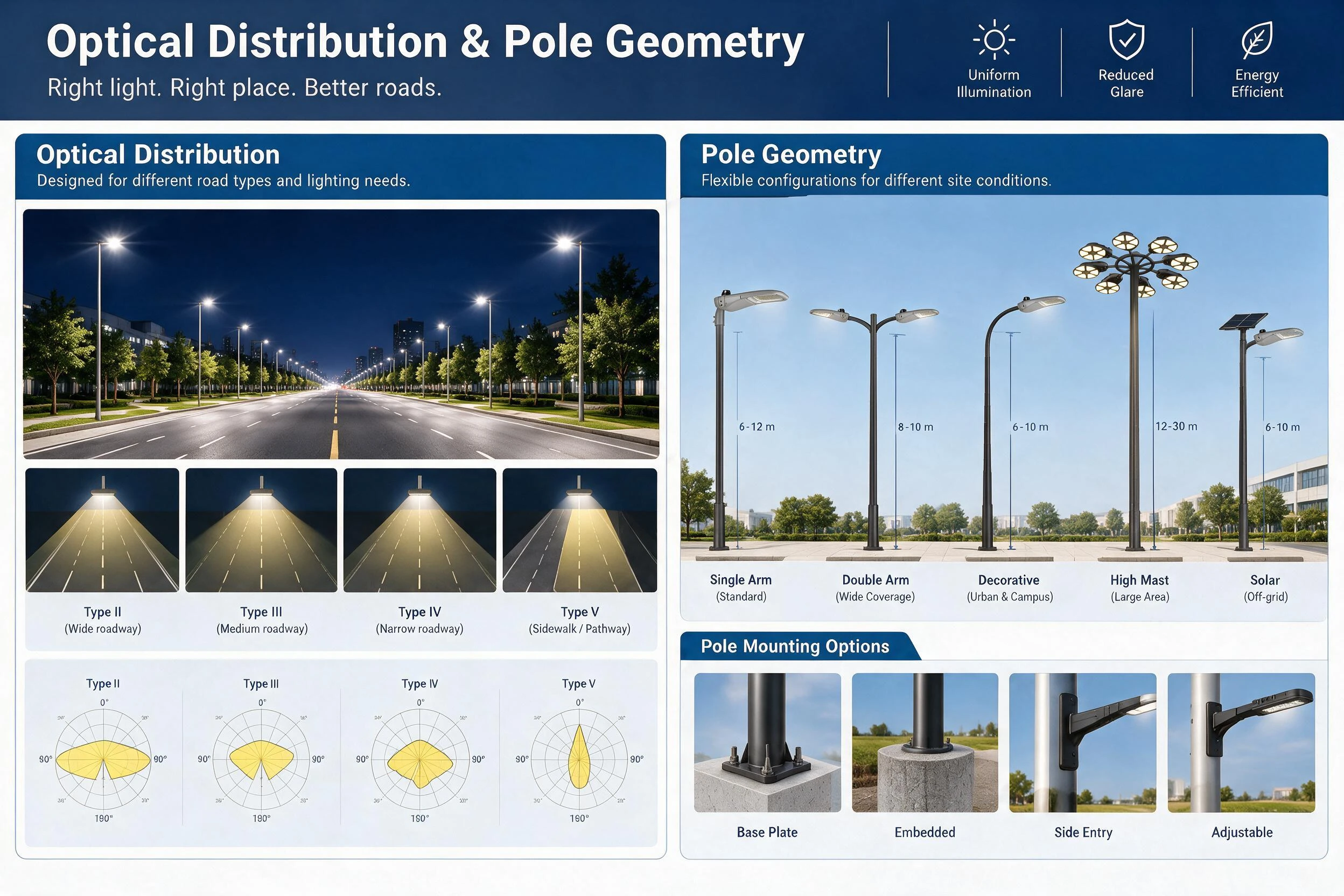
Optics and pole geometry should be designed together. Road width, mounting height, pole spacing, arm length, installation position, and luminaire orientation all influence the final lighting pattern.
Consider Type I to Type V Optical Distribution
- Type I can be considered for narrower roadway arrangements where concentrated distribution is appropriate.
- Type II provides broader roadway coverage for suitable side mounting applications.
- Type III can extend illumination farther across wider road areas.
- Type IV can support strong forward distribution from side mounted positions.
- Type V provides a more symmetrical distribution for suitable central or area lighting arrangements.
The final choice should always be confirmed through photometric calculation because optical suitability depends on the complete installation geometry.
Review Pole Height and Spacing Together
- Measure the road width.
- Confirm the pole height.
- Determine the proposed spacing.
- Identify single side, opposite side, staggered, or central arrangements.
- Select an appropriate optical distribution.
- Run a photometric calculation.
- Adjust optics, mounting height, spacing, or light output when required.
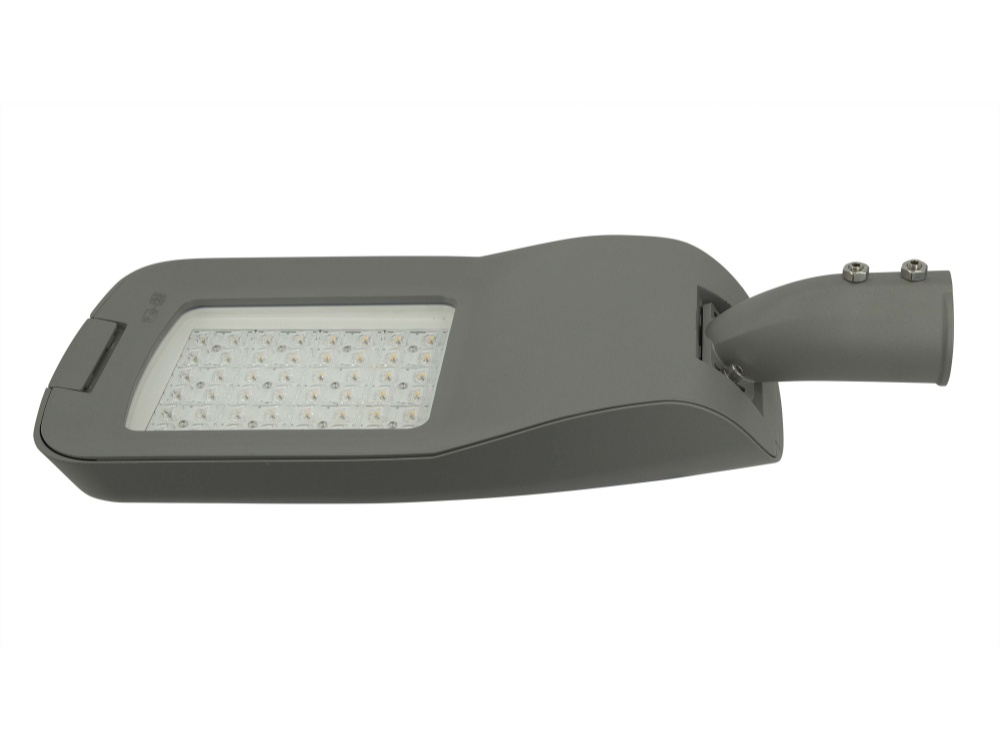
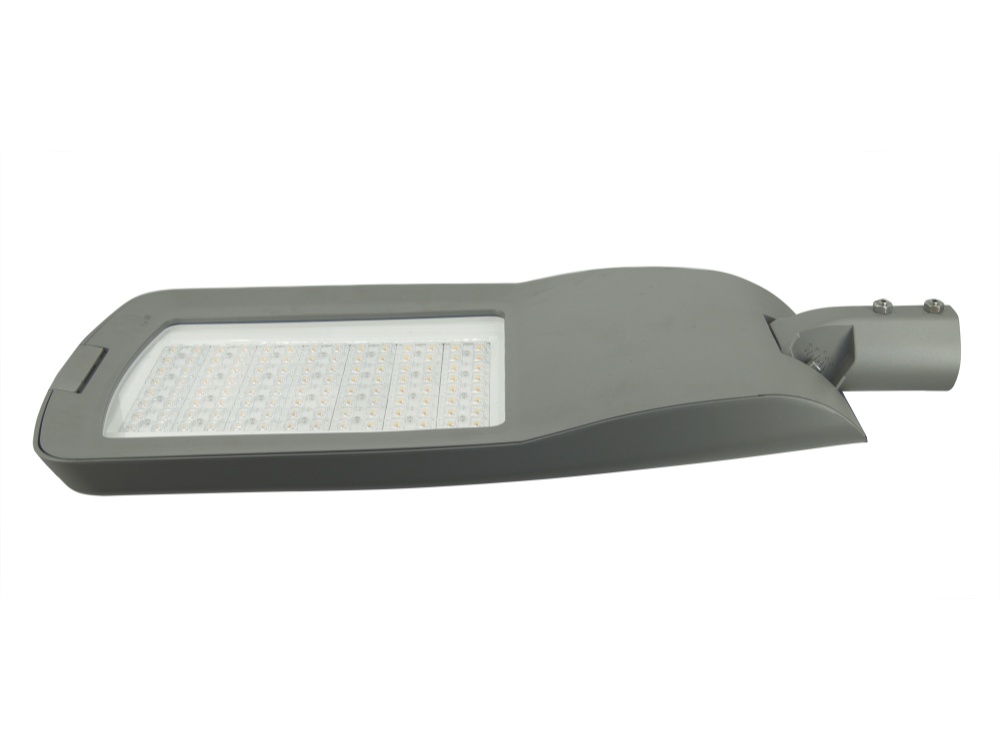
Luxific street light solutions include multiple Type I to Type V optical distributions, allowing different configurations to be evaluated for different road applications. The PIECES series also provides options for smart controls and enhanced surge protection.
Control Glare and Unwanted Light
Light should reach the intended road area without unnecessarily affecting nearby properties, buildings, pedestrian areas, or surrounding environments. This is particularly important for campuses, residential areas, commercial developments, and infrastructure located close to sensitive spaces.
Luxific has applied asymmetric optical solutions to a large industrial port project and used photometric analysis to support broad area illumination while controlling unwanted light trespass.
4. Validate the Selection With Photometric Files
Photometric data provides a more reliable basis for product selection than catalogue specifications alone. IES or LDT files can be used in lighting design software to simulate how a luminaire performs under specific road and pole conditions.
What the Calculation Should Verify
- Average illuminance
- Minimum illuminance
- Uniformity
- Light distribution across lanes
- Potential glare and light spill
- Fixture quantity
- Pole spacing
- Mounting height
Recommended Validation Process
- Obtain the correct IES or LDT file for the proposed product and configuration.
- Enter the actual road dimensions into the lighting software.
- Input pole height, spacing, mounting position, and orientation.
- Test the proposed optical distribution.
- Review the calculated lighting results against the project requirement.
- Adjust the configuration if the results are not suitable.
- Keep the approved calculation as part of the technical project documentation.
This process is valuable for EPC contractors, municipalities, infrastructure contractors, lighting integrators, and project developers because it provides a technical basis for product approval and procurement.
5. Evaluate Controls, Certifications, and Project Compatibility
Modern commercial street lighting may require more than basic on and off operation. Depending on the project, dimming, photocell control, scheduled operation, or smart city integration can influence energy use and maintenance planning.
Control Options to Consider
- Photocell control
- DALI control
- Analog dimming
- Scheduled dimming
- Smart lighting integration
- NEMA or other project specific control interfaces
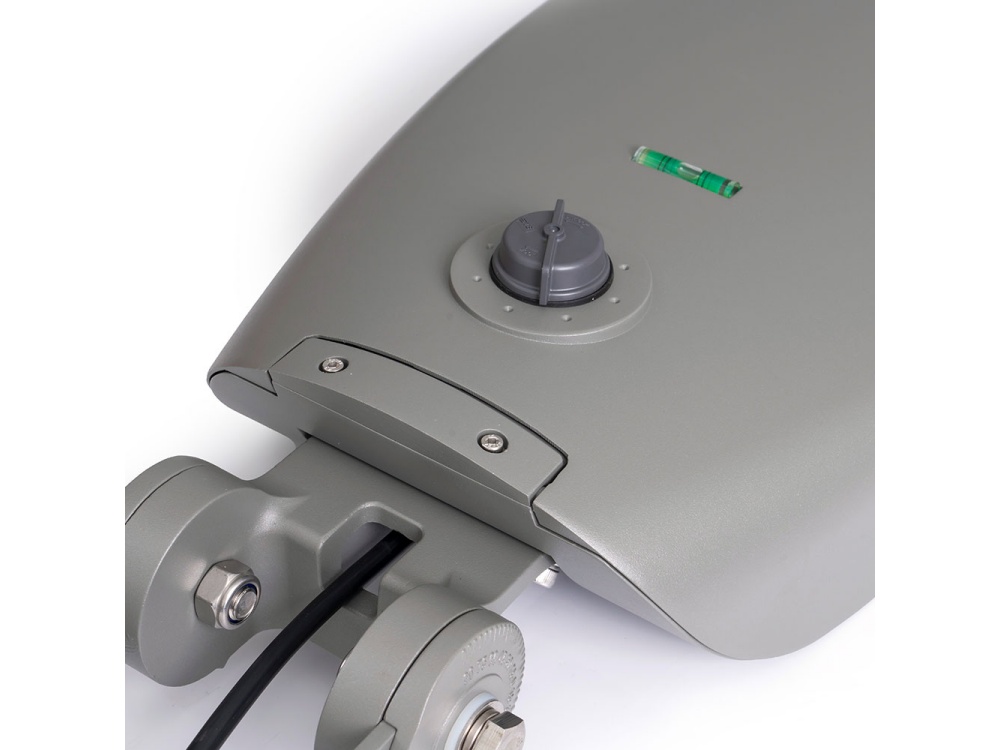
Luxific PIECES supports control inputs including DALI, analog dimming, Astro Dim, and Step Dim, with options such as photocell, NEMA socket, and ZHAGA interface for applicable configurations.
Check Certification Requirements Before Procurement
Certification requirements vary by destination market and project specification. Buyers should confirm the required documentation before placing an order rather than assuming that one certificate will satisfy every market.
- Confirm the applicable market requirements.
- Request relevant certificates and testing reports.
- Check that the documents correspond to the proposed product configuration.
- Include documentation requirements in the purchasing specification.
- Keep approved technical documents with the project records.
Luxific provides certification and testing documentation for applicable products and supports international project requirements. Its documented product portfolio includes certifications and testing references such as CE, CB, ENEC, EMC, TM21, LM79, and IEC 62471 for relevant models.
6. Select a Manufacturer Based on Total Project Value
For commercial and infrastructure projects, choosing a Manufacturer should involve more than comparing unit prices. Buyers also need to evaluate communication, technical support, production capability, customization, quality control, documentation, and delivery coordination.
Supplier Evaluation Checklist
- Can the Supplier provide project specific technical support?
- Can the product be adapted to the required application?
- Are relevant testing and certification documents available?
- Can the factory support the required order quantity?
- Is quality control clearly defined?
- Can the Supplier provide OEM or ODM support when required?
- Can delivery schedules be coordinated with the project program?
- Is technical communication efficient throughout the project?
Luxific provides OEM and ODM services covering project design, prototyping, product appearance, materials, dimensions, colors, branding, packaging, quality control, and logistics. This Customizable approach can be useful when standard catalogue products do not fully match a project specification.
7. Make the Final Decision With Lifecycle Cost in Mind
A professional street lighting decision should balance purchase cost, energy consumption, maintenance requirements, reliability, documentation, and expected service conditions.
| Cost consideration | Key question | Procurement focus |
|---|---|---|
| Purchase | What is the initial fixture cost? | Compare complete specifications |
| Energy | How much power will the system consume? | Review efficacy and control strategy |
| Maintenance | How difficult is servicing? | Review construction and maintenance access |
| Replacement | How easy is future product replacement? | Consider product continuity and support |
| Compliance | Does the product meet project requirements? | Verify applicable documentation |
| Delivery | Can supply match the installation schedule? | Confirm production and logistics planning |
For a contractor or Wholesaler, this approach helps move the purchasing decision from simple price comparison toward total project value. The right street light is the product and configuration that can meet the required performance while supporting practical installation, energy management, maintenance, compliance, and delivery objectives.
Conclusion: Prepare Your Project Data for Accurate Selection
Send Luxific your road dimensions, pole height, target illuminance, quantity, required market certifications, and delivery schedule. Our team can use these inputs to support product selection, optical configuration, technical evaluation, and project quotation.