Why Poor Municipal Street Lighting Can Become a Citywide Cost Problem
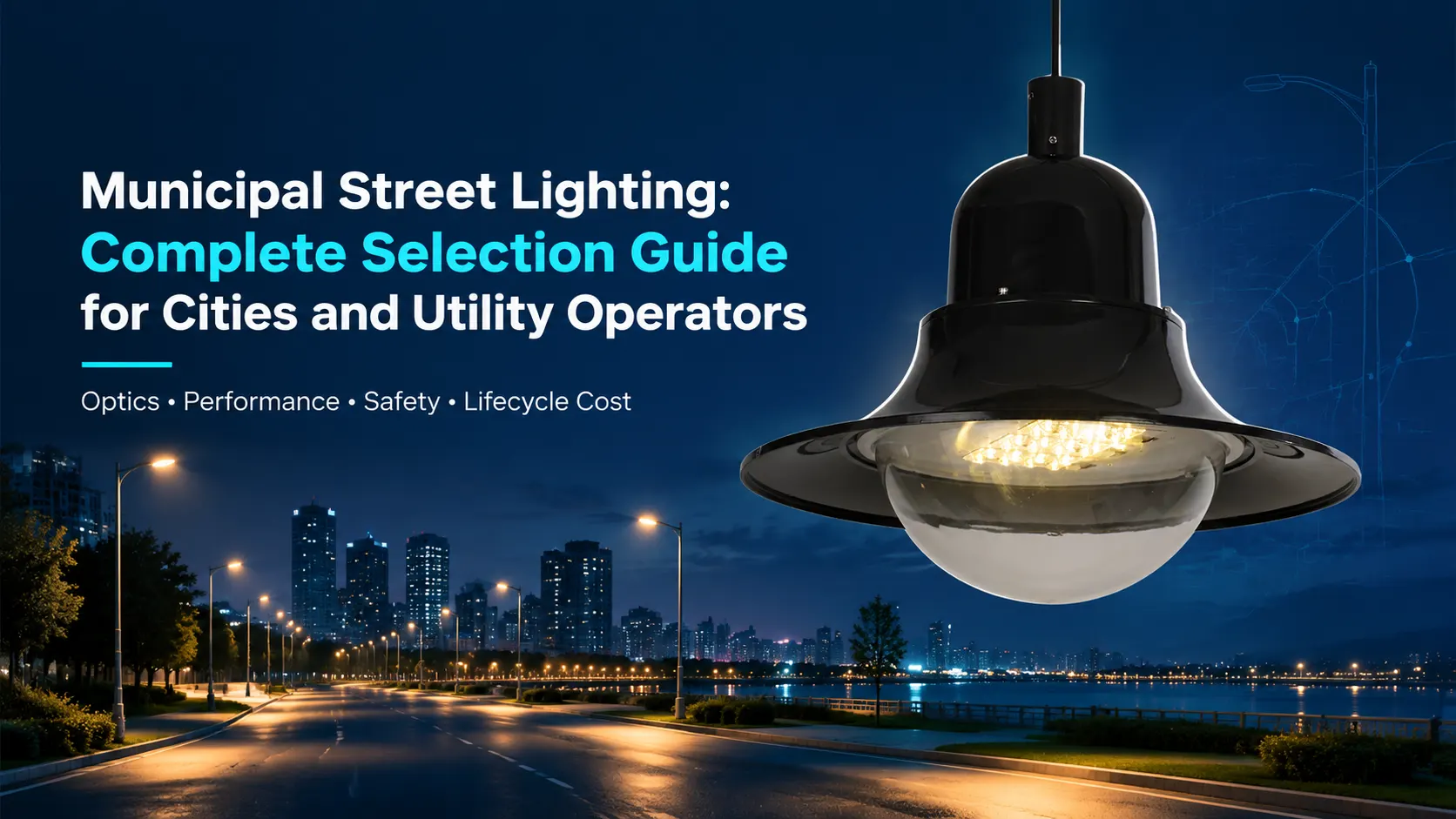
Municipal street lighting must balance safety, compliance, energy use, maintenance, and public expectations. Choosing fixtures by purchase price alone can create uneven illumination, excessive glare, premature failures, or higher maintenance costs. For cities and utility operators, the real risk is a lighting system that performs well on paper but becomes expensive to operate. A structured selection process helps align road requirements, optical design, controls, certifications, and lifecycle cost before procurement.
Municipal street lighting should be selected by road classification, required illuminance and uniformity, optical distribution, pole geometry, controls, certifications, and lifecycle cost. Luxific, a professional LED street light Manufacturer, supports project-oriented customization, OEM and ODM services, technical design, quality testing, and international certification requirements.
1. Start With Road Class and Application Inputs

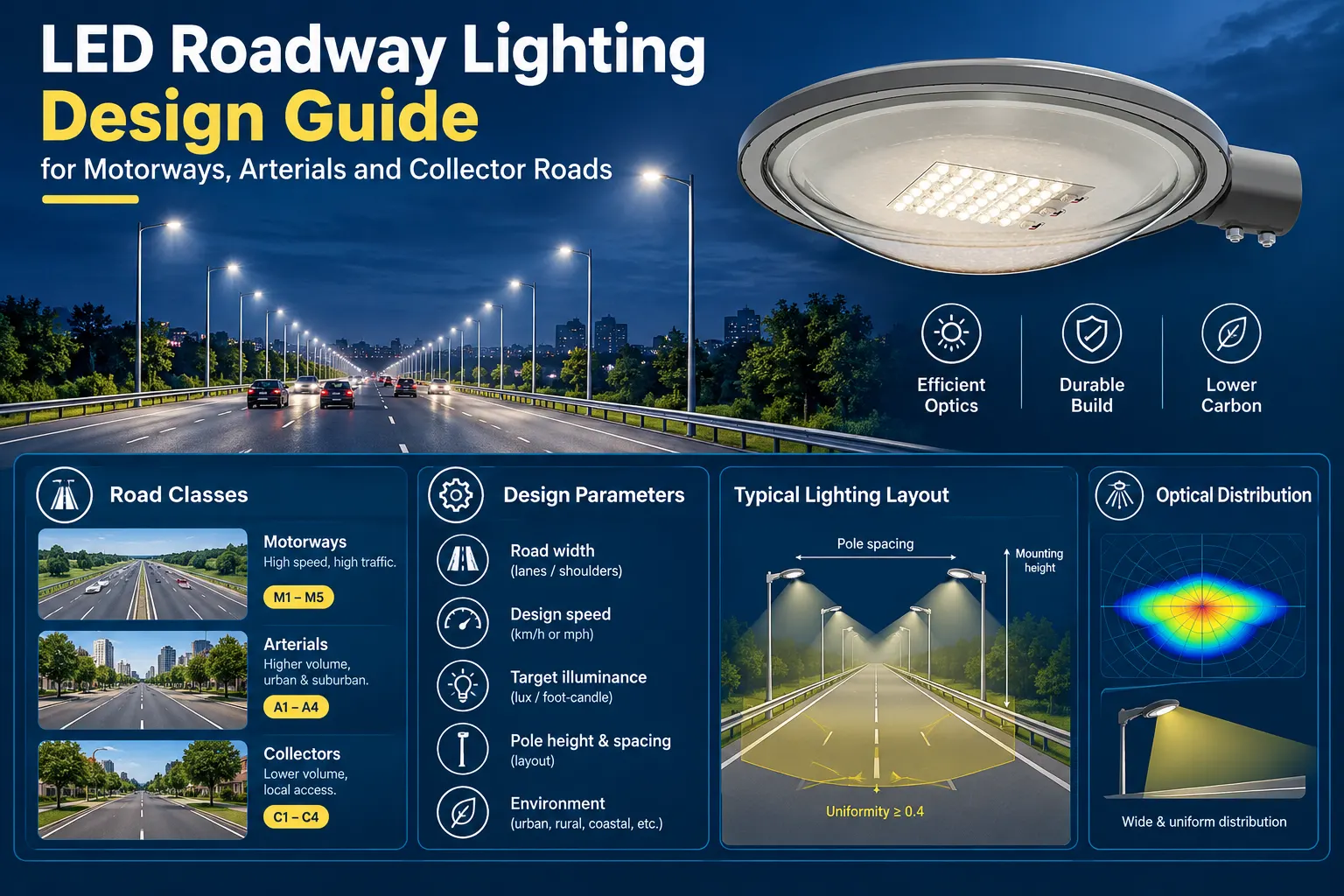
The correct street light depends first on where and how the road is used. A residential street, urban arterial, highway, intersection, and pedestrian-focused area can require very different lighting designs.
Key Project Inputs
- Road classification and traffic conditions
- Road width, lane arrangement, and median configuration
- Pole height, spacing, outreach, and mounting angle
- Target illuminance and required uniformity
- Pedestrian, bicycle, and intersection requirements
- Environmental conditions and installation location
- Existing electrical infrastructure and input voltage
- Local lighting standards and project specifications
For highway and major urban projects, the objective is not simply maximum brightness. The design should provide appropriate visibility while controlling glare, light spill, energy consumption, and maintenance requirements.
A Practical Road Selection Matrix
| Application | Primary Design Priority | Typical Selection Focus |
|---|---|---|
| Residential streets | Safety and visual comfort | Balanced output, controlled optics, suitable CCT |
| Urban arterials | Traffic visibility and uniformity | Efficient LED system and precise distribution |
| Highways | Long-distance visibility | Optics, mounting geometry, glare control |
| Intersections | Conflict-area visibility | Higher design attention and optimized distribution |
| Pedestrian areas | Comfort and security | Appropriate light level, CCT, and visual control |
2. Evaluate Lumens, Efficacy and Maintained Output
Lumens indicate the total light output of a fixture, but lumens alone do not determine whether a road will be adequately illuminated. The optical system, mounting height, spacing, road geometry, and fixture orientation determine how effectively that output reaches the required area.
Look Beyond Initial Lumen Output
- Define the required lighting performance for the road application.
- Check fixture lumen output and luminous efficacy.
- Consider expected maintained performance over the operating life.
- Compare energy consumption at the system level.
- Verify the photometric design before final procurement.
For city and utility operators, maintained output is especially important because the lighting system must continue providing useful illumination after years of operation. A higher initial lumen rating is not automatically the better choice if the optical distribution is poorly matched to the road.
Color Temperature Should Match the Application
Luxific’s lighting guidance distinguishes warm, neutral, and cooler outdoor lighting according to application. For municipal projects, CCT should be selected according to visibility, surrounding environment, project specifications, and community considerations rather than treated as a universal specification. The company’s outdoor lighting experience includes applications where 3000K, 4000K, and 5000K are selected for different functional purposes.
3. Match Optical Distribution With Pole Geometry
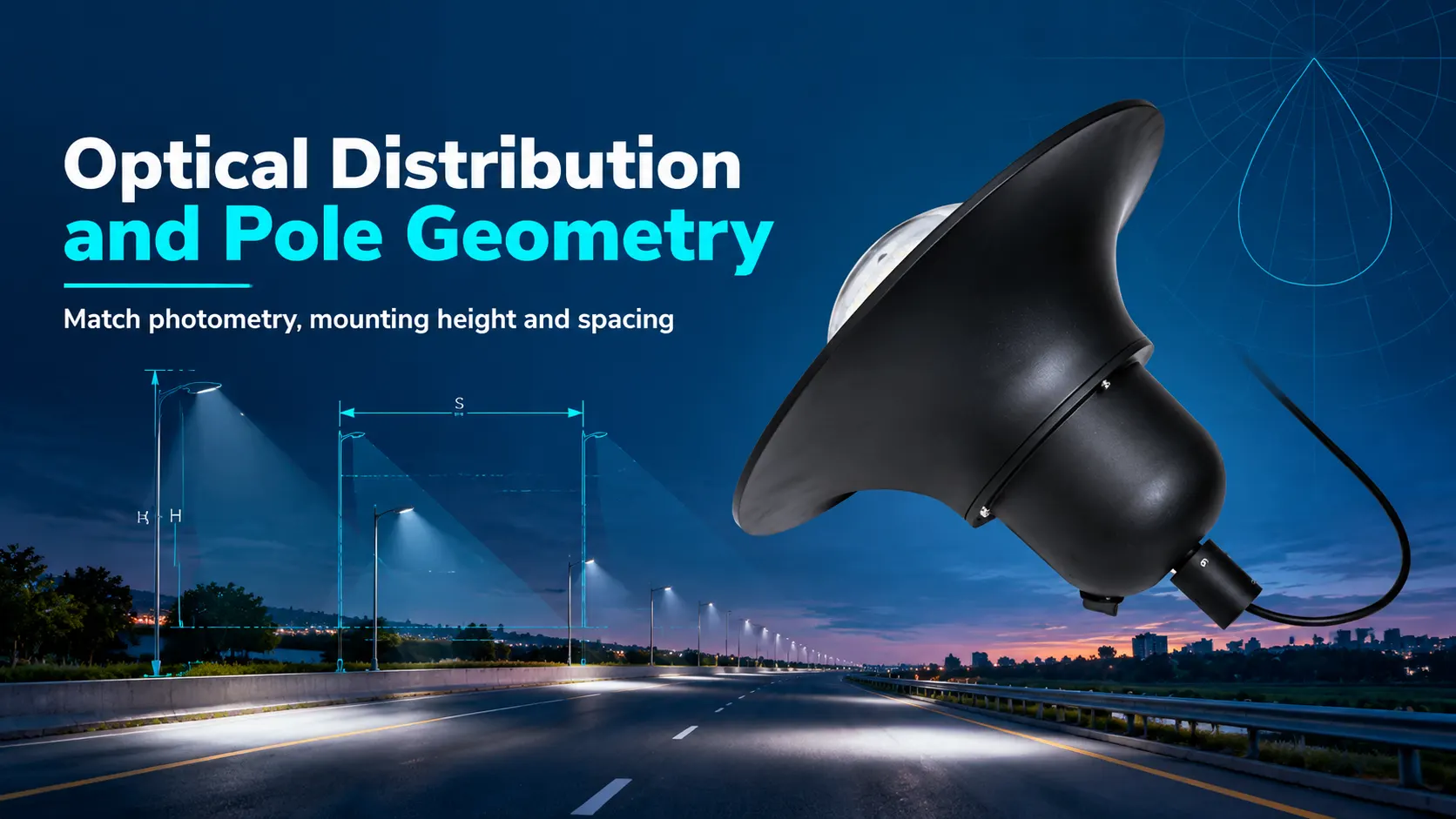
Optical distribution is one of the most important parts of municipal street light selection. The same fixture can produce very different results when pole height, spacing, road width, mounting angle, or roadway geometry changes.
Review These Geometry Factors
- Pole mounting height
- Pole-to-pole spacing
- Road width and number of lanes
- Fixture outreach
- Arm angle and fixture tilt
- Median or one-sided installation
- Potential glare and light trespass
A suitable optical distribution should place light where it is needed instead of simply increasing fixture power. Proper design can help reduce dark areas, excessive brightness, glare, and wasted light.
Use Photometric Analysis Before Ordering
Photometric simulation allows the proposed fixture, pole arrangement, mounting height, and optical distribution to be evaluated before installation. Luxific’s engineering approach includes technical design and project-oriented solutions, supporting adjustments based on real application scenarios.
For a procurement team, request the following before approving a final model:
- Project road dimensions and pole layout.
- Fixture photometric file and technical specification.
- Proposed optical distribution and mounting configuration.
- Calculated illuminance and uniformity results.
- Confirmation that the design aligns with the applicable project requirements.
4. Compare Controls, Certifications and Lifecycle Cost
Modern municipal lighting is increasingly evaluated as an infrastructure system rather than a collection of individual lamps. Controls can support scheduling, dimming, remote operation, and energy management, while appropriate certifications help procurement teams verify product suitability.
Controls and Smart Lighting
LED street lighting can integrate with photocells, wireless control systems, and intelligent lighting platforms. These technologies can help operators adjust lighting according to time, traffic, or operating requirements. For large municipal networks, controllability can also support monitoring and maintenance management.
Certification and Supplier Verification
Certification should be checked against the actual destination market and project specification. Luxific states that its products include certifications and compliance documentation such as CE, RoHS, CB, and ISO management-system certifications. Buyers should request current certificates, testing reports, product datasheets, and traceable documentation rather than relying only on marketing claims.
| Procurement Check | What to Verify |
|---|---|
| Quality | Testing process, product consistency, component selection |
| Compliance | Applicable certificates and project-specific requirements |
| Warranty | Warranty scope, conditions, and support process |
| Delivery | Production capability, lead time, and logistics planning |
| Maintenance | Driver, LED, housing, and replacement strategy |
| Customization | Optics, dimensions, color, branding, and installation requirements |
Calculate Total Value, Not Only Purchase Price
A reliable municipal procurement decision should consider fixture cost, electricity consumption, maintenance frequency, replacement requirements, installation, warranty support, and expected operating conditions. The lowest quotation may not deliver the lowest lifetime cost.
Luxific operates as a professional LED outdoor lighting Manufacturer and Supplier with manufacturing experience, in-house R&D, quality testing, and technical support. For project-specific requirements, the company also provides Customizable OEM and ODM solutions, including material, size, color, branding, and packaging adaptation. This can be useful for municipalities, EPC contractors, infrastructure contractors, public lighting companies, and lighting integrators requiring standardized project specifications.
5. A Practical Municipal Street Light Selection Checklist
Before issuing a purchase order, cities and utility operators can use this checklist:
- Define the road class and application.
- Confirm road dimensions and pole geometry.
- Set target illuminance and uniformity requirements.
- Select suitable lumen output and efficacy.
- Match the optical distribution to the road layout.
- Evaluate CCT, glare, and light spill.
- Confirm environmental and electrical requirements.
- Check controls and smart-city integration needs.
- Verify destination-market certifications and testing reports.
- Compare warranty, delivery capability, maintenance, and total lifecycle cost.
- Confirm whether OEM, ODM, or other customization is required.
Conclusion: Build the Lighting Specification Before Choosing the Fixture
For your municipal street lighting project, send Luxific your road dimensions, pole height, target illuminance, quantity, required market certifications, and delivery schedule. Our team can use these inputs to evaluate suitable LED street light configurations and prepare a project-oriented quotation.