Why Common LED Street Luminaire Failures Become Expensive Project Problems
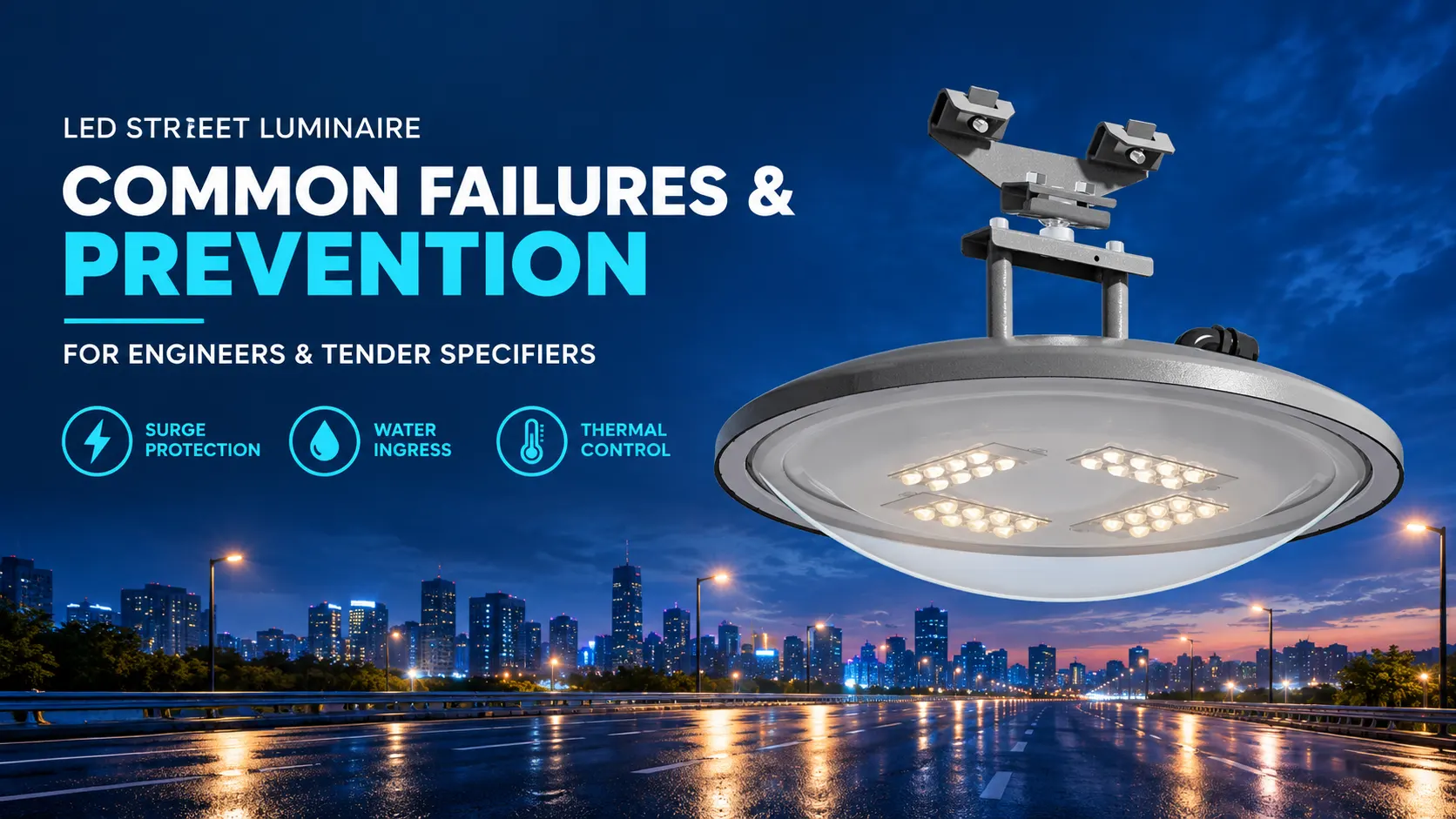
Street lighting failures rarely begin with a complete blackout. Glare, dark spots, water ingress, overheating, surge damage, and unstable drivers can gradually reduce safety and increase maintenance costs. When these risks are ignored during tender design, the cheapest luminaire can become the most expensive choice after installation. Engineers and tender specifiers need to prevent failures before procurement by connecting optical design, electrical protection, thermal management, environmental ratings, and commissioning requirements into one measurable specification.
Prevent LED street luminaire failures by validating photometric distribution, controlling glare and uniformity, specifying suitable surge and IP protection, managing heat, and commissioning the installed system against the approved design. Luxific supports project-specific optical configurations, protection options, testing documentation, and OEM and ODM solutions.
1. Prevent Glare and Over-Lighting
More light does not automatically mean better road lighting. Excessive brightness can create visual discomfort, while poorly controlled optical distribution may send light toward drivers, buildings, or surrounding properties instead of the road. The goal is controlled illumination that meets the required performance without unnecessary over-lighting.
Typical Causes of Glare
- Incorrect optical distribution for the road geometry
- Excessive luminaire tilt
- Incorrect mounting height or outreach
- Uncontrolled high-angle light
- Using a higher-output luminaire simply to compensate for poor distribution
- Insufficient consideration of surrounding properties and viewing directions
How to Prevent It
- Define the road classification and required lighting performance.
- Confirm pole height, spacing, road width, and mounting arrangement.
- Select the optical distribution according to the actual geometry.
- Use IES or LDT photometric files for the exact configuration.
- Check glare and light spill during the lighting calculation.
- Verify luminaire tilt during installation and commissioning.
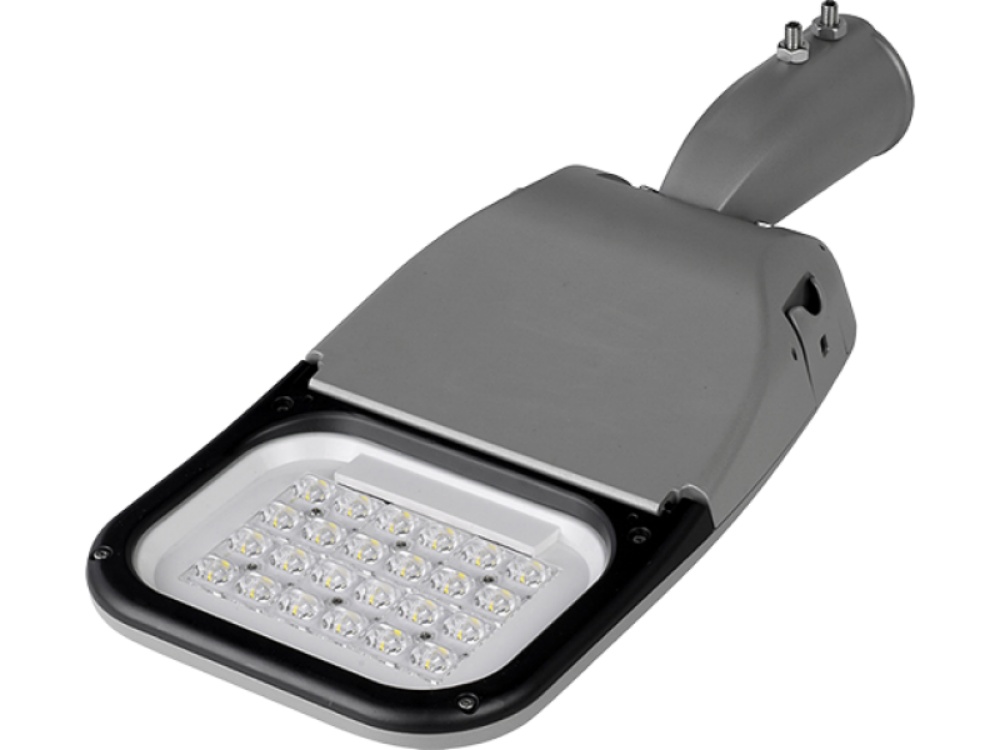
Luxifics PIECES series uses a modular optical system with Type I to Type V distributions. Its documentation describes these options as supporting tailored illumination, reduced glare, and improved uniformity. The appropriate distribution should still be selected through project-specific photometric analysis rather than assumed from the product family alone.
2. Prevent Dark Spots and Poor Uniformity
Dark areas are one of the most visible signs of poor street lighting design. They can result from excessive pole spacing, unsuitable beam distribution, incorrect mounting height, or insufficient photometric analysis. Simply increasing luminaire wattage may increase average brightness without solving the underlying uniformity problem.
What Engineers Should Check
- Average illuminance or luminance
- Minimum illuminance
- Overall uniformity
- Longitudinal uniformity where applicable
- Pole height
- Pole spacing
- Road width and lane configuration
- Luminaire orientation and tilt
| Failure Symptom | Likely Design Cause | Prevention Method |
|---|---|---|
| Dark areas between poles | Excessive spacing or unsuitable distribution | Validate spacing with photometric calculations |
| Bright center with dark edges | Beam pattern does not match road width | Select a suitable optical distribution |
| Uneven road appearance | Incorrect mounting height or tilt | Verify installation geometry |
| Excessive brightness | Oversized lumen output | Specify performance targets before wattage |
Use Photometric Files Before Tender Approval
A reliable tender process should require an IES or LDT file for the proposed configuration where applicable. The lighting designer can then model the actual road geometry and verify whether the luminaire achieves the required performance.
- Build the existing or proposed road geometry.
- Enter pole height and spacing.
- Specify the mounting arrangement and tilt.
- Load the correct photometric file.
- Review average and minimum results.
- Check uniformity and glare.
- Revise optics or geometry before final approval if the design fails.
3. Prevent Surge Damage, Water Ingress and Overheating
Outdoor luminaires face electrical and environmental stresses that indoor lighting does not. Surge events, rain, dust, humidity, high ambient temperature, and poor heat dissipation can all affect long-term reliability. These risks should be addressed in the tender specification rather than discovered after installation.
Surge Protection
Surge protection is particularly important for outdoor road lighting exposed to electrical disturbances and lightning-related events. The specification should define the required protection level and request supporting evidence for the actual configuration.
Luxific documentation identifies 10KV and 10KA surge protection options for specified street luminaire configurations. Engineers should confirm the exact protection level, test evidence, and applicability to the selected model before tender approval.
Water Ingress and Mechanical Protection
Insufficient environmental protection can allow moisture to reach electrical components and contribute to corrosion or electrical failure. IP and IK ratings should therefore be specified according to the actual installation environment.
- Define the required IP rating for the complete luminaire.
- Define the required IK rating for the installation environment.
- Check seals, covers, cable entries, and connection points.
- Confirm that test documentation corresponds to the relevant configuration.
- Consider coastal, industrial, humid, dusty, or high-exposure environments separately.
The Luxific PIECES series documentation specifies IP66 and IK09 for the referenced configuration, together with a die-cast aluminum body and tempered glass. Other Luxific product configurations may differ, so the exact model should always be checked against the tender requirements.
Overheating and Thermal Management
Heat is another common reliability risk. Poor thermal management can accelerate LED and electronic component degradation. Engineers should evaluate the housing, heat dissipation design, LED loading, driver conditions, and maximum ambient temperature together.
The referenced PIECES configuration specifies an ambient environment of minus 40 degrees Celsius to plus 55 degrees Celsius. This should be treated as model-specific technical information and verified for the final project configuration and local operating conditions.
Environmental Failure Prevention Checklist
- Surge protection is defined and documented.
- IP and IK requirements match the site environment.
- Housing construction supports thermal management.
- Operating temperature is suitable for the project climate.
- Corrosion protection is appropriate for the environment.
- Driver specifications are verified for the expected electrical conditions.
4. Prevent Failures Through Better Specifications
Many field failures can be reduced before procurement when the tender specification requires measurable evidence instead of generic claims. A strong specification should make competing products comparable and prevent suppliers from interpreting critical requirements differently.
Build a Failure Prevention Specification
- Define lighting performance targets before specifying wattage.
- Specify the required optical distribution and photometric file.
- Define pole height, spacing, mounting position, and tilt.
- Specify driver and surge protection requirements.
- Define IP, IK, corrosion, and operating temperature requirements.
- Request relevant test reports and certifications.
- Require installation and commissioning procedures.
- Compare lifecycle cost rather than purchase price alone.
Require Evidence From the Supplier
Whether procurement is made directly from a Manufacturer, through a Supplier, or through a Wholesaler, the same principle applies: important performance claims should be supported by relevant documentation.
| Technical Area | Evidence to Request | Failure Risk Addressed |
|---|---|---|
| Optics | IES or LDT photometric file | Glare and dark spots |
| Electrical | Driver and surge protection data | Electrical and surge failure |
| Environmental | IP and IK test evidence | Water and mechanical damage |
| Thermal | Operating temperature and thermal information | Overheating and accelerated degradation |
| Compliance | Applicable certificates and reports | Tender rejection and compliance risk |
5. Prevent Installation Failures Through Commissioning
A luminaire that passes factory testing can still produce poor road lighting if it is installed incorrectly. Commissioning should therefore confirm that the installed system matches the approved design.
Commissioning Checklist
- Confirm luminaire model and configuration.
- Check mounting height and orientation.
- Verify tilt angle against the approved design.
- Inspect electrical connections and protection.
- Confirm control settings and dimming schedules.
- Check for visible glare or unexpected light spill.
- Inspect representative sections for uniformity and dark areas.
- Record deviations and correct them before final acceptance.
Luxifics project experience includes lighting audits, custom luminaire design, sample testing, installation guidance, and after-sales support. Its documentation also references CE, CB, ENEC, EMC, TM21, LM79, and IEC 62471 for specified configurations. Exact certification scope should be verified for the selected model and target market.
When Customizable, OEM and ODM Support Helps
Not every project can be solved with a standard catalogue product. Non-standard mounting, unusual optical requirements, project branding, or specific environmental conditions may require a Customizable solution. Luxific provides OEM and ODM services covering technical design, prototyping, quality control, branding, packaging, and logistics, allowing project requirements to be addressed before mass production.
Submit Your Project Data for Failure Prevention
Send your road dimensions, pole height, target illuminance, quantity, required market certifications, and delivery time. Luxific can review the project conditions and recommend a suitable LED street luminaire configuration with the relevant optical, protection, and documentation requirements.