Why Incomplete Roadway Specifications Can Create Costly Project Risks
Choosing a roadway luminaire without checking housing, thermal management, driver quality, surge protection, dimming, ingress protection, and test documentation can create failures after installation. Moisture, temperature extremes, electrical surges, corrosion, or difficult servicing may increase maintenance costs and disrupt project schedules. For municipalities, EPC contractors, and lighting Wholesalers, these risks can also lead to rejected tenders or delayed approvals. A practical specification checklist should therefore connect mechanical construction, electrical protection, environmental ratings, serviceability, and certification documents before a Supplier or Manufacturer is selected.
A complete roadway lighting specification should cover housing and thermal design, tool-less serviceability, driver and surge protection, dimming controls, IP and IK ratings, operating temperature, corrosion resistance, LM-79 and TM-21 documentation, and tender compliance. Luxific provides Customizable roadway lighting with OEM and ODM support for project requirements.
1. Housing, Thermal Design and Tool-Less Serviceability
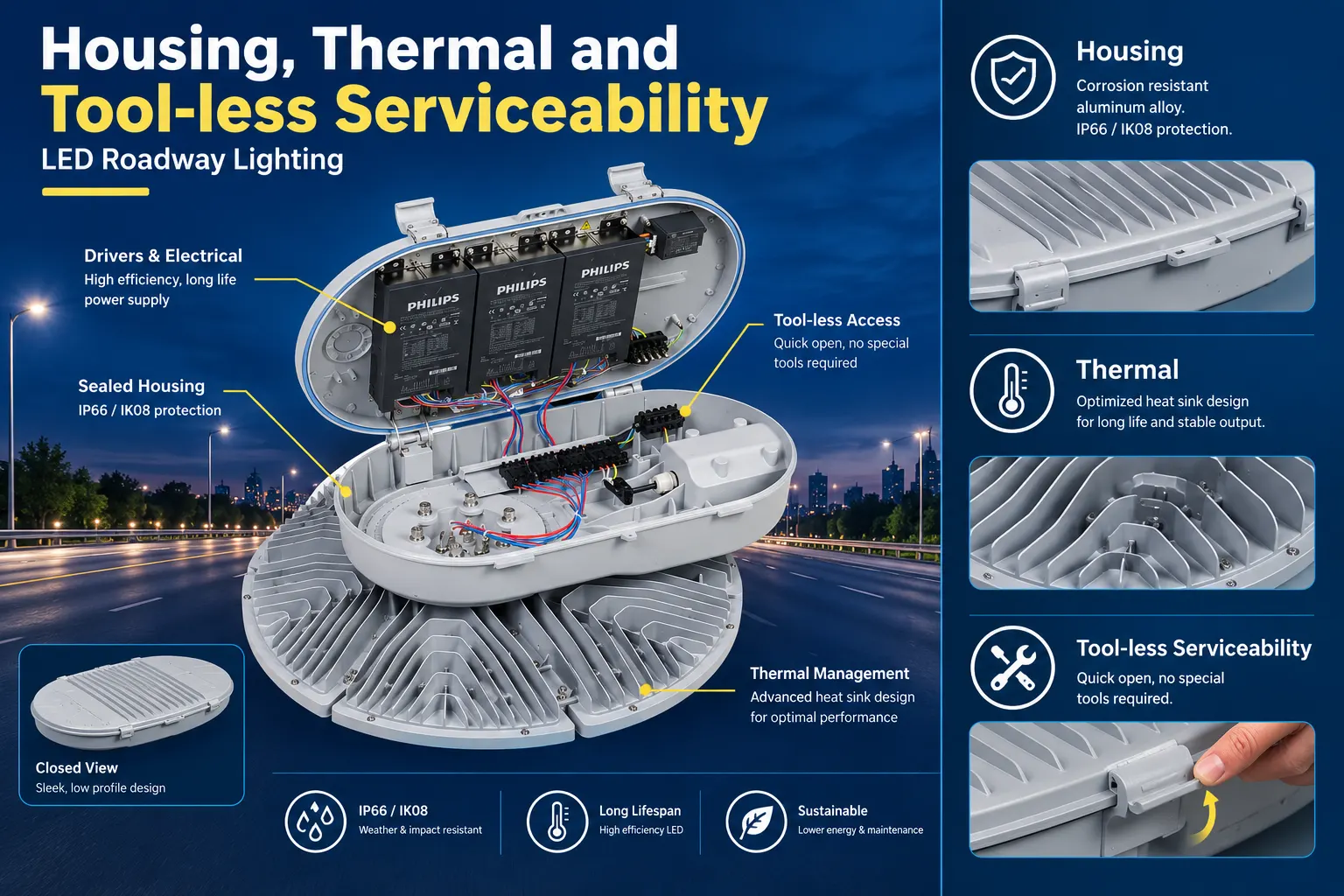
The luminaire housing is the first line of protection against outdoor conditions. For motorways, arterials, and collector roads, the specification should evaluate mechanical construction, heat dissipation, optical protection, maintenance access, and long-term outdoor exposure as one system.
Housing Materials and Construction
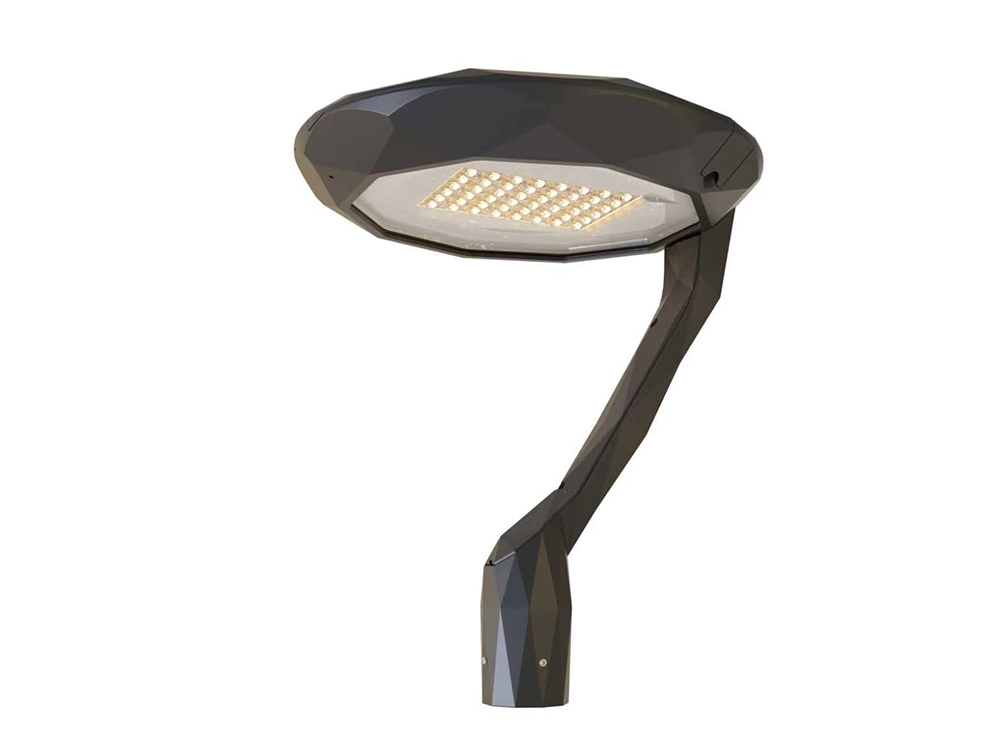
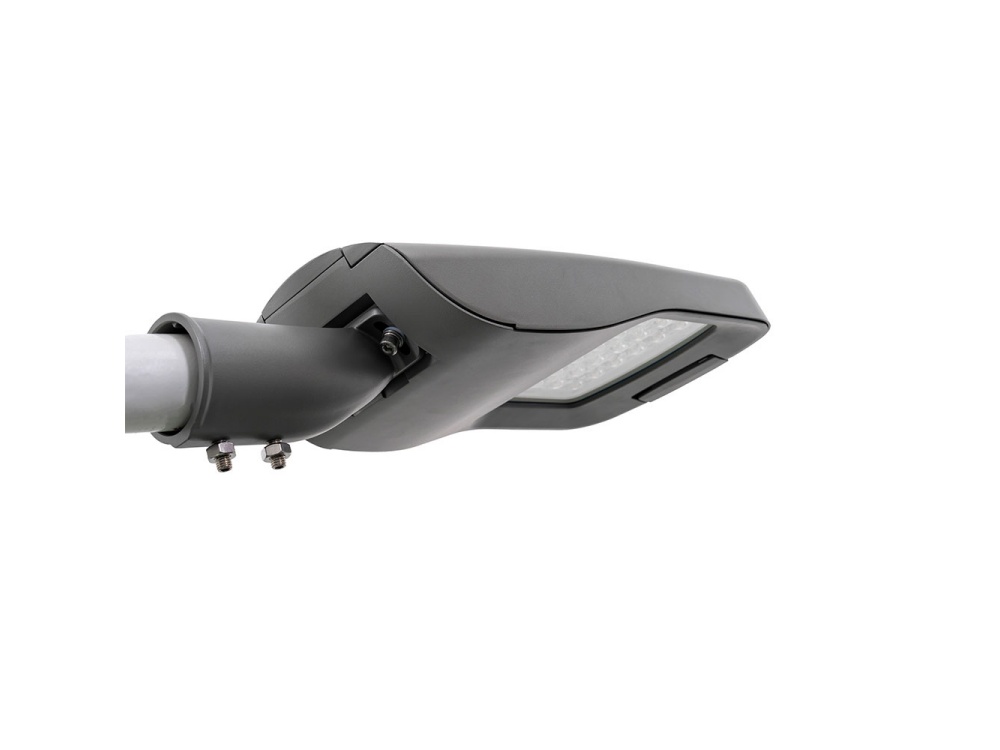
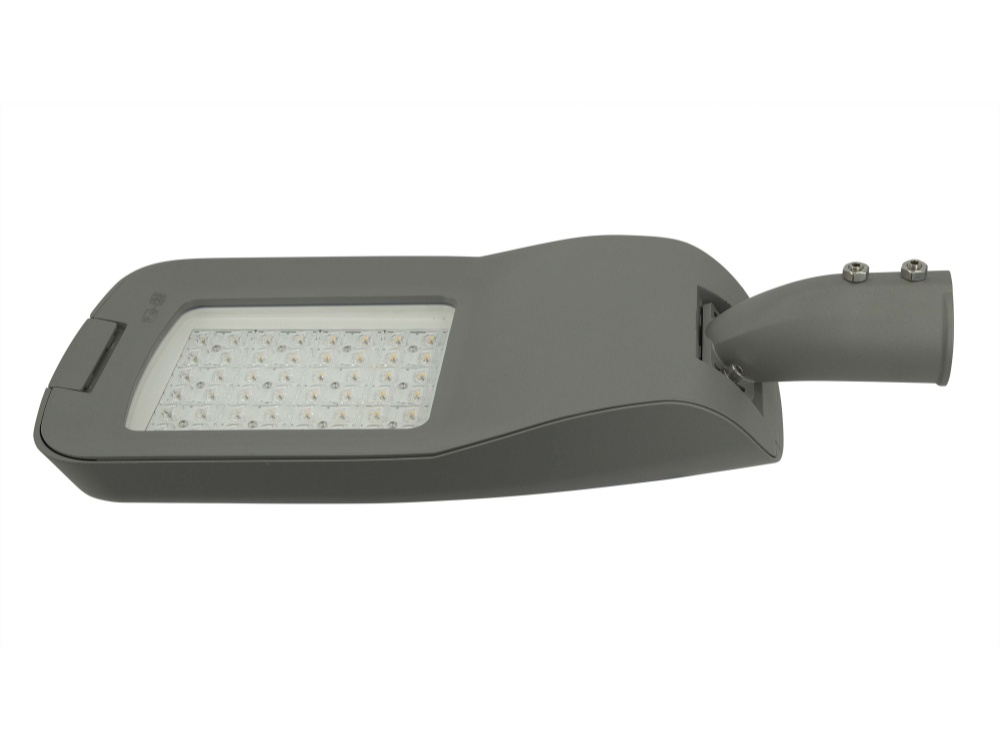
Die-cast aluminum is commonly used for professional outdoor LED luminaires because it provides a robust enclosure and supports heat dissipation. Luxifics PIECES roadway luminaire, for example, uses a die-cast aluminum body with an anodized aluminum reflector and PC or PMMA diffuser. Its documented construction also includes tempered glass and an anti-aging electrostatic surface treatment.
- Specify the housing material and surface treatment.
- Check lens or glass construction and impact protection.
- Confirm mounting compatibility with the existing pole or bracket.
- Review the mechanical design for the local wind and environmental conditions.
- Check whether the luminaire can be opened and serviced efficiently.
Thermal Management
LED performance depends strongly on thermal conditions. A roadway specification should therefore define the expected ambient temperature and verify that the driver, LED modules, and housing are suitable for the installation environment.
Luxific lists an ambient operating range of -40°C to +55°C for its PIECES model. A separate Luxific project for Northern Canada describes cold-weather-rated drivers and components for temperatures down to -40°C. Actual project selection should always be based on the environmental conditions and the specific product configuration.
Serviceability Checklist
- Accessible electrical components
- Quick or tool-efficient electrical connection
- Replaceable or serviceable LED and driver components where applicable
- Clear maintenance instructions
- Suitable mounting and adjustment hardware
Luxifics PIECES specification includes a quick on and off connector when the luminaire is opened, supporting easier service access.
2. Driver, Surge Protection and Dimming Requirements
The LED driver is a critical part of roadway lighting because it converts and regulates the electrical input supplied to the luminaire. Project specifications should define input voltage, driver requirements, power factor, surge protection, dimming protocol, and control interfaces.
Driver Specification
| Specification Item | Buyer Should Check | Project Benefit |
|---|---|---|
| Input voltage | Compatibility with local power supply | Stable operation within the project network |
| Power factor | Required project or utility level | Supports efficient electrical operation |
| Surge protection | kV and kA requirements | Protection against electrical transients |
| Dimming | DALI, 0-10V, timer or other control method | Supports scheduled or adaptive lighting |
Surge Protection
Roadside electrical infrastructure can be exposed to voltage surges. The required surge protection level should be defined according to the project environment and electrical design rather than selected only from a generic product catalogue.
Luxifics PIECES roadway luminaire specifies 10 kV and 10 kA surge protection. It also lists DALI, 0-10V, Astro Dim, and Step Dim control inputs, with optional photocell, NEMA socket, and ZHAGA interfaces.
Dimming and Smart Controls
For municipalities and smart-city projects, dimming can be incorporated into the lighting strategy to adjust output according to time, traffic, or other operating requirements. Luxific has documented a municipal project using smart LED street lights with remote dimming schedules, including different lighting levels during peak and late-night periods.
- Define whether fixed-output or dimmable operation is required.
- Specify the required control protocol.
- Confirm compatibility with the project control system.
- Define dimming schedules or control scenarios.
- Test the complete luminaire and control system before large-scale deployment.
3. Check IP, IK, Corrosion and Operating Temperature
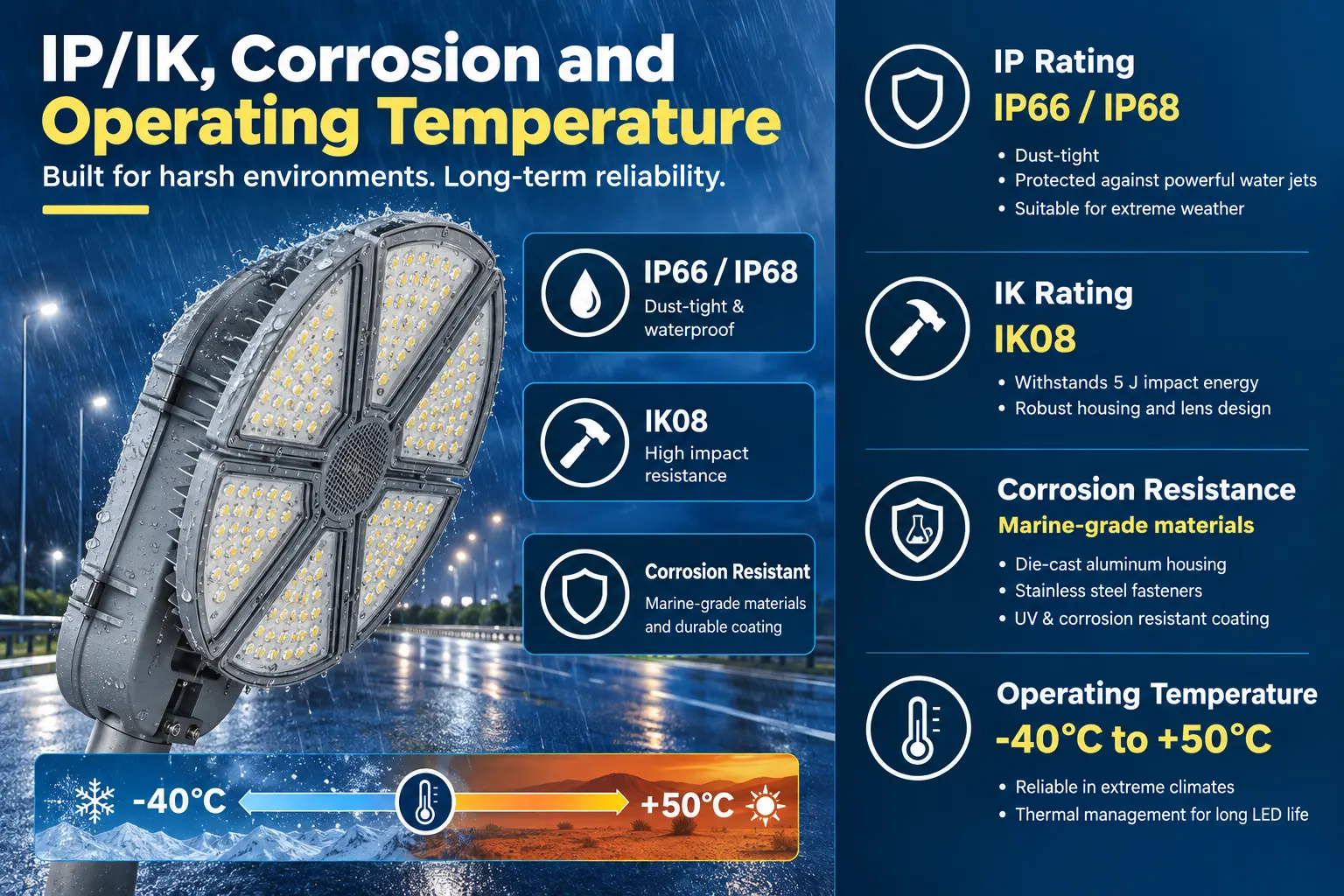
Outdoor roadway luminaires must withstand rain, dust, impact, temperature changes, and other environmental stresses. The specification should therefore address IP protection, IK impact resistance, corrosion protection, and operating temperature separately.
IP and IK Ratings
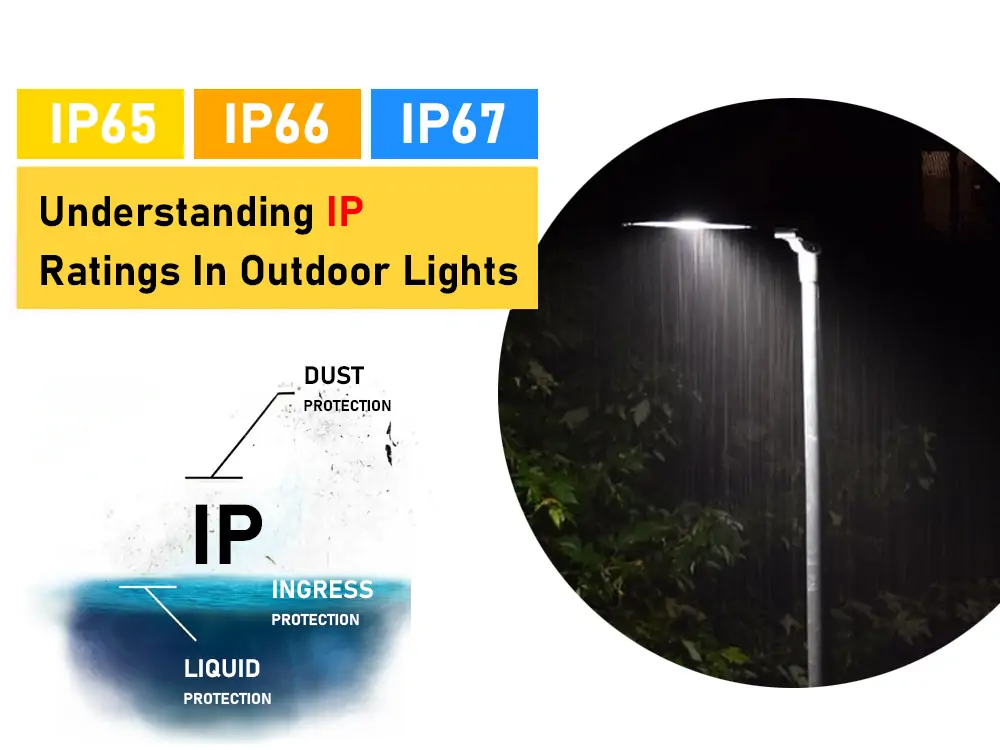
IP ratings describe protection against ingress of solids and water, while IK ratings address mechanical impact resistance. The appropriate rating depends on the road environment, installation position, exposure, and project specification.
Luxifics PIECES model is documented with IP66 and IK09 ratings. Its product description positions the luminaire for highways, urban streets, residential roads, car parks, cycling paths, and pedestrian areas.
Corrosion Resistance
Coastal roads, industrial zones, ports, and regions with high humidity may require additional attention to corrosion resistance. The specification should identify the environmental exposure and request appropriate material, coating, and testing information from the Supplier.
Luxific has documented outdoor projects involving harsh environments, including a Moroccan port application where corrosion-resistant housing and IP67 protection were specified for salty sea air.
Environmental Specification Matrix
| Environment | Key Specification | Questions for the Manufacturer |
|---|---|---|
| Normal urban road | IP, IK, temperature, corrosion protection | What standard configuration is suitable? |
| Coastal area | Corrosion resistance and ingress protection | What materials and finishes are available? |
| Cold climate | Low-temperature driver and component performance | What is the tested operating temperature? |
| Industrial or exposed area | Impact, dust, moisture and electrical protection | What additional protection options are available? |
4. Verify LM-79, TM-21 and Tender Documentation
Technical performance is only part of a roadway lighting tender. Buyers also need documentation that allows engineers, consultants, authorities, and contractors to evaluate the proposed product against project requirements.
LM-79 and TM-21 Documentation
LM-79 and TM-21 should be considered within the wider product documentation package. The exact documentation required depends on the tender, market, and applicable standards.
Luxifics PIECES product information lists LM-79 and TM-21 together with CE, CB, ENEC, EMC, and IEC 62471 among its stated certifications and testing documentation.
Tender Documentation Checklist
- Product datasheet
- Photometric files where required
- LM-79 documentation where applicable
- TM-21 documentation where applicable
- Relevant safety and EMC documentation
- IP and IK information
- Operating temperature information
- Driver and surge protection specifications
- Warranty information
- Installation and maintenance instructions
- Required market certifications
Do Not Treat Certificates as a Checkbox
For government and infrastructure projects, documentation should correspond to the exact product model and configuration being offered. Buyers should verify model numbers, testing scope, certification validity, and the relationship between the supplied documents and the tender requirements.
Luxific states that its products carry certifications including GS, CE, CB and RoHS compliance, while its company materials also describe quality testing, technical support, prototyping, and project documentation. Buyers should confirm the exact certification package required for their destination market before purchase.
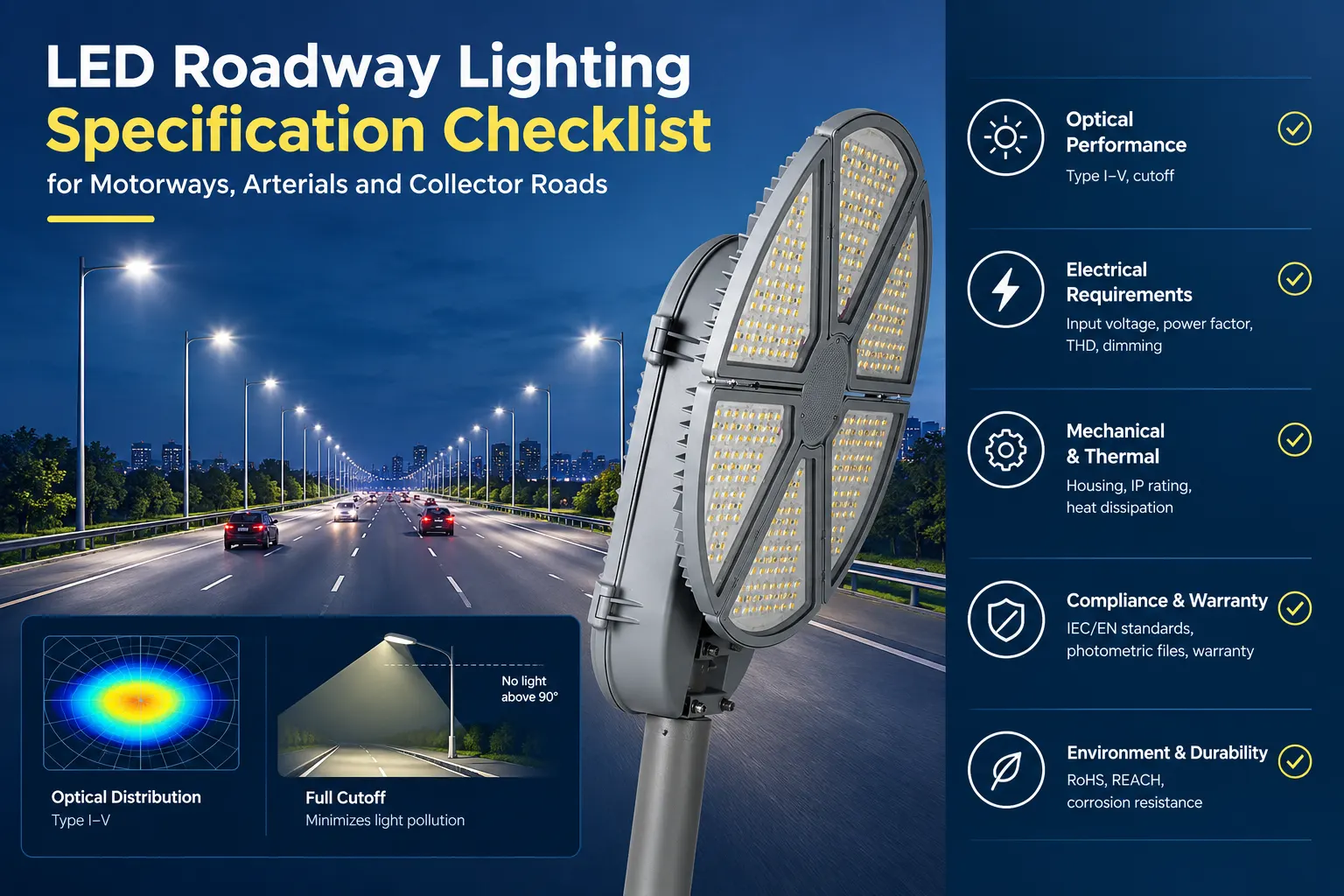
5. Build a Practical Roadway Lighting Specification Checklist
Before requesting a quotation, project buyers can organize the specification into five groups. This makes communication clearer between the municipality, consultant, EPC contractor, Wholesaler, and Manufacturer.
- Mechanical: housing material, dimensions, mounting method, serviceability, IP and IK ratings.
- Electrical: input voltage, driver, power factor, surge protection, insulation class, and control interface.
- Environmental: ambient temperature, humidity, corrosion exposure, dust, rain, and impact conditions.
- Photometric: lumen output, optical distribution, target lighting level, uniformity, and photometric files.
- Documentation: certifications, testing reports, warranty, installation instructions, and tender compliance documents.
Luxific operates as a professional LED outdoor lighting Manufacturer and Supplier with OEM and ODM capabilities. Its customization services cover technical design, prototyping, appearance, materials, dimensions, colors, branding, packaging, quality control, and logistics, allowing project specifications to be adapted where required.
Conclusion
Send Luxific your road dimensions, pole height, target illuminance, quantity, required market certifications, and delivery date. Our team can review the specification, recommend a suitable roadway lighting configuration, and prepare a project quotation based on your requirements.