Are You Buying Directly from a Manufacturer or Adding Hidden Risk Through the Supply Chain?
Choosing the wrong sourcing partner can create expensive problems for LED street light importers. A company may present itself as a Manufacturer while outsourcing production, technical decisions, quality control, or delivery management. This can lead to slower responses, unclear responsibility, inconsistent specifications, and difficulty solving project problems. For a Wholesaler or regional distributor, these risks can affect customer relationships and future sales. The solution is not to assume that either a factory or trading company is automatically better, but to verify ownership, technical capability, production control, and communication before placing a purchase order.
A Manufacturer is usually the stronger choice when buyers need direct control over technical specifications, OEM or ODM customization, quality, and production schedules. A trading company may offer broader sourcing options. Luxific operates as an LED outdoor lighting manufacturer with production, engineering, customization, and quality-control capabilities that buyers can evaluate according to project requirements.
Manufacturer vs Trading Company: Understand the Real Difference
The most important difference is not the company name on a website. Buyers should understand who controls the critical parts of the supply chain.
What a Manufacturer Typically Controls
A direct Manufacturer may have responsibility for some or all of the following areas:
- Product development and engineering
- Production planning
- Assembly and manufacturing processes
- Quality control procedures
- Technical specification changes
- OEM and ODM projects
- Production scheduling
- Product consistency for repeat orders
What a Trading Company May Provide
A trading company can also provide value, especially when a buyer needs products from multiple factories or wants one commercial contact for different product categories.
- Access to multiple suppliers
- Broader product sourcing
- Commercial coordination
- Communication support
- Consolidated purchasing from different factories
However, buyers should clearly understand whether the trading company directly controls production and technical decisions or communicates with another factory on their behalf.
| Evaluation Area | Manufacturer | Trading Company |
|---|---|---|
| Production control | May directly manage manufacturing processes | Usually depends on partner factories |
| Technical response | May provide direct engineering communication | May need to coordinate with the factory |
| OEM and ODM | Can potentially connect customization with production | May coordinate customization through suppliers |
| Quality control | May manage internal QC procedures | May rely on factory or third-party inspection |
| Product sourcing range | Often focused on its own product capability | May offer products from multiple sources |
How to Validate Ownership and Technical Staff
Before deciding whether you are dealing with a genuine Manufacturer, ask for evidence rather than relying on marketing language.
Questions That Help Verify a Factory
- Where is the production facility located?
- Which manufacturing processes are completed by the company?
- Who owns or manages the production operation?
- Does the company have an in-house engineering team?
- Who answers technical questions about optics, electrical systems, and mechanical design?
- Who approves product changes?
- Who is responsible for quality control?
- Can the Supplier explain its production workflow?
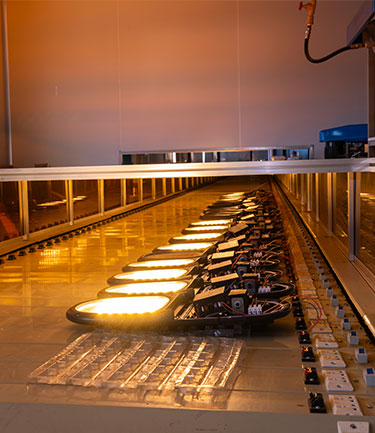
Luxific presents itself as a professional LED outdoor lighting Manufacturer with production facilities and an in-house team of engineers and lighting specialists. Its available company information describes engineering support for project requirements, technical design, prototyping, quality control, and logistics.
Look Beyond the Sales Representative
A knowledgeable salesperson is useful, but complex street lighting projects often require engineering participation. Buyers should test whether technical questions can reach the people responsible for the product.
A Simple Validation Method
- Send a realistic technical inquiry.
- Include road dimensions and pole height.
- Specify target illuminance or project requirements.
- Ask about optical distribution.
- Request information about electrical or control options.
- Observe whether the response is specific and technically relevant.
A direct technical response does not automatically prove ownership, but it can help buyers understand how effectively the Supplier connects sales communication with engineering resources.
Test Response Quality During Specification Review

The specification review stage is one of the best opportunities to compare a Manufacturer and a trading company. A reliable sourcing partner should understand that LED street lighting selection involves more than wattage and price.
What a Good Technical Response Should Consider
- Road width and application type
- Pole height and installation arrangement
- Required lighting distribution
- Target illuminance
- Operating environment
- Voltage and electrical requirements
- Control and smart lighting requirements
- Market certification requirements
Luxific product information for selected street lighting products includes multiple optical distributions, DALI, 0-10V, Astro Dim and Step Dim control inputs, together with options such as photocells, NEMA sockets, and ZHAGA interfaces. Exact configurations should be confirmed for the selected product model.
Warning Signs During Technical Communication
- Every project receives the same product recommendation.
- The Supplier avoids technical follow-up questions.
- Specifications change without explanation.
- Engineering questions receive only sales answers.
- OEM requests are accepted without feasibility review.
- Certification questions receive vague responses.
For importers, response quality is often an early indicator of how efficiently problems may be handled after an order is placed.
Control Over Tooling, QC and Production Schedule

When comparing sourcing partners, buyers should identify who actually controls the key production decisions. This becomes especially important for Customizable products and private-label projects.
Control Over OEM and ODM Development
OEM and ODM projects may involve changes to appearance, materials, dimensions, colors, branding, or packaging. The company managing the project should be able to connect the approved design with actual production.
Luxific describes its OEM and ODM service as covering project-oriented design, material, size and color adaptation, product branding, and customized packaging. Its company information also states that customization can extend from technical design and prototyping through quality control and logistics.
Buyers should ask:
- Who manages incoming material inspection?
- Where does in-process inspection take place?
- Who approves finished products?
- How are non-conforming products handled?
- How are approved specifications maintained?
- Who investigates quality complaints?
A Supplier does not need to claim perfection to demonstrate a professional quality system. What matters is whether responsibilities and procedures can be clearly explained.
Control Over the Production Schedule
Delivery delays can be particularly damaging for municipal projects, EPC contractors, and regional distributors. Buyers should understand who manages the production plan and who can provide accurate progress information.
| Question | Why It Matters | What Buyers Should Clarify |
|---|---|---|
| Who schedules production? | Delivery planning | Direct responsibility for production timing |
| Who approves changes? | Specification consistency | Technical and commercial approval process |
| Who controls QC? | Product reliability | Inspection responsibility |
| Who manages customization? | OEM and ODM execution | Engineering and production coordination |
| Who provides progress updates? | Customer communication | Clear contact and reporting process |
Questions to Ask Before Placing a Purchase Order
A professional sourcing decision should be based on a structured review rather than a price comparison alone.
Factory and Ownership Questions
- Are you the actual Manufacturer of this product?
- Which production processes do you control?
- Can buyers review your factory capability?
- Who manages engineering and technical development?
Product and Engineering Questions
- Is the proposed product suitable for the actual application?
- Which optical options are available?
- What electrical and control options can be supported?
- What is the scope of OEM or ODM customization?
- What technical changes are feasible?
Quality and Compliance Questions
- Which quality-control procedures apply?
- What documents are available for the selected model?
- Which certifications are relevant to the destination market?
- Can test reports be reviewed before ordering?
Commercial and Delivery Questions
- What is the MOQ for the selected configuration?
- How does customization affect pricing?
- What is the expected production lead time?
- Who is responsible for production updates?
- How are packaging and labeling requirements confirmed?
When Is a Manufacturer the Better Choice?
Working directly with a Manufacturer can be particularly valuable when your business requires close control over product specifications and repeatability.
- You need Customizable products.
- You are developing a private-label program.
- You require OEM or ODM services.
- You have technical project specifications.
- You need direct engineering communication.
- You expect repeat orders with consistent configurations.
- You want clearer visibility into quality and production processes.
Luxific is positioned as an outdoor LED lighting Manufacturer serving project-oriented requirements across street lighting and other outdoor applications. Its available company information highlights engineering support, production capability, OEM and ODM customization, quality testing, and international certification support. Buyers should evaluate the specific product, configuration, and documentation required for their destination market.
Make Your Supplier Decision Based on Evidence
The best sourcing partner depends on your business model, but the evaluation process should remain practical. Do not decide solely based on whether a company calls itself a factory, Manufacturer, Supplier, or trading company.
- Verify who controls production.
- Test technical communication.
- Review engineering resources.
- Understand control over OEM and ODM projects.
- Clarify quality-control responsibilities.
- Confirm who manages the production schedule.
- Review documentation before placing the purchase order.
- Approve the final specification in writing.
Start Your LED Street Light Sourcing Review
Send Luxific your road dimensions, pole height, target illuminance, quantity, required market certifications, and delivery deadline. Our team can help review suitable LED street light options, discuss OEM or ODM requirements, and prepare a product selection and quotation for your project.