Why Choosing the Wrong LED Street Light Manufacturer Can Put a Municipal Project at Risk
Municipal roads, highways, and urban streets demand more than attractive fixtures. An unreliable Supplier can create inconsistent quality, certification problems, delayed deliveries, and expensive maintenance after installation. These issues can affect public safety, project schedules, and long-term budgets. The risk becomes greater when a trading company presents itself as a Manufacturer without sufficient engineering or production control. For buyers, verifying factory capability, customization scope, documentation, and project experience before placing an order is essential.
The best LED street light Manufacturer for municipal projects should demonstrate real production capability, responsive engineering, documented certifications and test reports, practical OEM/ODM experience, reliable sampling and delivery processes, and relevant project references. Luxific combines in-house R&D, production, quality control, OEM/ODM customization, and international certification support for project-oriented outdoor lighting.
How to Verify a Real LED Street Light Factory
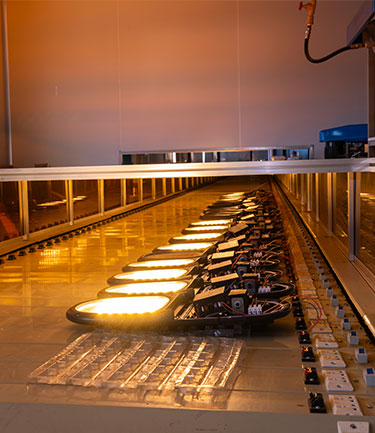
A municipal buyer should verify the supply chain before comparing prices. A genuine factory should be able to explain how products move from engineering and component selection to assembly, testing, packaging, and shipment.
1. Check Manufacturing Background
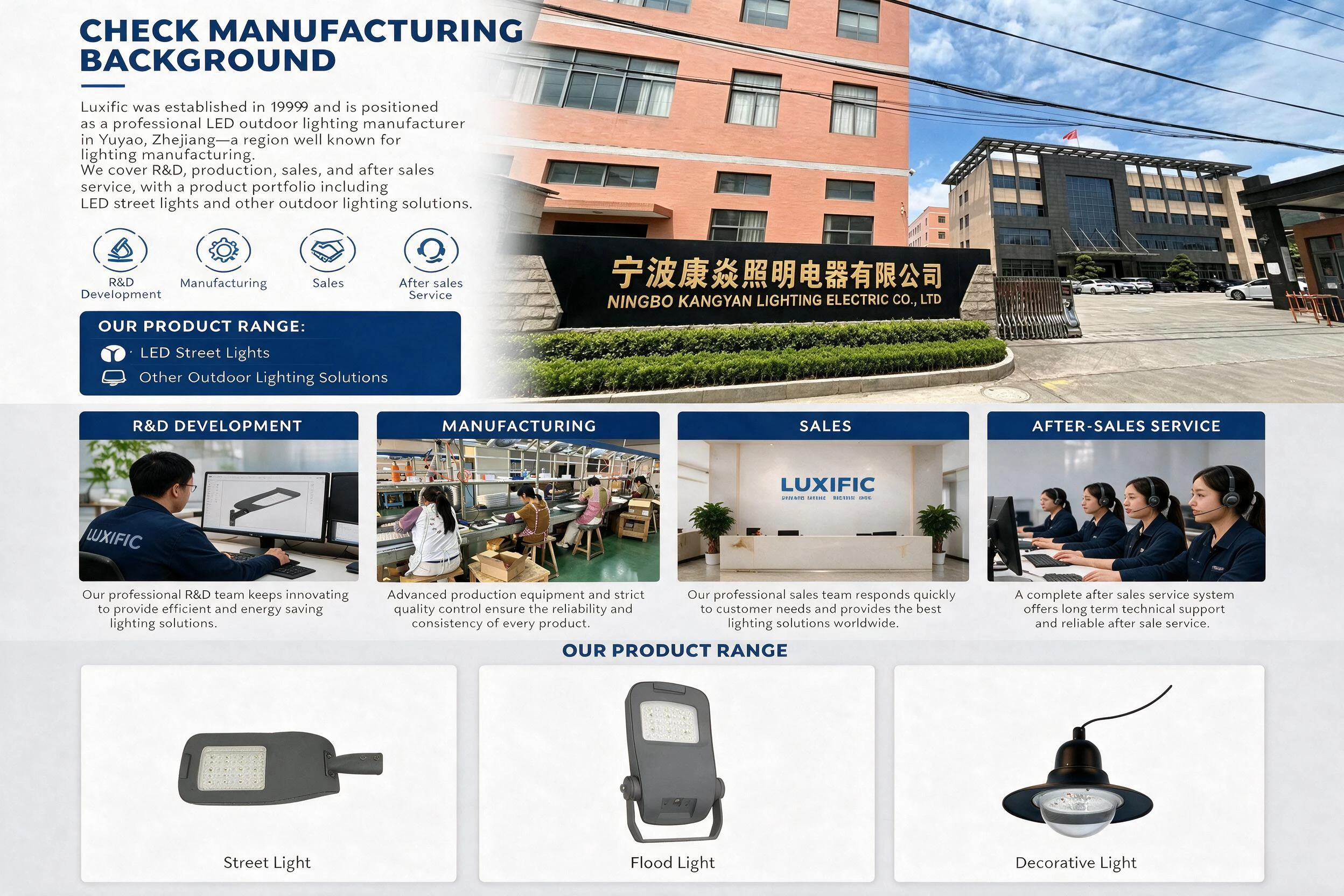
Luxific was established in 1999 and is positioned as a professional LED outdoor lighting Manufacturer in Yuyao, Zhejiang, a region known for lighting manufacturing. The company covers R&D, production, sales, and service, with a product portfolio including LED street lights and other outdoor lighting solutions:
- Ask for the factory address and manufacturing background.
- Confirm whether engineering and production are handled in-house.
- Review quality-control procedures rather than relying only on product photographs.
- Check whether the Supplier can support both standard products and project-specific requirements.
For wholesalers and project contractors, the distinction matters because direct manufacturing control can simplify communication and customization. Luxific states that every product undergoes strict quality testing and that its in-house team provides technical support and R&D capability.
2. Look Beyond the Lowest Purchase Price
For municipal lighting, the better comparison is usually total project value. Energy consumption, maintenance access, product reliability, replacement frequency, compliance, and delivery performance can matter more than the initial unit price.
| Buyer Checkpoint | What to Verify |
|---|---|
| Factory capability | Production, engineering, testing, and quality-control process |
| Product performance | Optics, power, CCT, IP/IK rating, surge protection, and operating environment |
| Compliance | Applicable certificates, reports, and market-specific requirements |
| Project support | Photometric analysis, samples, technical communication, and documentation |
| Supply reliability | Lead-time planning, production capacity, packaging, and logistics coordination |
OEM and ODM Scope: What Engineering Support Should You Expect?
OEM and ODM should mean more than putting a logo on an existing lamp. Municipal projects may require different dimensions, mounting arrangements, optical distributions, colors, controls, or branding requirements. A capable Manufacturer should explain what can be modified and what requires engineering development.
Luxific OEM and ODM Capabilities
Luxific provides project-oriented OEM and ODM services covering appearance, materials, dimensions, colors, branding, product design, prototyping, quality control, and logistics. Available customization includes materials such as ABS engineering plastic, PC, powder-coated steel, and stainless steel, as well as custom colors or Pantone matching.
- Define the road application and technical requirements.
- Confirm mounting dimensions and physical constraints.
- Select the appropriate optical distribution and electrical configuration.
- Review drawings, samples, or prototypes where required.
- Complete testing and documentation before mass production.
- Confirm packaging, branding, and delivery requirements.
Engineering Response Matters
A strong Supplier should respond with technical questions rather than simply sending a catalogue. For example, road width, pole height, pole spacing, target illumination, mounting angle, environmental temperature, control requirements, and local certification can affect the final selection.
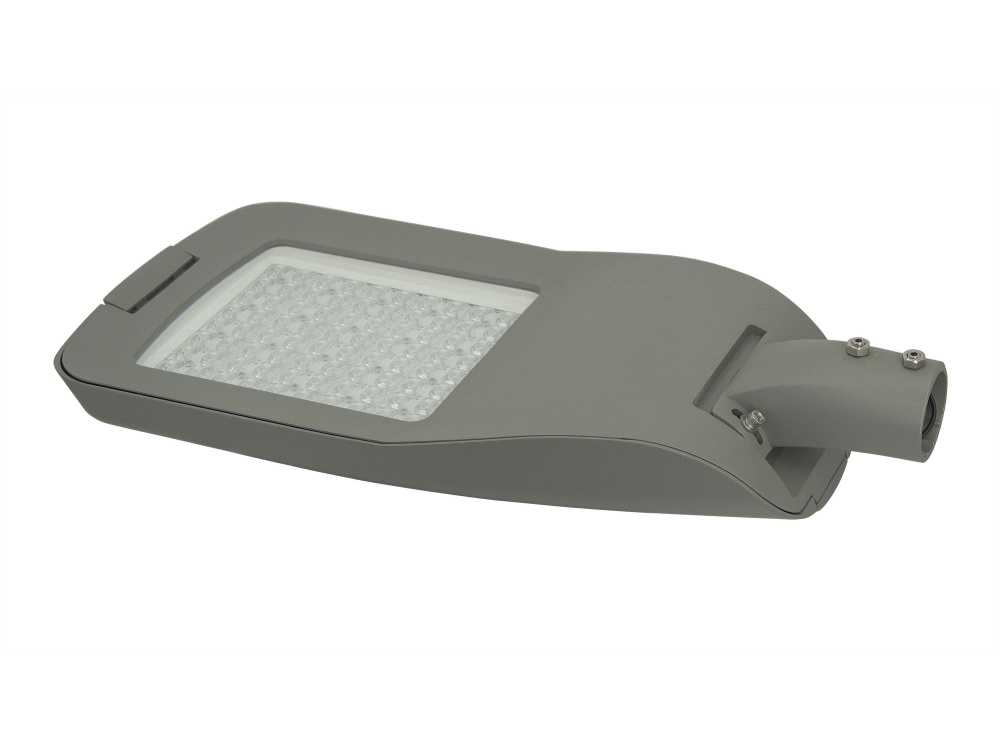
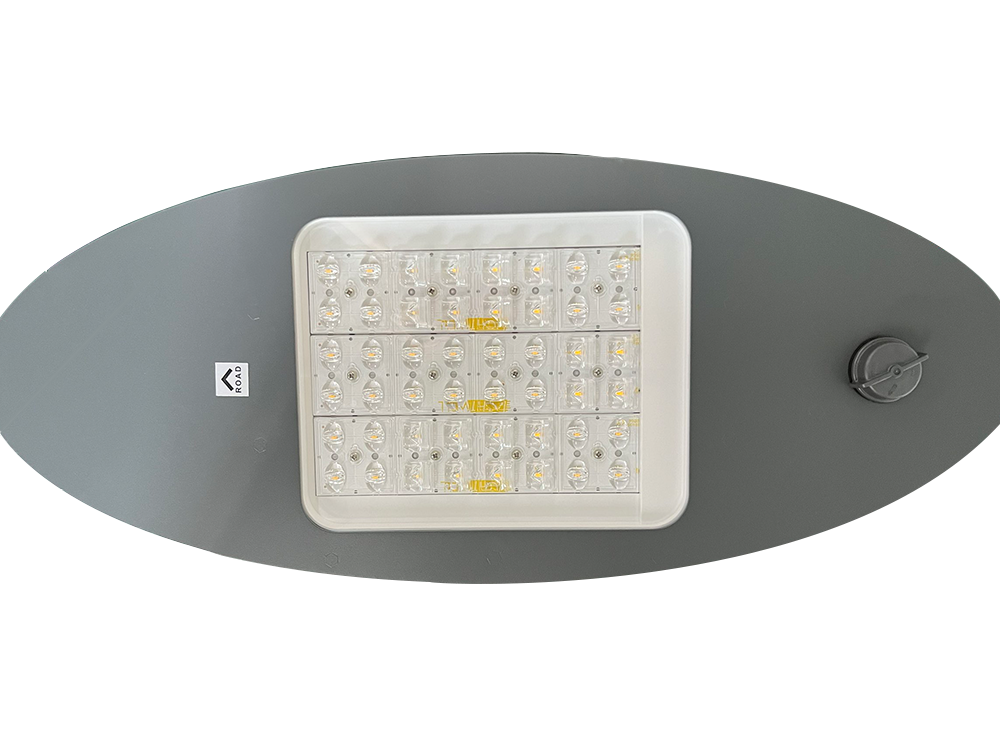
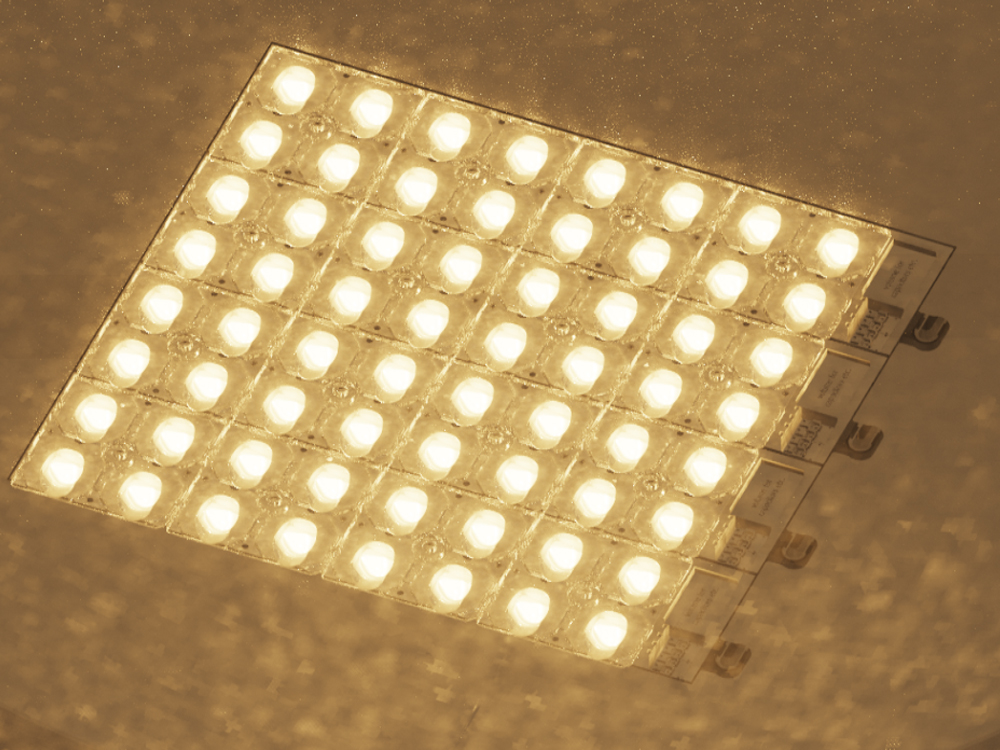
Luxific product information includes multiple optical distributions, smart-control options, surge protection, DALI, 0-10V, Astro Dim and Step Dim controls on selected street-light products. One listed model also specifies IP66, IK09, 10KV/10KA surge protection, and certification references including CE, CB, ENEC, EMC, TM21, LM79, and IEC-62471.
MOQ, Samples and Lead Time: Reduce Procurement Risk Before Mass Production
Before approving a large municipal order, buyers should establish what happens between initial inquiry and final shipment. Samples can reveal assembly quality, appearance, mounting compatibility, light distribution, and documentation quality before the project becomes difficult to change.
Recommended Procurement Process
- Technical inquiry: Provide road dimensions, pole height, spacing, required illumination, quantity, and local standards.
- Product selection: Compare suitable standard or customizable models.
- Sample stage: Request samples when project risk or specification requirements justify physical verification.
- Technical validation: Review photometric information, certificates, test reports, and installation requirements.
- Mass-production planning: Confirm MOQ, production schedule, packaging, inspection, and shipment date in writing.
MOQ should be discussed according to the actual product and customization level rather than assumed from a generic catalogue. For example, Luxific documentation identifies OEM quantities for some lighting products, while its broader OEM/ODM service supports project-specific development.
| Procurement Stage | Buyer Should Confirm | Purpose |
|---|---|---|
| Before sample | MOQ, specifications, certifications, quotation | Check commercial feasibility |
| Sample approval | Dimensions, optics, appearance, mounting | Reduce specification risk |
| Before production | Approved specifications, quantity, packaging, schedule | Prevent production discrepancies |
| Before shipment | Inspection, documents, packing list, shipping plan | Reduce logistics and acceptance risk |
Certificates, Test Reports and Project References
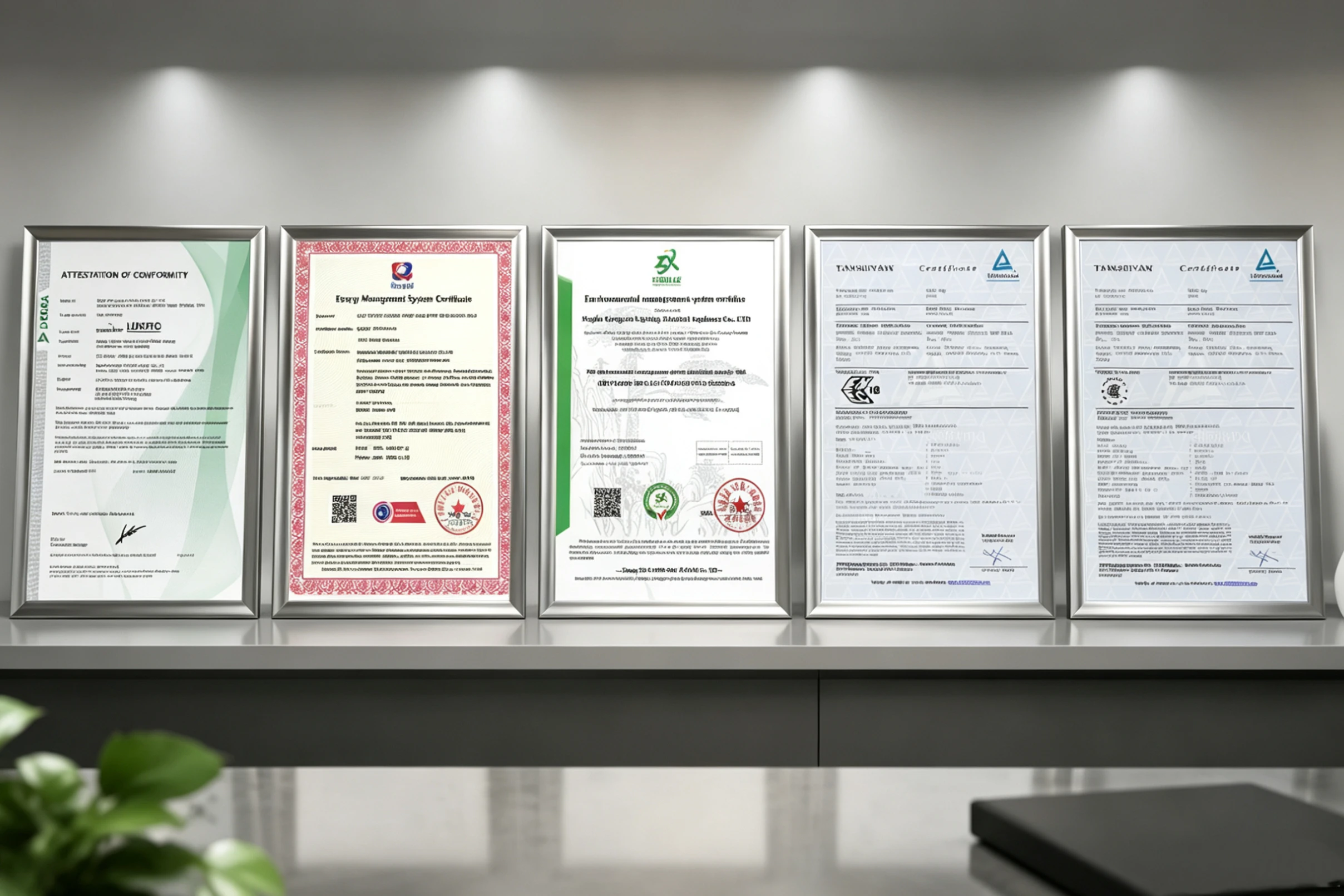
Certification should be treated as a verification process, not simply a marketing statement. Municipal authorities and EPC contractors may need documentation for safety, electromagnetic compatibility, environmental requirements, and market access.
What to Request From a Supplier
- Applicable product certificates and their validity.
- Relevant test reports matching the exact product model.
- Photometric or optical documentation where required.
- Environmental and protection ratings applicable to the project.
- Quality-management or factory-management certifications where relevant.
- Previous project information that demonstrates experience with comparable applications.
Luxific states that its products have certifications including GS, CE, and CB and comply with RoHS requirements. Its company materials also reference ISO 9001, ISO 14001, and ISO 50001 management certifications. Buyers should still request the specific certificate and report applicable to the exact model and destination market before procurement.
References Should Match the Application
A supplier with experience in decorative lighting is not automatically the right choice for highway or municipal road projects. Look for references that demonstrate relevant outdoor conditions, installation scale, technical requirements, and delivery experience.
Luxific documents several outdoor project applications, including municipal infrastructure modernization in Southeast Asia, harsh-environment lighting in Canada, and industrial port lighting in Morocco. The Canadian case involved samples tested on-site through a winter season, while the Moroccan port project included customized mounting and photometric analysis.
A Practical Supplier Verification Checklist
- Is the company a genuine Manufacturer or primarily a trading Supplier?
- Can it provide clear OEM and ODM scope?
- Can its engineering team understand road-lighting requirements?
- Are samples available for important projects?
- Are MOQ and lead-time conditions clearly communicated?
- Do certificates and test reports correspond to the actual product?
- Can the Supplier provide relevant project references?
- Can it support documentation, quality control, and logistics through delivery?
Why Luxific Can Be Considered for Municipal Road Lighting
Luxific combines outdoor LED lighting manufacturing, engineering support, OEM/ODM customization, certification capability, and project-oriented service. Its product range includes LED street lights, smart street lights, solar street lights, highway lights, tunnel lights, bridge lights, and high-mast lighting. The company also promotes strict quality testing, technical support, and customized solutions for different applications.
For a Wholesaler, EPC contractor, municipal lighting company, or infrastructure project developer, the key question is not simply whether a Supplier can offer a competitive quotation. The stronger question is whether the Manufacturer can provide the right product, documentation, engineering response, customization, quality control, and delivery coordination throughout the project lifecycle.
Request a Project-Based LED Street Light Proposal
Send your road dimensions, pole height, target illumination, quantity, required market certifications, and delivery schedule to Luxific. Our team can review the application and recommend a suitable LED street light configuration for your project and quotation.