Why Poor Retrofit Decisions Can Turn LED Street Light Projects Into Costly Problems
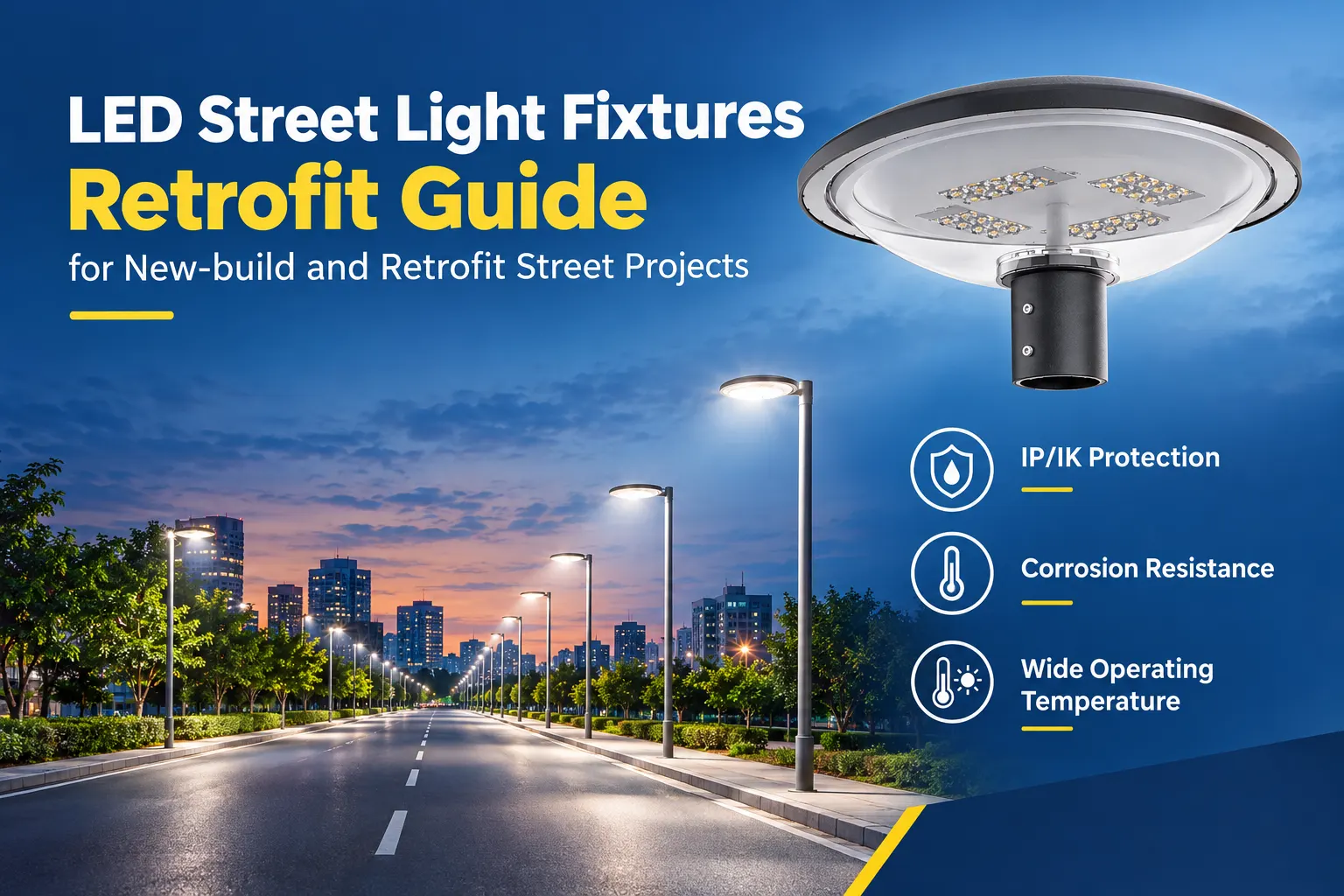
Replacing HPS or MH fixtures looks simple until existing poles, electrical supply, mounting brackets, optics and required illumination levels create hidden constraints. Choosing a fixture by wattage alone can produce uneven lighting, unnecessary energy use, installation problems and higher maintenance costs. For municipalities, EPC contractors and lighting integrators, the real risk is not simply buying the wrong lamp. It is selecting an LED street light fixture that cannot deliver the required photometric performance on the existing infrastructure or meet project documentation requirements.
The best LED street light retrofit starts with an audit of poles and power, then verifies photometrics, bracket compatibility, optical distribution, energy savings, maintenance and payback. Luxific provides Customizable OEM and ODM street lighting solutions to align fixture design with project requirements.
1. Audit Existing Poles and Electrical Supply Before Selecting Fixtures
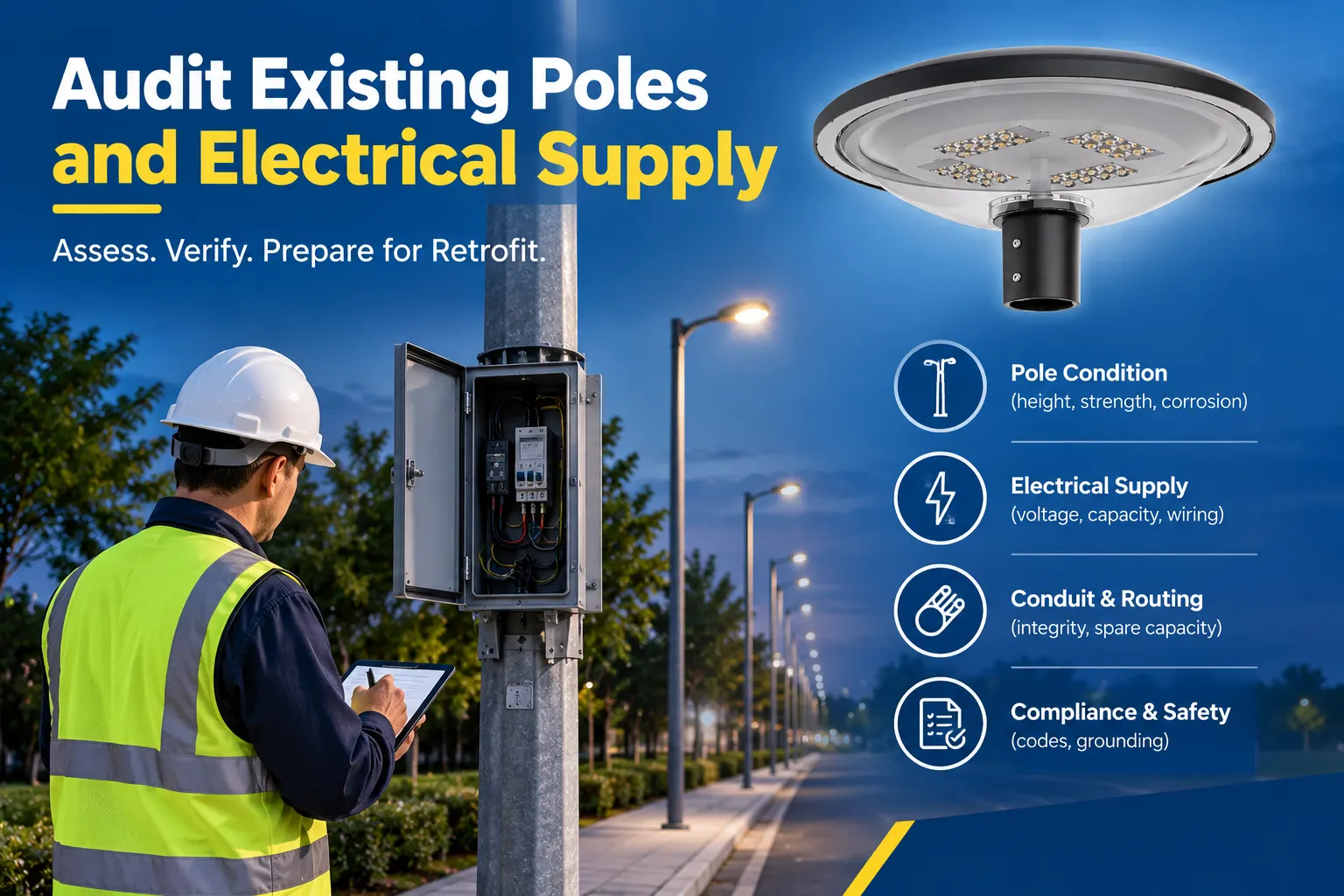
A retrofit project should begin with the infrastructure, not the product catalogue. Existing poles may have different mounting diameters, outreach brackets, tilt angles, cable arrangements and structural conditions. Electrical supply can also vary between locations.
What to Check on Existing Infrastructure
- Pole height, spacing and approximate road geometry
- Bracket type, mounting diameter and available adjustment
- Existing fixture weight and mounting arrangement
- Supply voltage, frequency and wiring condition
- Existing control systems, photocells or timers
- Pole corrosion, mechanical damage and installation condition
- Current fixture type, wattage and operating schedule
New-build Versus Retrofit Priorities
| Project Type | Primary Verification | Key Risk | Recommended Approach |
|---|---|---|---|
| New-build | Road geometry, pole layout, target illuminance | Incorrect fixture and pole combination | Complete photometric design before procurement |
| Retrofit | Existing poles, brackets and electrical supply | Mechanical or electrical incompatibility | Audit existing infrastructure before fixture selection |
| Large municipal project | Uniformity, documentation and maintenance | Inconsistent performance across locations | Standardize approved configurations |
For a Supplier or Wholesaler serving infrastructure projects, collecting these details early also reduces quotation revisions and helps the project team confirm compatibility before shipment.
2. Replace HPS or MH by Photometrics, Not Watts
One of the most common retrofit mistakes is assuming that a 150 W LED fixture should simply replace a 150 W HPS or MH fixture. LED technology changes the relationship between electrical power and useful light delivered to the road.
Focus on What the Road Receives
The correct replacement should be based on the required lighting performance rather than a direct watt-for-watt comparison. Important parameters include illuminance, luminance where applicable, uniformity, mounting height, pole spacing, road width, lane arrangement and optical distribution.
- Record the existing HPS or MH fixture and installation conditions.
- Define the target lighting class and required performance.
- Measure or establish pole height, spacing and road dimensions.
- Select an LED fixture with an appropriate optical distribution.
- Run a photometric calculation using the proposed configuration.
- Compare energy consumption and maintenance assumptions with the existing system.
Why Optical Distribution Matters
A high-output fixture does not automatically provide good road lighting. The beam must distribute light appropriately across the carriageway while limiting unnecessary light outside the target area. Luxific street lighting solutions can be developed with different design requirements, allowing project teams to consider road geometry and application conditions rather than relying only on nominal wattage.
| Selection Factor | Why It Matters | Project Verification |
|---|---|---|
| Wattage | Determines electrical consumption | Compare with required lighting performance |
| Optical distribution | Controls where light is delivered | Review photometric calculation |
| Mounting height | Changes coverage and uniformity | Confirm with pole data |
| Pole spacing | Affects lighting continuity | Use actual project layout |
| Target illuminance | Defines required road performance | Verify against project specification |
3. Check Bracket, Tilt and Optical Compatibility
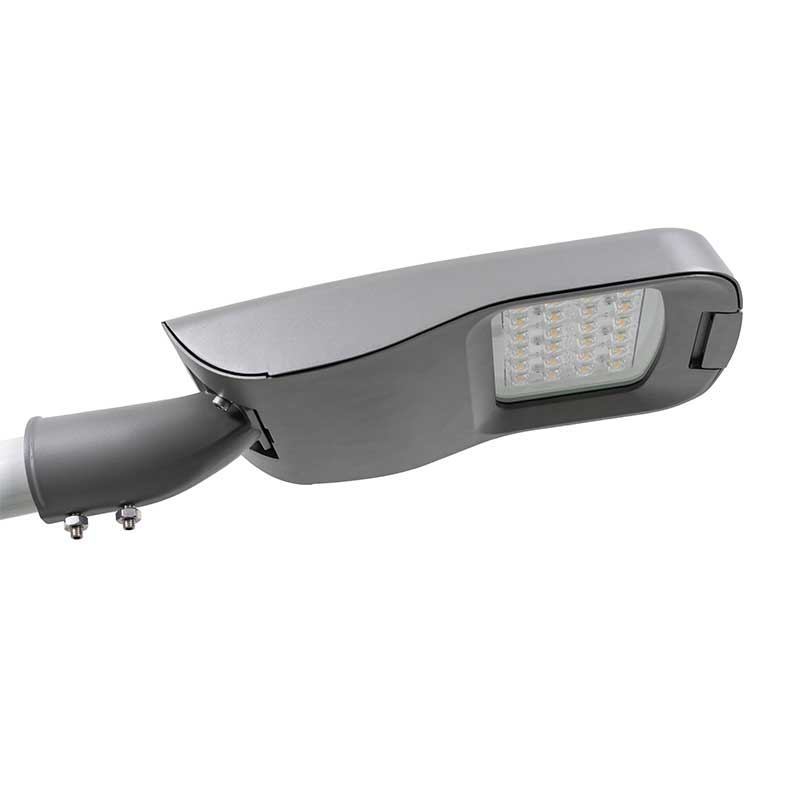
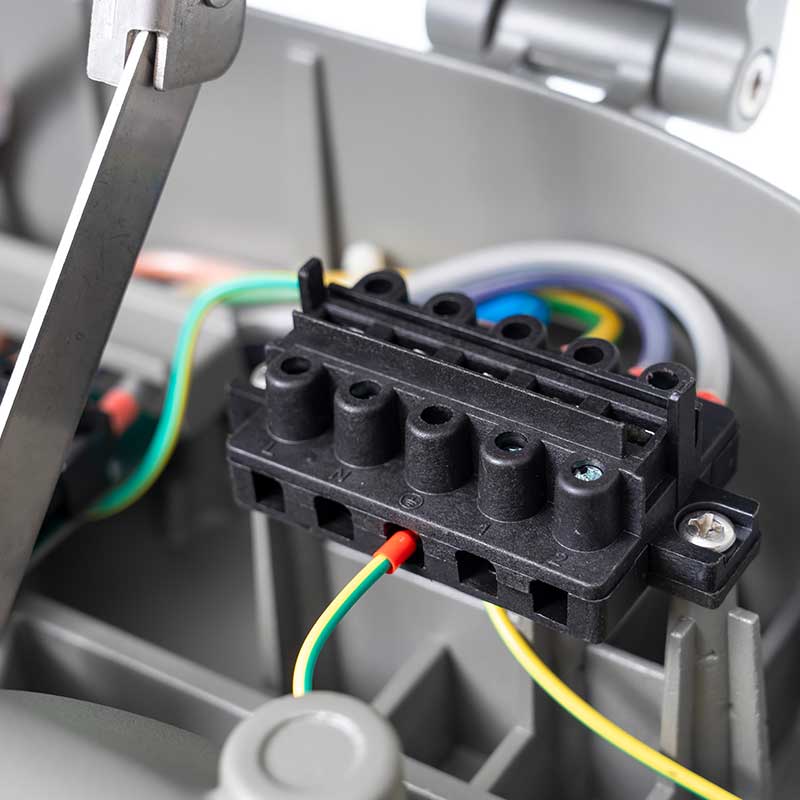
Even when the photometric design is correct, a fixture can fail at installation if the mounting arrangement is incompatible with the existing pole. Retrofit projects should therefore treat mechanical compatibility as part of the lighting specification.
Bracket Compatibility Checklist
- Confirm the existing arm or bracket diameter.
- Check fixture mounting dimensions and fixing method.
- Confirm allowable fixture tilt and installation angle.
- Check cable entry and electrical connection requirements.
- Verify fixture weight against the existing structure.
- Consider whether an adapter is required for the retrofit.
Why Tilt Can Change Lighting Results
Changing the fixture angle can alter the direction of the optical distribution and therefore the lighting pattern on the road. A fixture selected from a catalogue should not be evaluated separately from its mounting position.
For a project requiring a different size, appearance, mounting arrangement or branding, a Customizable solution can be more practical than forcing a standard product into an unsuitable installation. Luxific supports OEM and ODM development, including customization of fixture dimensions, materials, colors, logos and packaging according to project requirements.
4. Verify Energy Savings, Maintenance and Payback
Municipal buyers and infrastructure contractors should evaluate an LED retrofit by total ownership cost rather than purchase price alone. The most useful comparison combines energy consumption, operating hours, maintenance requirements, expected service life, replacement costs and installation conditions.
Build the Business Case
- Establish the existing fixture wattage and annual operating hours.
- Determine the proposed LED fixture power.
- Estimate annual energy consumption for both systems.
- Compare expected maintenance activities and replacement frequency.
- Include installation, logistics and disposal considerations where relevant.
- Calculate the expected payback period using the local electricity cost.
For buyers who prioritize the lowest lifetime cost, features such as long service life, tool-free maintenance and low maintenance requirements can be as important as the initial fixture price. Luxific positions its street lighting products around reliable outdoor performance, long service life and project-oriented design, while supporting wholesale and project procurement requirements.
Maintenance Questions to Ask a Manufacturer
- What warranty support is available for the proposed configuration?
- Which components can be serviced or replaced?
- How is thermal management handled?
- What testing and certification documents are available?
- Can the same configuration be supplied consistently for phased projects?
- What technical support is available during installation and commissioning?
5. Create a Retrofit Specification That Procurement Can Verify
A strong LED street light specification should allow engineers, purchasing teams and contractors to compare suppliers on equivalent requirements. Avoid descriptions that depend only on marketing terms such as high efficiency or long life. Request measurable information and supporting documentation.
Recommended Specification Checklist
- LED fixture model and application
- Rated input power and electrical characteristics
- Photometric data and applicable test reports
- Optical distribution and mounting conditions
- Housing and thermal management design
- Ingress and impact protection requirements
- Operating temperature range
- Driver and surge protection specifications
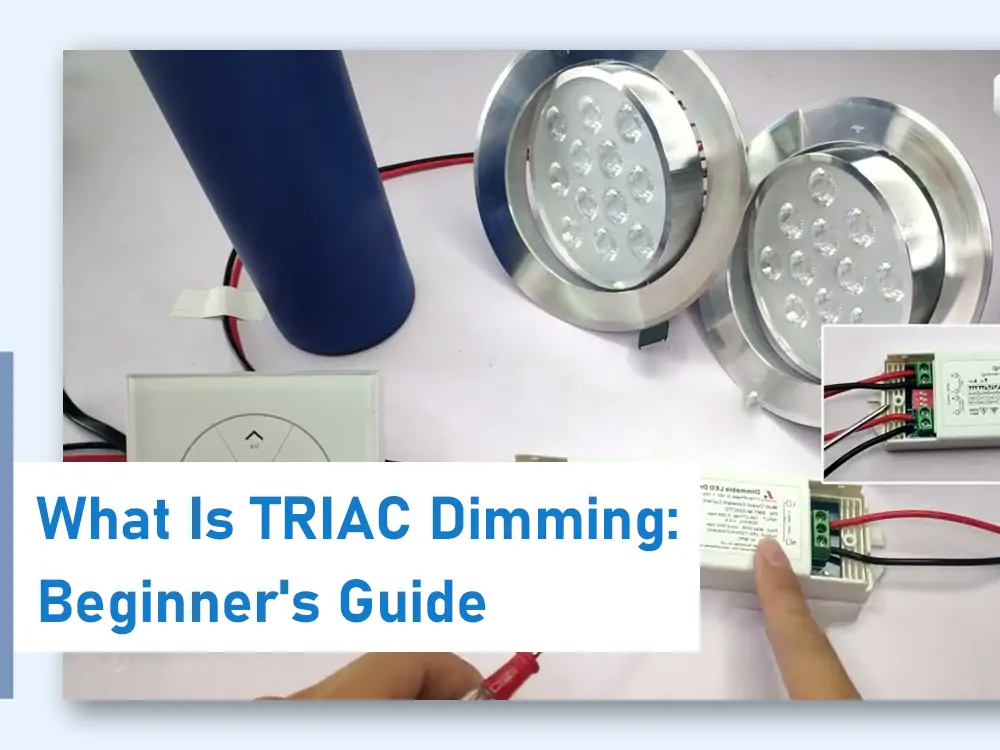
- Dimming or smart-control compatibility where required
- Warranty terms and maintenance support
- Required market certifications
- Production and delivery schedule
Luxific operates as a LED street light Manufacturer with project-oriented OEM and ODM capabilities. Its company information states that the factory supports ISO 9001, ISO 14001 and ISO 50001 management certifications, while product-related certifications listed include CE, RoHS and CB. Certification requirements should still be matched to the specific destination market and project tender.
6. A Practical Retrofit Decision Process
For municipalities, EPC contractors, road construction companies and lighting integrators, the following process can make supplier evaluation more efficient.
- Audit: collect road, pole, bracket and electrical information.
- Define: establish lighting targets, operating conditions and applicable standards.
- Calculate: evaluate photometric performance using the proposed LED configuration.
- Compare: review energy, maintenance, warranty and total ownership cost.
- Verify: check certifications, testing reports, samples and technical documentation.
- Confirm: finalize customization, quantities, production schedule and logistics.
This approach helps procurement teams compare a Supplier or Manufacturer based on project suitability instead of simply selecting the lowest quotation. It also gives a Wholesaler or lighting integrator clearer technical information when coordinating multiple projects.
Conclusion: Make the Retrofit Decision From the Road, Not the Catalogue
Ready to select your LED street light fixtures? Send Luxific your road dimensions, pole height, target illuminance, quantity, required market certifications and delivery schedule. Our team can use these details to support suitable fixture selection and project quotation.