Urban Street Lighting: Avoiding Poor Visibility, Glare, and Rising Maintenance Costs in Residential Districts
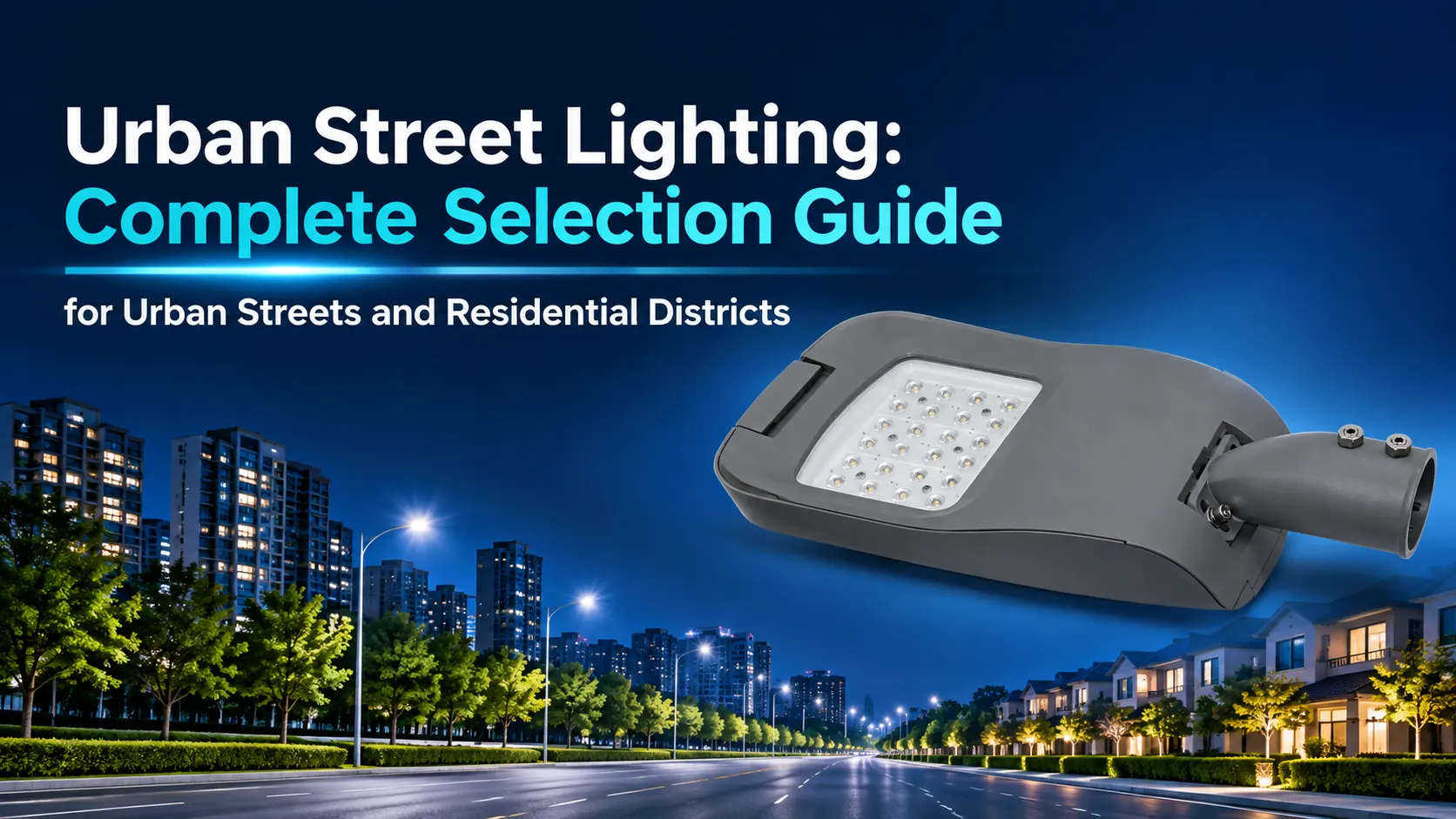
Urban street lighting is more than installing LED fixtures along roads. Poor lighting design can create dark spots, excessive glare, uneven illumination, and safety concerns for drivers and pedestrians. In residential districts, inappropriate color temperatures and uncontrolled light spill can also disturb residents and affect neighborhood comfort. For municipalities, EPC contractors, and infrastructure developers, these problems can increase maintenance costs and delay project acceptance. Choosing the right street lighting system from the beginning is essential for long-term performance and public satisfaction.
The best urban street lighting solution combines road classification, target illuminance, LED efficacy, optical distribution, pole geometry, smart controls, and local certification requirements. A reliable manufacturer such as Luxific helps project buyers select customizable LED street lights that balance visibility, energy efficiency, durability, and lifetime operating costs.
1. Understand Road Class and Application Requirements Before Selecting Street Lights
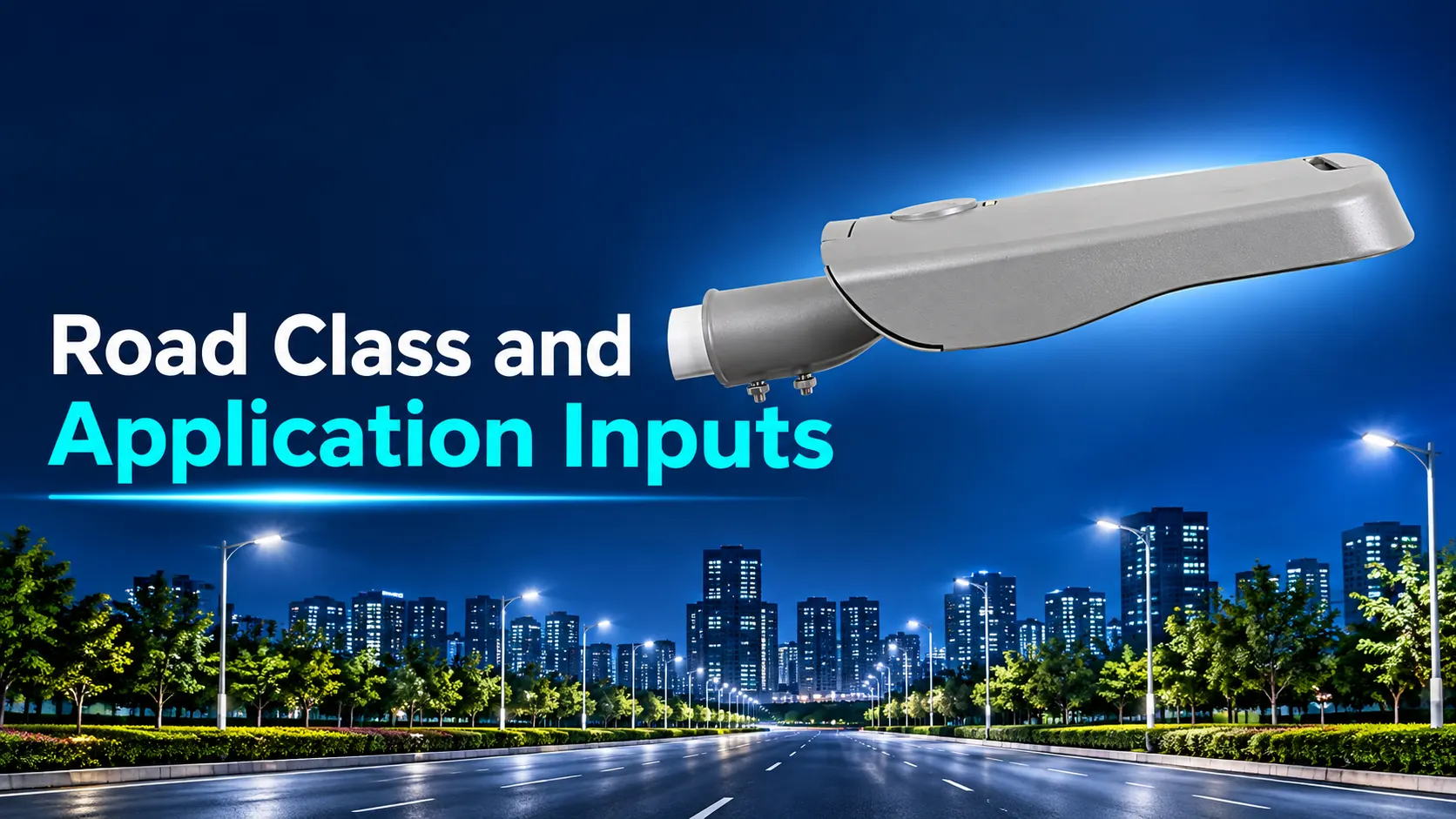
Every urban road has different lighting requirements. A main city road carries faster traffic and requires consistent visibility, while residential streets prioritize pedestrian comfort, neighborhood safety, and reduced glare. Selecting fixtures based only on wattage can result in unnecessary energy consumption or inadequate illumination.
1.1 Classify Roads According to Their Functions
Before choosing LED street lights, identify the road category and its primary users.
- Urban arterial roads: Require consistent illumination, good visual guidance, and controlled glare for vehicles traveling at higher speeds.
- Collector roads: Connect residential neighborhoods with major roads and require balanced lighting for vehicles, cyclists, and pedestrians.
- Residential streets: Prioritize pedestrian visibility, comfortable illumination, and limited light intrusion into nearby homes.
- Intersections and crossings: Need additional attention to visibility, potential conflict points, and pedestrian safety.
- Sidewalks and pathways: Benefit from appropriate lower-level illumination and comfortable visual conditions.
1.2 Identify Essential Project Inputs
Municipal authorities and engineering contractors should collect the following information before requesting quotations:
- Road width, number of lanes, and sidewalk dimensions.
- Traffic volume, vehicle speed, and pedestrian activity.
- Existing pole locations, mounting heights, and spacing.
- Required illuminance, luminance, and uniformity standards.
- Surrounding buildings, trees, and potential obstructions.
- Local environmental conditions and electrical infrastructure.
These details help the Manufacturer recommend an appropriate LED street light configuration instead of simply replacing traditional lamps with higher-wattage LEDs.
2. Choose the Right Lumens, Efficacy, and Maintained Light Output
Lumens, luminous efficacy, and maintained light output are three important indicators when evaluating urban street lighting performance. However, higher lumen output does not automatically mean better road illumination. The real objective is to deliver sufficient, uniform light to the target area while controlling energy consumption and future maintenance expenses.
2.1 Understand the Difference Between Lumens, Watts, and Lux
- Lumens (lm): Measure the total visible light output produced by a fixture.
- Watts (W): Measure the electrical power consumed by the fixture.
- Luminous efficacy (lm/W): Indicates how efficiently electrical power is converted into visible light.
- Lux (lx): Measures illuminance, or the amount of light reaching a unit of surface area.
For example, two LED street lights with identical wattage may produce different lumen outputs and road illumination results. Optical efficiency, installation height, beam distribution, and maintenance factors all influence actual performance.
2.2 Evaluate Maintained Output Rather Than Initial Brightness
New fixtures may initially provide excellent brightness, but LED output gradually decreases during operation. Dirt accumulation, environmental exposure, and component aging can also affect performance.
Project buyers should evaluate:
- LED lumen maintenance data and expected operating life.
- Initial and maintained illuminance calculations.
- Fixture thermal management and heat dissipation.
- Ingress protection and resistance to environmental conditions.
- Warranty coverage and replacement component availability.
2.3 Compare Lighting Parameters During Procurement
| Parâmetro | O que os compradores devem verificar | Project Value |
|---|---|---|
| Rated power | Actual system wattage | Energy consumption planning |
| Luminous flux | Fixture output in lumens | Available light output |
| Eficácia luminosa | Delivered lumens per watt | Eficiência energética |
| Temperatura da cor | Typically 3000K, 4000K, or 5000K options | Visual comfort and application suitability |
| IP rating | IP65, IP66, or project-required protection | Proteção ambiental |
| Garantia | Written coverage and conditions | Long-term procurement confidence |
Luxific provides outdoor LED lighting solutions with customizable configurations. Buyers can discuss project-specific power, appearance, materials, and technical requirements with our engineering and sales teams.
3. Select Optical Distribution and Pole Geometry for Uniform Illumination
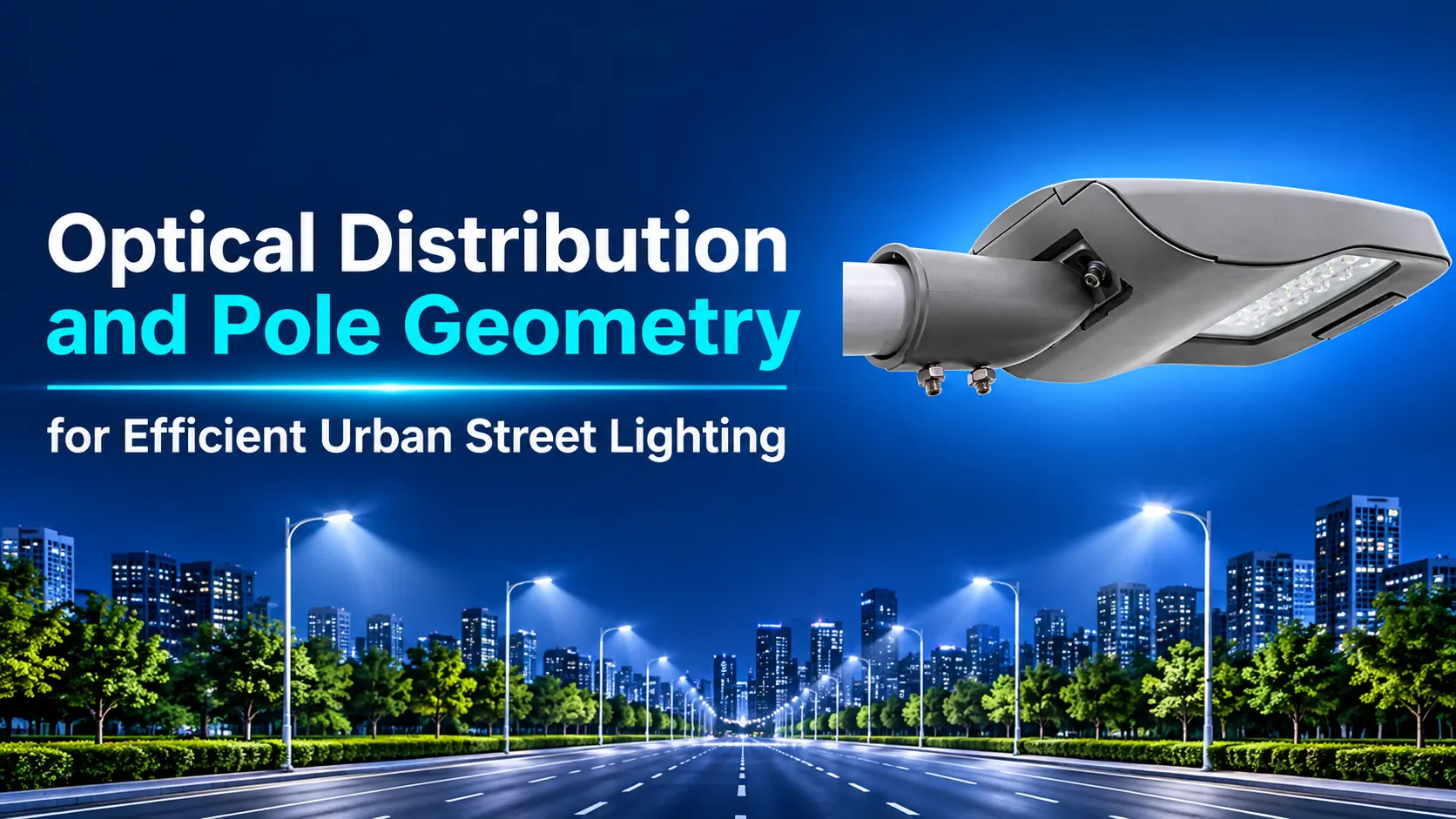
Optical distribution is one of the most important factors in urban street lighting design. Even a high-output LED fixture can produce poor results if its beam angle does not match the road width, pole height, and installation spacing.
3.1 Match Light Distribution to Road Geometry
Different road layouts require different optical solutions. Common considerations include:
- Narrow residential streets: Require controlled distribution to illuminate the carriageway and pedestrian areas without excessive light spilling into homes.
- Wide urban roads: May require wider or asymmetric distributions to achieve adequate coverage across multiple lanes.
- Interseções: Need carefully planned fixture positioning to reduce shadows and improve visibility.
- Curved roads: Require special attention to pole spacing and beam direction to maintain consistent illumination.
3.2 Consider Pole Height, Spacing, and Mounting Position
Pole geometry directly affects illumination uniformity and installation costs. Higher poles can cover larger areas, but they may require higher-output fixtures and more careful optical planning. Lower poles can improve localized illumination but may require additional installations.
Consider the following factors when developing a lighting layout:
- Measure the road width and determine the available pole positions.
- Confirm the mounting height and outreach arm length.
- Evaluate single-side, staggered, or opposite-side pole arrangements.
- Calculate pole spacing according to the required uniformity.
- Check glare, shadows, and light intrusion into residential properties.
- Use photometric simulation to verify the proposed configuration before installation.
3.3 Balance Visibility and Residential Comfort
Urban lighting must serve both road users and nearby residents. Excessive brightness can cause discomfort, while poorly directed light can enter bedroom windows or create unnecessary environmental impact.
Color temperature should also reflect the application. For example, 3000K can provide a warmer appearance for residential environments, while 4000K offers neutral white illumination suitable for many urban applications. The final selection should follow municipal requirements and project specifications.
4. Consider Smart Controls, Certifications, and Total Lifecycle Cost
For municipalities and infrastructure contractors, the initial purchase price is only one part of the investment. Electricity consumption, maintenance frequency, replacement costs, warranty support, and product reliability all influence the total cost of ownership.
4.1 Choose Appropriate Lighting Control Systems
Smart lighting technologies can improve operational flexibility and energy management. Depending on project requirements, buyers can consider:
- Photocell controls: Automatically switch lights according to ambient brightness.
- Dimming functions: Adjust light output according to scheduled operating requirements.
- Motion sensors: Support demand-based lighting in suitable low-traffic areas.
- Remote monitoring: Help operators identify equipment faults and monitor operating conditions.
- Smart city integration: Allow lighting infrastructure to connect with compatible management platforms.
Not every residential street requires a sophisticated smart lighting network. The most appropriate solution depends on the municipality’s budget, infrastructure, maintenance capabilities, and long-term development plans.
4.2 Verify Certifications and Manufacturing Quality
Certification is particularly important for international procurement. Government authorities and EPC contractors should verify that the certificates and test reports match the exact product model and applicable market requirements.
Before selecting a Supplier, request and review:
- Relevant CE, CB, RoHS, and market-specific certifications.
- Applicable ISO quality management documentation.
- Photometric test reports and electrical performance data.
- Ingress protection and relevant safety test reports.
- Product warranty terms and quality inspection procedures.
- Production capacity, delivery schedules, and packaging arrangements.
Luxific is a professional LED outdoor lighting Manufacturer established in 1999. Our company offers LED street lights, solar street lights, flood lights, decorative lighting, and other outdoor lighting products. Our documented certifications include CE, CB, and RoHS, alongside ISO management system certifications. Buyers should confirm the validity and applicable scope of individual documents for their intended projects.
4.3 Calculate Total Cost of Ownership
A reliable lighting system should deliver value throughout its operating life, not simply offer the lowest initial quotation. A practical procurement comparison should include the following costs:
| Cost Category | Key Evaluation Points |
|---|---|
| Initial investment | Fixtures, poles, electrical accessories, and installation |
| Energy costs | Rated power, operating hours, and electricity tariffs |
| Manutenção | Cleaning, inspections, labor, and component replacement |
| Substituição | Driver, LED module, and complete fixture replacement |
| Operational support | Warranty, technical assistance, and spare parts availability |
For wholesalers, lighting distributors, and project procurement teams, comparing these factors helps identify suppliers capable of supporting long-term business relationships rather than focusing exclusively on the lowest purchase price.
4.4 Work with a Manufacturer Offering Customization and OEM/ODM Services
Different countries and municipalities have different technical specifications, design preferences, and procurement requirements. A flexible manufacturing partner can help adapt products to specific applications.
Luxific provides OEM and ODM customization services, including:
- Customized housing materials, including ABS engineering plastic, PC, powder-coated steel, and stainless steel.
- Flexible product dimensions and structural designs.
- Custom colors and Pantone color matching.
- Brand logo integration and customized packaging.
- Project-oriented product development and technical coordination.
With five production lines and in-house R&D capabilities, Luxific supports wholesale buyers, lighting distributors, and engineering contractors seeking customizable outdoor lighting products. As a Manufacturer and Supplier, we focus on product quality, responsive communication, and project-oriented cooperation.
5. A Practical Checklist for Urban Street Lighting Procurement
Before issuing a purchase order, project managers should complete a structured evaluation to reduce technical misunderstandings and delivery risks.
- Confirm project requirements: Define road categories, dimensions, target illuminance, and applicable standards.
- Review technical proposals: Check lumen output, efficacy, optics, color temperature, and photometric calculations.
- Verify product documentation: Confirm certificates, test reports, specifications, and warranty conditions.
- Evaluate the Manufacturer: Review production capacity, quality control, customization capabilities, and communication efficiency.
- Confirm commercial terms: Clarify quantities, packaging, payment conditions, shipping arrangements, and delivery schedules.
- Plan after-sales support: Establish procedures for technical assistance, spare parts, and warranty claims.
For a Wholesaler or project contractor, these steps help establish a more predictable procurement process and reduce the risks associated with inconsistent product quality or delayed shipments.
Conclusion: Build Better Urban Streets with the Right Lighting Partner
Planning an urban street lighting project? Contact Luxific at sales@luxificlighting.com. Submit your road dimensions, pole height, target illuminance, quantity, required market certifications, and delivery schedule. Our team can help evaluate suitable LED street lighting configurations and prepare a project quotation.